
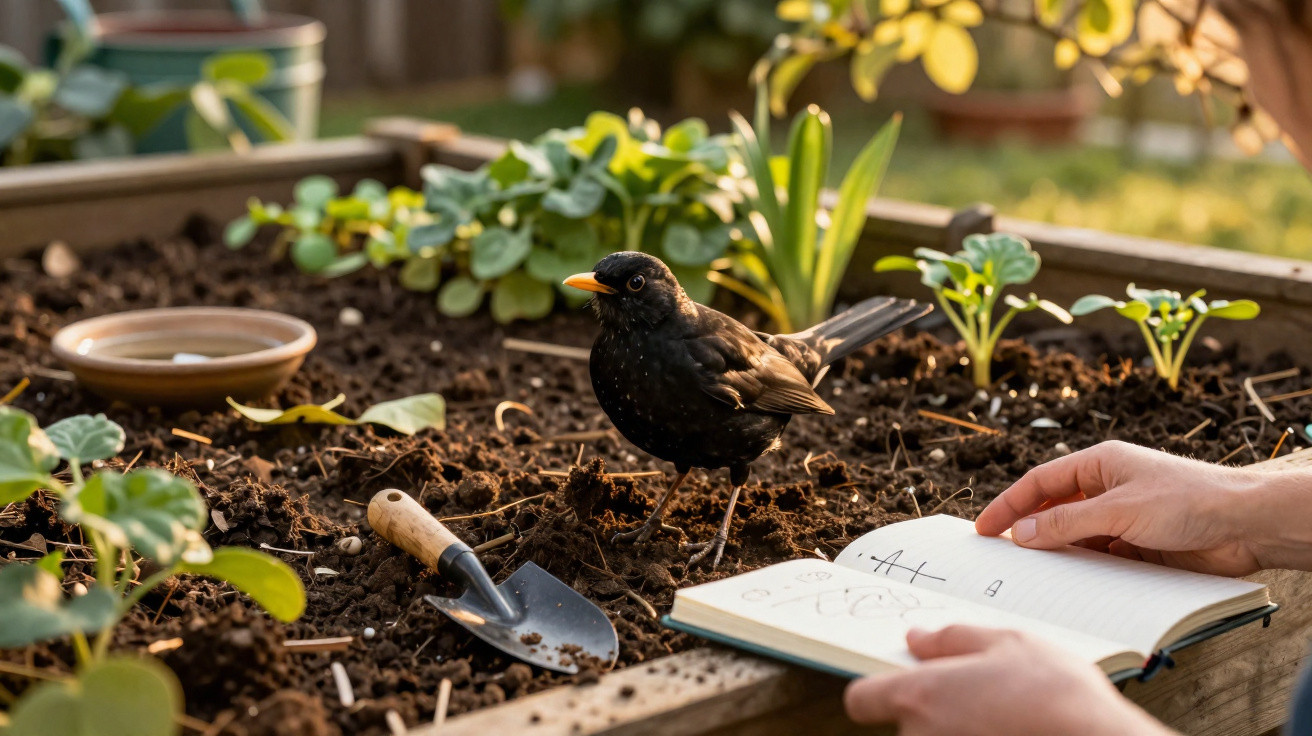
Before dawn, long before the street comes to life, a blackbird sometimes lands in precisely the same spot: beside the vegetable patch, beneath the rose bush or along the edge of a lawn still wet with dew. It moves in short hops, tilts its head, scrapes aside a couple of leaves, then vanishes with an almost familiar confidence. We all know that moment when an animal appears to have selected our garden without asking permission. This daily visit is not entirely random, although ornithologists are careful not to draw firm conclusions from a single bird. The blackbird does not assess the soil’s chemical composition; above all, it follows what the ground provides to eat, drink and investigate. That alone can tell us a great deal.
What a blackbird’s return really reveals about garden soil
A blackbird returning each morning is rarely attracted by the appearance of the garden: it is looking for a dependable food supply. Its beak probes the upper layers of the soil for earthworms, larvae, small insects, spiders and fallen berries. These are all resources found in gardens where underground life remains active. Ground that is heavily compacted, completely bare or repeatedly treated is far less appealing to it. Its regular presence therefore often points to soil that is loose, living and adequately moist, at least across part of the plot.
In a medium-sized garden, a blackbird may examine several dozen square metres from first light, especially after a mild night or light rain. Earthworms then rise closer to the surface, and the bird detects them through vibrations or tiny movements in the grass. During the warmer months, a pair of blackbirds also feeds its young an impressive quantity of invertebrates. If one lingers beside a border, it may simply have remembered a productive patch where previous searches have paid off.
The distinction matters: a blackbird is not a mobile laboratory that can pronounce soil to be perfect. It may return because a neighbour feeds birds, compost is within reach, a cat does not patrol that area, or a hedge offers instant cover. A welcoming garden is never the result of one factor alone. Its routine chiefly suggests an interesting balance of food, moisture, plant cover and peace, four signs that naturalists are happy to consider together.
Simple ways to encourage soil that blackbirds appreciate
The first step is to let a small area of the garden breathe, even when the urge to clear everything away in spring is strong. Beneath dead leaves, fine twigs and cut grass, a layer forms in which insects can shelter, fungi can work and worms can rise more easily. Set aside an unobtrusive patch at the base of a hedge, behind a shed or in a less visible border. A few handfuls of leaves can sometimes alter the character of the soil without turning the garden into an unmanaged wilderness.
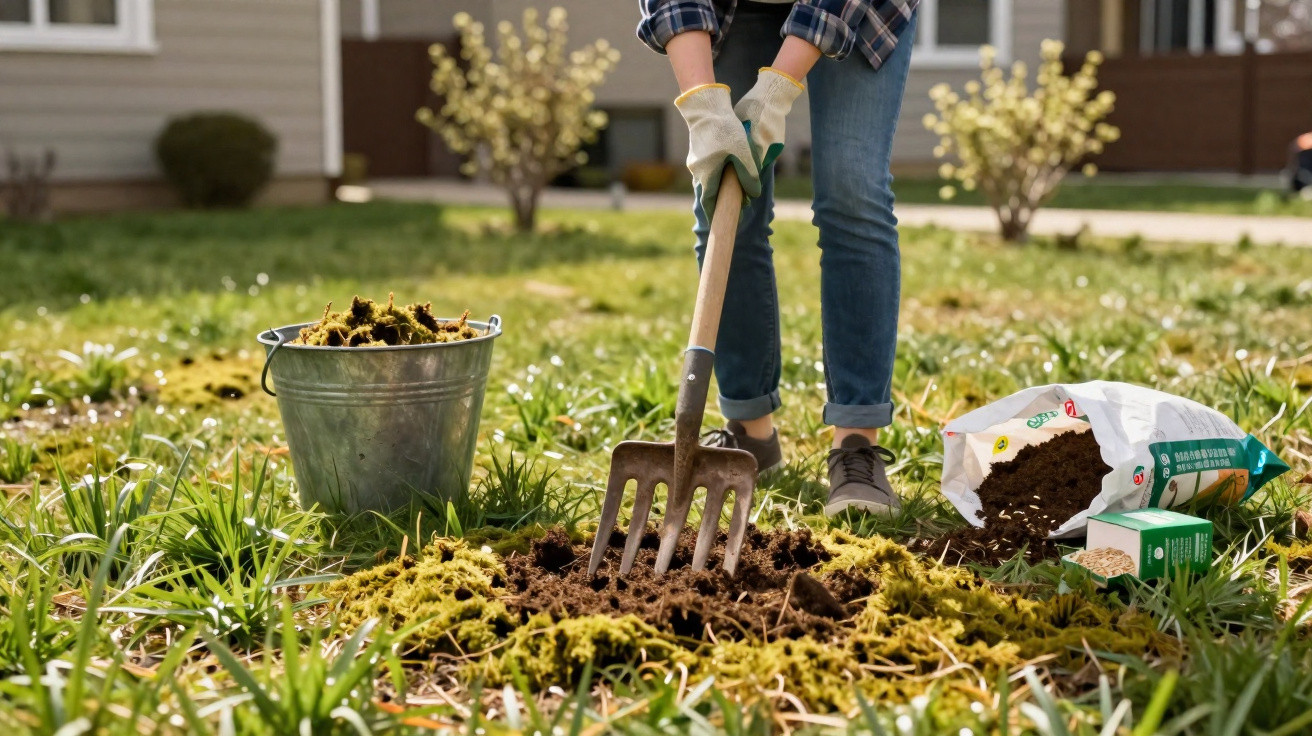
Try not to dig the soil deeply every season, particularly in areas already rich in earthworms. This practice can create the impression of a neat garden, but it disrupts tunnels, exposes organisms to dry air and damages part of this invisible system. Let us be honest: nobody really does this every day, and that is a good thing. A light mulch, well-rotted compost spread on the surface and varied planting sustain the soil more effectively than repeated vigorous digging.
Also provide a shallow water source, cleaned regularly and positioned a sensible distance from places where cats may hide: the blackbird will readily drink and bathe there. Keep some open areas so it can spot danger approaching, while retaining dense shrubs where it can dart for cover in a second.
“The blackbird does not choose a garden for its appearance: it returns when it finds a continuity of resources and a feeling of safety.”
- Dead leaves left in place: they shelter useful small wildlife and retain moisture.
- Well-rotted compost on the surface: it feeds the soil without disturbing it.
- A hedge, shrubs and a quiet corner: these give the blackbird refuge close to its feeding area.
- Shallow water: this supplements food resources, particularly during dry spells.
A daily visitor that changes how we see the garden
Spotting the same blackbird in the same place can become a reassuring little ritual, almost a natural clock in days that pass too quickly. It is a reminder that beneath a lawn, border or carpet of leaves, hundreds of interactions unfold silently: roots advance, woodlice break down debris, worms mix organic matter and insects move about. Soil is not merely a surface to weed or level. It is a living environment, with both vulnerabilities and abundance.
Watching a few details over a week can reveal far more than a single sighting: does the blackbird appear after rain, near the compost, under a hedge, or only when the garden is quiet? Such clues do not replace a soil test, but they offer a sensitive and highly practical reading of the space being cared for. A child noticing an earthworm, a neighbour finally leaving a strip of long grass, a border that is no longer raked bare: change often begins this way, without grand speeches.
| Key point | Detail | Added value for the reader |
|---|---|---|
| The blackbird looks for food first | Earthworms, larvae, insects and small invertebrates are easier to find in loose, moist soil enriched with organic matter. The bird’s regular visits often indicate that this food is available on site or very close by. | You learn to interpret this behaviour without giving it mysterious powers: the blackbird becomes a living indicator of biological activity in the garden. |
| Its loyalty is not an absolute diagnosis | The presence of a hedge, water source, compost heap, fallen fruit or a quieter setting may also explain its return. Ornithologists always consider several signs before assessing the quality of a habitat. | You avoid jumping to conclusions and can observe your plot more precisely, without assuming that one bird can reveal everything. |
| A less “tidy” garden can be more alive | Leaves left on the ground, mulch, varied planting and lightly worked areas support a food chain that benefits blackbirds and many other species. This does not mean abandoning everything, but allowing a few spaces to develop naturally. | You have straightforward, affordable and realistic actions to support biodiversity while keeping a pleasant garden. |




Comments
No comments yet. Be the first to comment!
Leave a Comment