
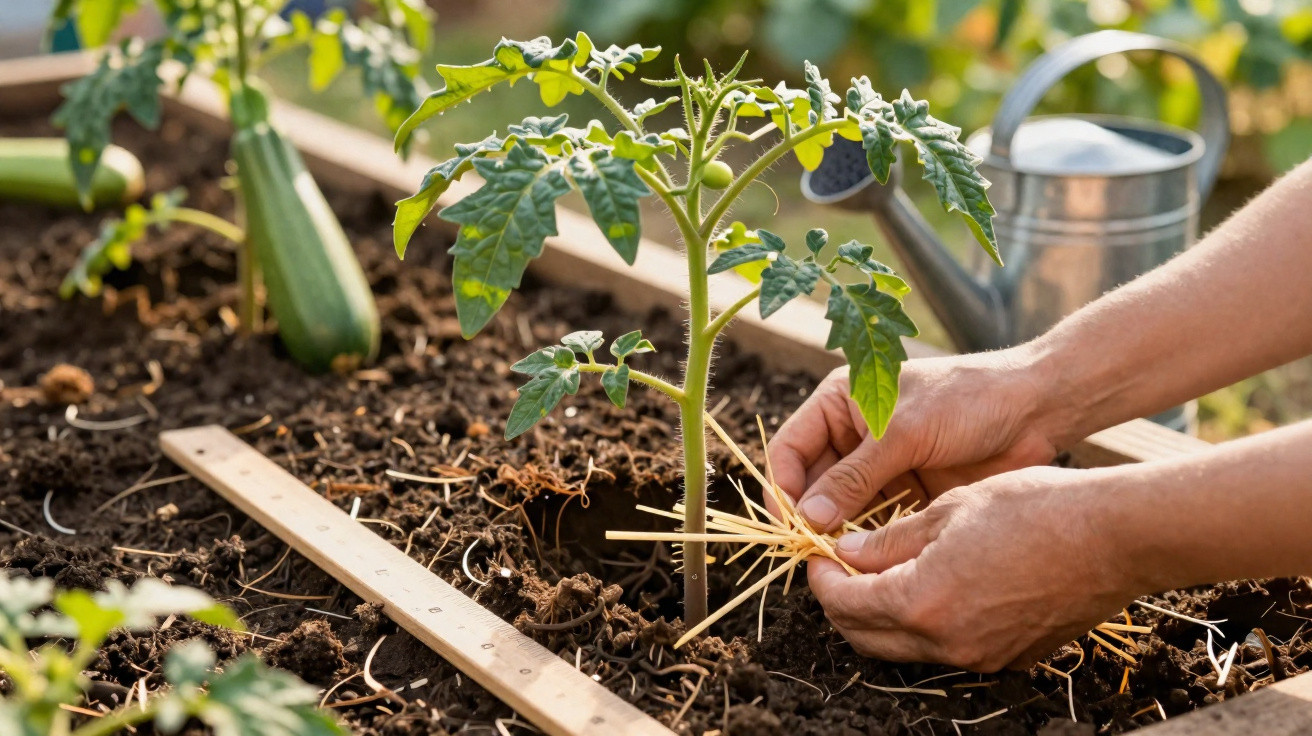
At first, everything in the bed appears ideal: vigorous young plants, loosened soil and a fresh layer of mulch. A few days later, one tomato plant topples over. The soil is still damp, while the leaves and stem initially look perfectly normal. This is where the guessing starts for many home gardeners, because the true cause lies a few millimetres lower, where the tomato plant meets the soil.
The vulnerable area at the base: why the tomato collar is so susceptible
Tomatoes have an exceptionally delicate transition zone between the roots and the stem. Gardeners refer to it as the “collar” or stem base. The plant’s entire flow of sap passes through this narrow section. If it is damaged, the supply to the upper part of the plant can collapse completely.
Tomatoes grow reliably when the stem base remains visible, well ventilated and relatively dry. Trouble starts when this area becomes buried in soil or covered by a dense layer of mulch. Moisture then builds up directly around this critical point.
“Just a few millimetres too much soil or mulch around the tomato base can be enough for rot to begin within two days.”
As a result, the tissue at the base is deprived of air, the outer layer softens, turns brown and may eventually split. At first, only slight yellowing of the foliage may be visible. Then the stem bends over, often overnight.
Why tomatoes rot at soil level while the upper plant looks healthy
When tomato plants rot, many gardeners immediately suspect blight or unusual fungal diseases. With newly planted young tomatoes, however, the reason is generally much simpler: soil or mulch is sitting too high against the plant.
The effect is similar to leaving tomatoes in an airtight plastic bag for too long. In that situation:
- Moisture cannot escape.
- Heat and dampness accumulate.
- The surface remains wet continuously.
- Fungi and bacteria find ideal conditions.
The same miniature greenhouse develops around a tomato stem when soil or mulch presses closely against it. Rainfall and watering collect in a small hollow around the plant base. If this area does not dry quickly, the collar begins to rot, often with no apparent leaf damage until it is too late.
Mulching tomatoes safely: keep a gap around the stem
Mulch is generally highly beneficial for tomatoes: it keeps the soil moist for longer, reduces evaporation and protects roots from heat and cold. The issue only arises when mulch is pushed directly against the stem.
A common sequence is this: the soil is already slightly compacted, then several centimetres of straw, grass clippings or wood chips are added. It looks tidy and thoroughly covered. In reality, the soil level has risen by a few millimetres, precisely at the sensitive stem base.
“The most important safety zone is a tiny ring measuring one to three centimetres around the tomato base - this area must remain clear.”
Many garden advisers offer the following practical guidance:
- Leave at least 1 centimetre of visible, uncovered soil around the stem base.
- A 2–3 cm “air gap” is better, especially in heavy, damp soils.
- The rest of the bed can have a generous mulch layer, but it must not touch the stem.
The right timing: when tomatoes should be mulched
Applying mulch too early can place additional stress on the plants. Cold, permanently damp mulch over soil that has not yet warmed up slows root activity, so a little patience is worthwhile.
When it is safe to mulch according to plant size
As a rough guide, tomato plants should be 15 to 20 centimetres tall before mulch is added. By then, they have developed a stronger root system and can better cope with minor mistakes.
Recommended mulch depths:
| Material | Recommended layer depth |
|---|---|
| Straw or hay | 8–10 cm |
| Well-dried grass clippings | 3–5 cm |
| Wood chips / pieces of bark | 3–5 cm |
The layer can be substantial, but only across the root zone rather than at the stem base. When using a watering can or hose, direct the water into the mulched area around the plant, not onto the exposed collar.
Water tomatoes properly: water the roots, not the stem
How tomatoes are watered plays a part in whether their bases rot. Watering repeatedly right beside the stem creates a permanently damp area there. Over time, a small dip forms where water remains trapped.
These approaches work better:
- Water directly into the mulched root zone with a watering can, around 10–15 centimetres away from the base.
- Make watering rings or shallow watering basins around each plant, without extending them all the way to the stem.
- Position drip hoses or emitters several centimetres away from the base.
Watering less often but more deeply in hot weather encourages deeper roots while preventing constant changes in moisture around the stem base.
Weekly checks: prevent tomato rot with one simple movement
One detail is easily overlooked in day-to-day gardening: with every watering session or after a thunderstorm, mulch and clumps of soil move slightly closer to the stem. A perfect gap can therefore become problematic within only a few days.
“Once a week, simply brush around the base with your hand - this small check saves more tomatoes than any specialist product.”
The routine is straightforward:
- Use the flat of your hand to brush mulch and loose soil away from the stem.
- Check that the base is firm, dry and free from brown patches.
- If necessary, build the mulch back up a little further from the plant.
At the first signs of rot, acting quickly is worthwhile: uncover the base, reduce watering quantities and, if necessary, replant the tomato slightly higher. Tomatoes often produce additional roots on buried stem sections, provided the tissue above the damaged point is still healthy.
Courgettes and aubergines can be affected too
This mistake is not limited to tomatoes. Courgettes, squashes and aubergines are also sensitive when their stem bases remain constantly wet. Soil beneath large-leaved plants dries more slowly, particularly increasing the risk of rot.
The same rule can therefore be used throughout a mulched vegetable garden: leave a small ring of bare soil around the base, while keeping the rest densely covered. This greatly reduces the risk of plants unexpectedly collapsing or suddenly wilting.
Why this error is so common - and how to remember the rule
Many guides advise gardeners to “plant tomatoes deeply” so they can form extra roots along the buried stem. This is true, but it applies to planting itself, not to the later mulch or soil level. The collar must always remain exposed and visible afterwards.
A simple rule to remember is: “Show the stem, hide the roots.” The roots may sit deep, warm and well covered, but the transition to the stem needs light, air and distance from damp material.
Keeping this small difference in mind prevents many puzzling failures in the tomato bed, without specialist fertilisers, secret varieties or expensive plant protection products. Sometimes an inconspicuous centimetre determines the success or failure of the entire season.



Comments
No comments yet. Be the first to comment!
Leave a Comment