
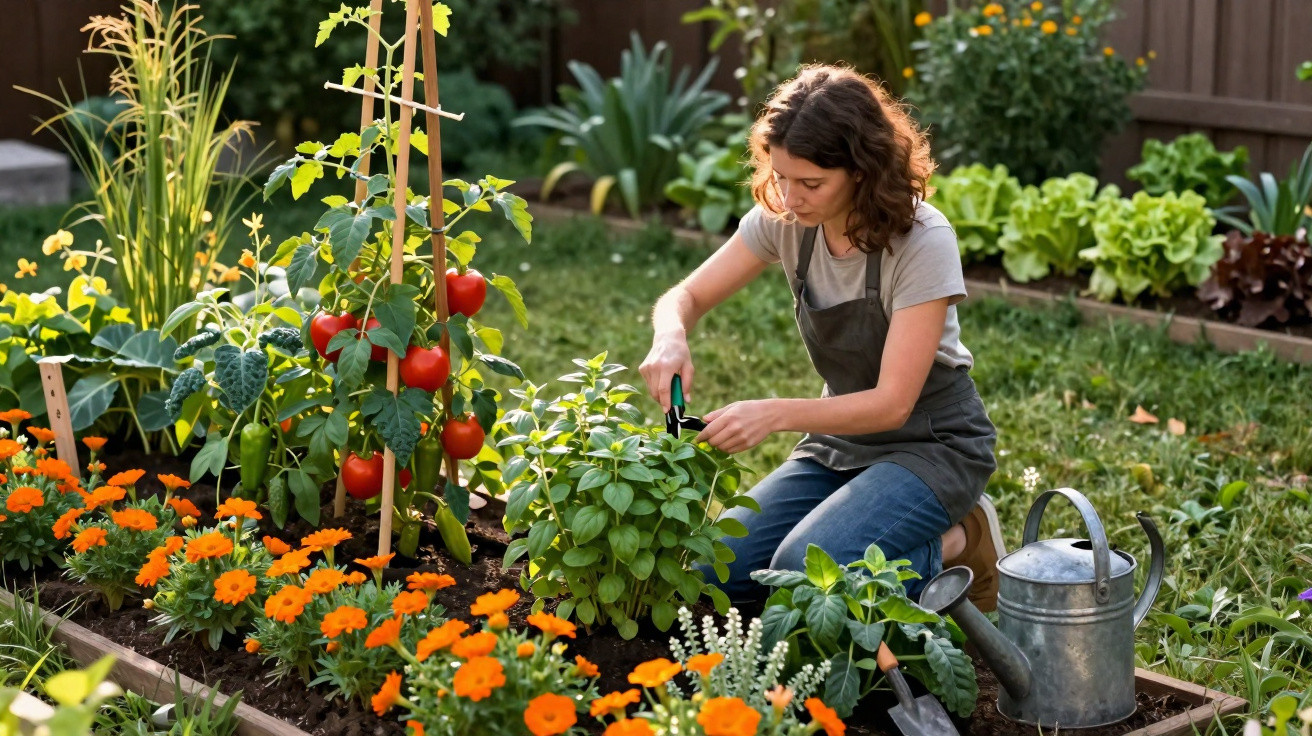
Many amateur gardeners tuck oregano away in a corner of the herb garden. However, anyone who deliberately combines this Mediterranean herb with vegetables and flowers can benefit from fewer pests, tougher plants and improved harvests. The key is choosing suitable neighbours – and consistently avoiding a few troublesome pairings.
Why oregano is so valuable in a garden bed
Oregano is one of the most versatile companion plants for the garden. It thrives in sunshine, prefers free-draining, relatively lean soil and copes remarkably well with dry conditions.
“The essential oils in oregano act like a natural insect repellent while also supporting a healthy soil environment.”
The herb:
- repels many sap-sucking and chewing insects with its strong scent,
- works as ground cover against weeds and moisture loss,
- attracts beneficial insects such as solitary bees, hoverflies and parasitic wasps,
- suits mixed-cropping schemes in vegetable beds and raised beds.
Positioning oregano with care creates small protected zones in the bed that confuse pests and encourage beneficial insects. This can significantly reduce the need for spraying, especially in an organic garden.
Ideal vegetable companions for oregano
Tomatoes – the classic dream team
Oregano forms its strongest partnership with tomatoes. Its spicy fragrance creates a scented veil over the tomato bed, making it harder for pests to locate their host plants.
“Oregano around the base of tomato plants reduces pressure from aphids and caterpillars without restricting tomato growth.”
At the same time, oregano benefits from the light shade cast by tomato foliage during high summer. The soil does not dry out as severely, and the herb stays aromatic without scorching. Many gardeners also report fewer fungal issues nearby, as oregano’s antibacterial and antifungal compounds can have a positive effect on the soil environment.
Peppers and chillies – improved fruit set, fewer pests
Peppers and chillies are also excellent neighbours for oregano. Both enjoy sun and warmth, while oregano’s low-growing habit does not deprive them of light.
- Pepper and chilli flowers benefit from the extra pollinators attracted by the herb.
- Spider mites and aphids are noticeably less comfortable around its intense scent.
Leave enough room so the plants do not grow over one another: around 25–30 centimetres between plants is sensible.
Brassicas – a shield against caterpillar damage
White cabbage, broccoli, cauliflower and Brussels sprouts are real magnets for cabbage white butterflies and other moths. Their caterpillars can strip entire beds bare. This is where oregano proves useful as a fragrant barrier.
“Oregano scattered among brassicas confuses butterflies searching for places to lay eggs and also attracts parasitic wasps that parasitise caterpillar eggs.”
Ideally, plant small clumps evenly between the rows. This produces a network of scented islands rather than a dense carpet, disrupting pests without crowding the brassicas.
Cucumbers and squash plants – fewer beetles, stronger plants
Cucumbers, courgettes and squashes often suffer from beetles and bugs that spread disease. Oregano disrupts these insects with its aroma and may reduce damage.
Important: do not plant the herb in the middle of the climbing and trailing area, as it will otherwise be overgrown. A better option is a position at the edge of the bed, set slightly away from the trailing stems.
| Vegetable companion | Main benefit from oregano | Recommended spacing |
|---|---|---|
| Tomatoes | Fewer caterpillars and aphids | 30–45 cm from the base |
| Peppers / chillies | More pollinators, fewer mites | 25–40 cm spacing |
| Cucumbers | Reduced beetle activity | 45–60 cm from the climbing area |
| Courgettes / squash | Protection from bug infestations | 60–75 cm from the trailing stems |
Herbs and flowers that complement oregano perfectly
Basil – the kitchen and bed both benefit
Basil and oregano often appear together in the kitchen, and they work well together in a garden bed too. Their flowers both attract numerous insects, which in turn pollinate fruit and vegetables.
“Planting basil and oregano within easy reach means you always have the foundation for Mediterranean dishes ready to pick – straight from the bed to the pan.”
Watering is the crucial difference: basil prefers consistently moist soil, whereas oregano tolerates drier periods. In raised beds or large containers, there is a simple solution: place basil closer to the watering side and oregano in the drier corner. This gives each plant the conditions it needs.
Thyme – a fragrant Mediterranean pairing
Thyme has almost identical growing requirements to oregano. Both perform best in sunny, free-draining, nutrient-poor conditions. Together, they make an intensely scented carpet that keeps many pest insects at a distance.
The pairing also offers visual variety: thyme’s fine foliage contrasts attractively with oregano’s larger leaves. It is particularly appealing along bed edges or in rock gardens.
Calendulas and French marigolds – protection above and below ground
Flowers such as calendulas and French marigolds are already classics in mixed planting. Among other benefits, they deter nematodes in the soil and attract beneficial insects.
“Combining oregano with brightly flowering companion plants creates a multi-layered defence system of scent, colour and soil action.”
The blooms attract large numbers of hoverflies, ladybirds and lacewings. These feed on aphids and other soft-bodied pests that could weaken vegetables. Together with oregano’s fragrant cover, they create a well-protected garden bed.
Nasturtiums – a deliberate ‘sacrifice bed’ for aphids
Nasturtiums make excellent trap plants. Many aphid species prefer their leaves and flowers, gathering there instead of spreading across the rest of the vegetables.
Combined with oregano, this creates a clever strategy: aphids remain concentrated on the nasturtiums, while oregano attracts beneficial insects with its scent and flowers to reduce the infestation. Anyone who wishes can simply cut off and dispose of heavily affected nasturtium shoots.
Plants oregano should avoid in the garden bed
Fennel – chemical competition in the soil
Fennel releases substances into the soil that slow the growth of many neighbouring plants. Oregano is sensitive to these too. It stays smaller, produces less flavour and appears generally “held back”.
“Fennel and oregano do not belong in the same bed – a distance of at least one metre, preferably more, prevents stress for both.”
If you want to grow fennel, it is best placed in its own bed or a separate raised bed, well away from the herb area.
Lettuces and other moisture-loving plants
Oregano prefers comparatively dry conditions, while salad crops such as lettuce, loose-leaf lettuce and spinach require much more water. With direct neighbours, one side will always lose out:
- Either watering is frequent enough that oregano risks waterlogging and root rot.
- Or conditions remain too dry, causing lettuces to bolt and turn bitter.
The simple answer is to group plants by their water requirements. Keep moisture-loving plants in one bed and drought-tolerant plants such as oregano, thyme or rosemary in another.
How to get the most from oregano as a companion plant
Plan the right site, care and pruning
Over the years, oregano develops into dense carpets. This is desirable when it is used as ground cover, but it can overwhelm weaker neighbours.
“Regular trimming keeps oregano compact, increases its aromatic intensity and strengthens its protective effect in the bed.”
A few practical tips:
- Harvest several times each year before the herb comes fully into flower – the leaves are most intense then.
- Cut back longer shoots before they grow over other plants.
- Lift and divide older clumps every few years to prevent them becoming woody.
Smart positioning in the garden
Planting oregano deliberately makes the best use of its strengths. Popular options include:
- using it as edging along paths, where its scent is released with every step,
- placing it at the corners of beds to frame them visually while deterring pests,
- growing it beneath lightly shaded fruit trees, where it reduces weed pressure and attracts insects.
Oregano can even be useful near compost areas: its scent reduces unpleasant odours, while its flowers encourage beneficial insects that compete with flies.
Manage soil and nutrients carefully
Oregano does not need rich treatment. In fact, too much nitrogen produces plenty of leaf growth but weaker flavour and fewer essential oils.
“A relatively lean, well-drained soil gives oregano a sharper flavour and makes it more effective against pests.”
Heavy soils with plenty of clay can be loosened with sand and compost. Apply organic fertilisers sparingly; a thin layer of compost in spring is usually enough. This keeps the herb vigorous and aromatic, and makes it a dependable companion for tomatoes, peppers and more.
Keeping these relationships in mind can achieve a great deal through a few deliberate planting choices: fewer sprays, steadier yields and, as an added benefit, a bed that is enjoyable both visually and in the kitchen – with oregano as its quiet yet highly effective key player.



Comments
No comments yet. Be the first to comment!
Leave a Comment