
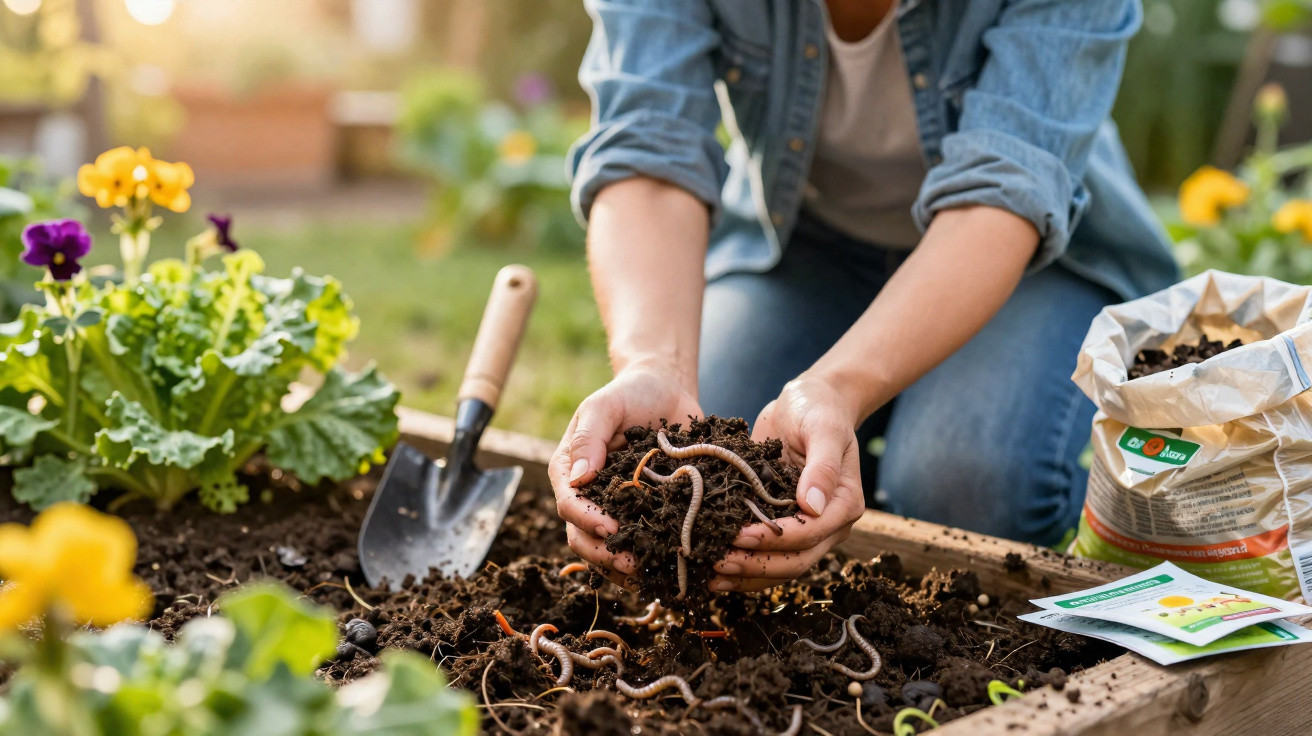
Earthworms in garden soil generally indicate ground that is rich in organic matter, suitably moist and less affected by chemical products. These small creatures operate beneath the surface, burrowing tunnels, blending plant debris and converting dry leaves into nutrients that roots can absorb more easily.
Why do earthworms appear in certain soils?
Earthworms seek out places with moderate moisture, decomposing organic material and steady temperatures. Very dry or compacted soil, ground lacking plant remains, or soil exposed to excessive chemical treatments, usually supports less activity from these organisms.
When they are regularly present, a garden will normally provide both food and shelter. Dry leaves, organic compost, mulch and beds that are not excessively turned over offer better conditions for earthworms to stay in the soil.
What does the number of earthworms reveal about soil quality?
A healthy earthworm population points to more living soil, active decomposition and a less compacted structure. By mixing soil layers, creating air channels and depositing nutrient-rich castings, they improve the ground’s physical, chemical and biological properties.
Several signs commonly occur alongside soil containing earthworms:
- soil that feels looser to the touch;
- a greater amount of decomposing leaves;
- effective water infiltration after watering;
- less of a hard crust on the surface;
- roots that can grow more easily.
How do earthworms improve garden fertility?
Earthworms feed on organic material and return castings to the soil, known as humus or coprolites. This material often contains nutrients and beneficial microorganisms, while also helping to create aggregates that give the soil a more stable structure.
Earthworms also make tunnels that encourage air to enter and water to move through the ground. This activity limits compaction, enables roots to breathe more effectively and improves drainage without requiring harsh interventions in the bed.
How can you protect and increase the earthworm population?
The key is to feed the soil rather than only the plant. When a garden receives organic matter regularly, earthworms have a food source and can continue their work in the same area.
A number of practices can make a considerable difference:
- add well-rotted organic compost to beds;
- retain mulch made from dry leaves, straw or seed-free clippings;
- avoid unnecessary insecticides and chemical products;
- do not turn the soil over too often;
- keep moisture levels consistent without waterlogging the soil.
Why is this a positive sign for the garden?
The presence of earthworms shows that the soil is neither lifeless nor completely depleted. It signals biological activity, available food and favourable conditions in which roots, microorganisms and organic matter can work together.
Soil with earthworms is likely to become more fertile, aerated and able to support healthy plants over time. With plant cover, compost and fewer harsh products, the garden naturally improves from the inside out.

Comments
No comments yet. Be the first to comment!
Leave a Comment