
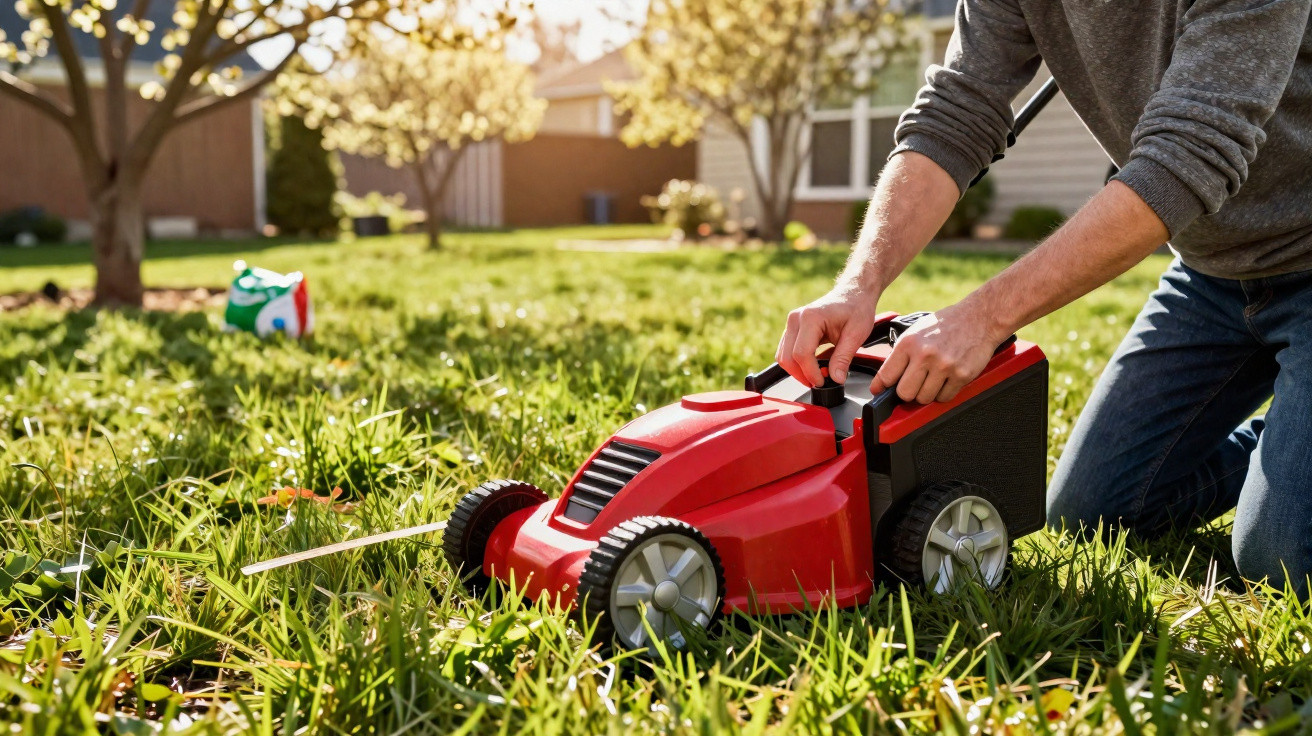
As soon as the first warm days arrive, lawnmowers can be heard everywhere. The enthusiasm is understandable: at last, the garden is meant to look neat again. Yet this is exactly when the same mistakes are made year after year, especially with the first cut after winter. Mowing too early and too severely can hold back lawn growth for the entire season.
Why the first cut in spring shapes the summer lawn
During winter, a lawn enters something of a dormant period. Growth almost stops, while the grass blades act as reserves that help the roots survive cold and wet conditions. In spring, the grass needs these stores of energy to start growing again, produce fresh shoots and form a thick green covering.
That is why lawns are especially sensitive at this stage. Cutting too soon removes the leaves the grass needs for its restart. This can result in weak roots, bare patches and a pale, uneven surface rather than rich green turf.
The first cut of the year often determines whether a lawn looks thick and strong in summer – or thin and full of gaps.
There is no fixed date for the first mow. Conditions in the garden matter more than the calendar. Above all, pay attention to temperature and the state of the soil.
The right temperatures to begin mowing
Grass only starts growing properly once daytime conditions are consistently mild. Useful rules of thumb are:
- Daytime temperatures remain steadily above 10°C.
- No overnight frost is forecast.
- The soil temperature is around 6 to 7°C or higher.
Patience at this point will be rewarded with a considerably stronger lawn later on. Looking at the grass itself is just as important as checking the thermometer: the blades should be a deep green again and have reached a height of roughly 8 to 10 cm.
The most common trap: mowing too early and far too short
The typical spring mistake combines two problems: mowing before the lawn is ready, then choosing the cutting height normally used in high summer.
Why wet or frozen soil becomes a lawn hazard
Many lawns remain heavily waterlogged in spring, while shaded areas may still be frozen solid. If a heavy mower is pushed across them at this point, it compresses the ground. The consequences include:
- Compacted soil that allows hardly any air to enter
- Young shoots that are crushed or pinched
- Yellowish, flattened areas of grass
- Ideal conditions for moss and weeds
The lawn may initially appear “tidy” after mowing, but yellow patches and gaps often emerge a few weeks later. Moss and wild plants spread much more easily in these spaces than in dense, healthy turf.
A drastic spring cut is harmful to roots
The second error is cutting the grass much too low. In spring, never remove more than one third of the blade length. If the grass is approximately 9 cm tall, cut it back only to around 6 cm – not to golf-course height.
A cutting height of at least 5 to 7 cm makes grass more resilient while also helping to prevent weeds from becoming established.
Longer blades provide light shade for the soil, bringing several benefits:
- The ground loses moisture more slowly.
- Roots grow deeper as they search for water.
- The soil surface does not heat up as much.
- Weed seedlings receive less light.
Mowing too short in spring therefore does not stimulate growth; it weakens the whole plant. The lawn must first recover from the shock instead of putting its energy into new shoots and roots.
How to set your lawnmower correctly in spring
The first mow of the year is not a cosmetic finishing touch, but a gentle health check for the whole lawn. The lawnmower should therefore be set with equal care.
High cutting height and sharp blades
For the first passes of the year, select the highest setting on the mower, or at least one of its upper settings. Many modern models state cutting height in millimetres. Use this table as a guide:
| Stage | Recommended cutting height |
|---|---|
| First cut in spring | 6–7 cm |
| Second and third cuts | 5–6 cm |
| Regular summer mowing (normal lawn) | 4.5–5.5 cm |
Sharp blades are at least as important. Blunt blades tear grass rather than cutting it cleanly. The torn edges become frayed and brown, and the plants lose unnecessary moisture.
Having the blades sharpened once a year, or sharpening them yourself, prevents brown tips and significantly reduces the risk of disease in the lawn.
Checklist before the first mow
Before taking the mower over the lawn for the first time, it is worth walking around the garden briefly. Check the following points:
- The soil is no longer frozen and does not feel spongy underfoot.
- No old leaves or coarse debris remain on the lawn.
- The grass blades have visibly grown and are a rich green again.
- The forecast shows no frosty nights or prolonged wet weather in the next few days.
- The mower’s grass collector and housing are clean and dry.
Waiting for these signs gives the lawn a much better start to the season than hurried mowing during a brief dry spell in March.
What a gentle start does for the lawn over time
A well-planned first cut has effects that extend far beyond spring. A dense lawn with deep roots stays green for longer, even during hot periods. It also withstands playing children, garden furniture and barbecues far better.
The contrast is particularly noticeable in high summer. Areas cut too low repeatedly in spring scorch more quickly, develop pale patches and can only be kept reasonably stable with substantial watering. A lawn that has been introduced to the season gently needs less water and recovers more rapidly after wear and tear.
Helpful additions: aerating, scarifying and feeding
Because the first cut is such a sensitive step, any extra lawn-care measures also need careful timing. In particular, many people scarify too early and too aggressively. The lawn should already be growing strongly; otherwise, the blades will tear out more than they improve.
A sensible spring order is:
- Make the first, higher cut once the weather is consistently mild.
- Wait one to two weeks and watch whether the lawn regrows vigorously.
- If needed, scarify lightly or aerate when the soil is dry.
- Then feed the lawn selectively, ideally with a slow-release fertiliser.
Those who adapt these steps to the rhythm of their lawn rather than rigidly following a calendar generally achieve much better results.
Why patience in spring delivers more than perfection
A perfectly short, closely trimmed lawn in March may look neat, but it often proves counterproductive. Many gardeners are frustrated by weak areas in July without realising that the decisive mistake was made months earlier, during the first cut.
A slightly longer lawn in spring may look less “tidy”, but it creates the foundation for a hard-wearing, resilient and attractive garden throughout the season. Keeping an eye on temperature, respecting the condition of the soil and deliberately setting the lawnmower higher will deliver more from every part of the lawn in the long term – without costly specialist products or constant reseeding.






Comments
No comments yet. Be the first to comment!
Leave a Comment