
Anyone who genuinely wants to future-proof their flower beds has long been choosing a different approach.
Bought potting compost may seem convenient, inexpensive and straightforward. Put a few bags in the car, tear them open and spread the contents around – job done. Yet this convenience hides a problem rarely mentioned on the packaging: much of the compost sold commercially has a far greater impact on the climate and environment than many people realise. High-quality growing medium can, however, be made at home with simple materials, little effort and remarkably good results.
Why bought potting compost can become a climate problem
When shoppers reach for standard potting compost at the garden centre, they are often unknowingly supporting the use of a highly questionable raw material: peat. Many composts contain a substantial proportion of it, even though this is frequently disclosed only in the small print.
Peat comes from bogs. These wetland areas act as enormous natural carbon stores, locking away vast quantities of CO₂ over thousands of years. When peat is extracted, the land dries out, the stored carbon gradually escapes into the atmosphere and global warming is intensified.
“With every bag of peat-containing compost, a piece of bog ends up in the air as a greenhouse gas – entirely unnecessarily.”
Transport adds another issue. Potting compost is heavy and bulky, so lorries move thousands of tonnes across Europe simply so that we can fill our beds with it. This uses energy and creates additional emissions.
There is also the plastic packaging, which is seldom recycled. These plastic films often end up in general waste or the environment, where they eventually break down into microplastics. All of this is for a product that can essentially be made at home from kitchen scraps, leaves and garden waste.
Mixing your own compost: far easier than expected
For many people, homemade compost sounds like something for professional gardeners or an endless craft project. In reality, it requires just three things: a little space, patience and a simple system.
The foundation: good compost as a nutrient source
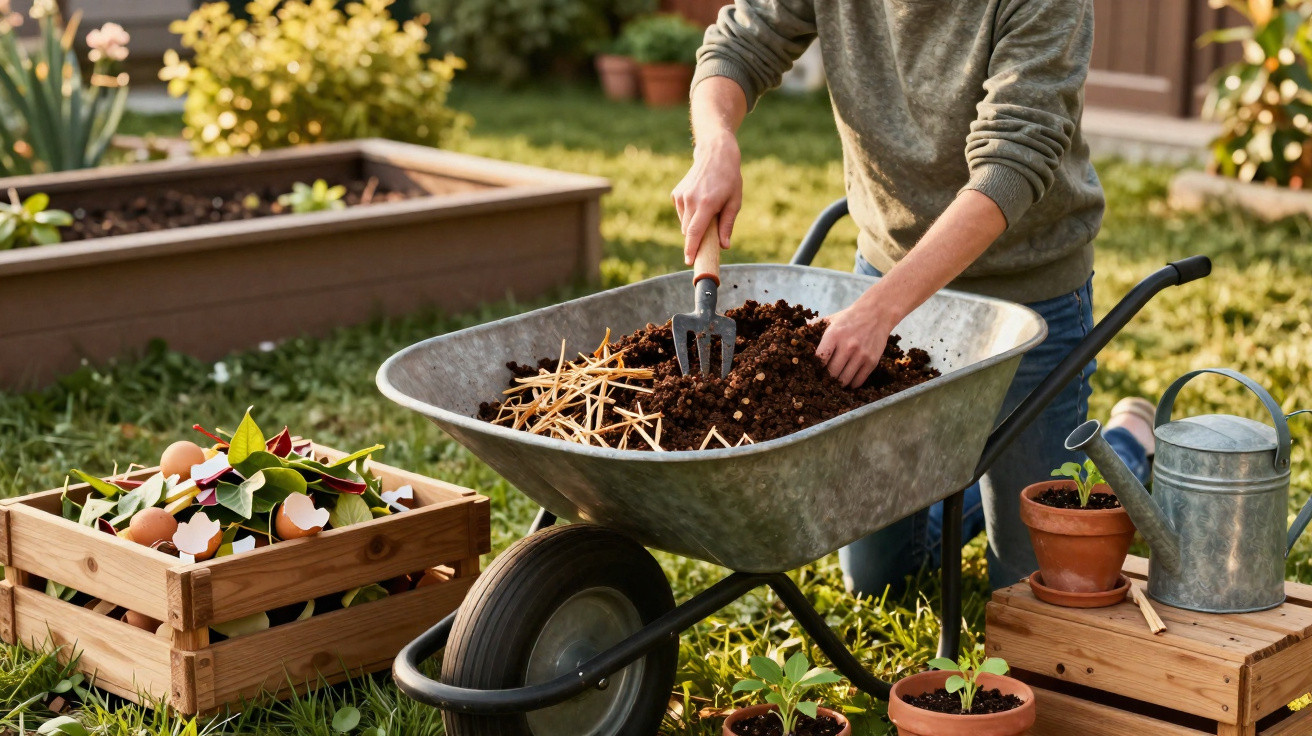
Mature compost is the most important ingredient in homemade growing medium. It is created from materials that arise anyway:
- Vegetable and fruit scraps from the kitchen
- Coffee grounds and tea leaves, without plastic tea bags
- Crushed eggshells
- Wilted flowers and plant debris
- Leaves and fine garden cuttings
Anyone who deliberately collects these materials and keeps them in a compost heap or compost bin will have a crumbly, dark-brown material after a few months. It smells like woodland soil and is full of life – ideal nourishment for vegetables, perennials and container plants.
Create balance: do not forget dry material
Nutrient-rich kitchen waste alone does not make good planting compost. It would become too wet and dense, and would soon start to smell. Compost therefore always needs a share of ‘brown’ ingredients: dry materials rich in carbon.
- Leaves, ideally from a mixture of trees rather than one species alone
- Finely chopped twigs and prunings
- Unprinted brown cardboard or egg boxes, torn into pieces
- Small amounts of straw or hay
The key is the balance. A useful rough guide is to use approximately equal amounts of ‘green’ material, such as kitchen scraps and fresh grass clippings, and ‘brown’ material, such as leaves and cardboard. With the right mix, the heap decomposes quickly and with very little odour.
Turning compost into a growing medium in which plants thrive
Finished compost is an effective fertiliser, but it is still too rich for delicate roots or fine seed sowings. Add a few extra ingredients and it becomes a versatile growing medium.
Step-by-step mix for all-purpose compost
For most window boxes, raised beds and containers, a simple base blend is enough. One possible mix is:
| Ingredient | Purpose | Suggested proportion |
|---|---|---|
| Screened, mature compost | Provides nutrients and soil life | 40–50% |
| Garden soil, free from contamination | Gives the mix structure and retains water | 30–40% |
| Sand, ideally river sand | Keeps the mix open and free-draining | 10–20% |
Mix all the ingredients thoroughly and remove coarse pieces and root remnants. The result is a growing medium suitable for many uses. Where soil is especially heavy and clay-rich, increase the proportion of sand. If the soil is very sandy and poor, use a little more compost.
“The major advantage is that homemade compost can be tailored precisely – from a tomato container to a seed tray.”
A fine mix for seeds and young plants
Young plants are more sensitive, so a lighter blend is worthwhile:
- Screened, very fine compost, making up no more than one third
- Fine-grained sand
- Some loose garden soil or ready-made peat-free compost as a base
The nutrient level should be lower so that roots do not ‘burn’ and can develop undisturbed. Later, when plants are moved into a bed or larger container, they can be transferred into a richer mixture.
Compost needs air and water to work properly
To turn kitchen scraps into genuinely valuable compost, the microorganisms in the heap need suitable conditions. Two factors matter most: air and moisture.
Loosen it regularly rather than leaving it untouched
Billions of tiny helpers work inside a compost heap. They break down organic waste and gradually convert it into humus. To do this, they need oxygen. If the heap becomes too compacted, the system goes wrong, leading to a rotting smell and slimy patches.
Loosening compost every two to three weeks with a garden fork or compost aerator mixes in fresh material and introduces oxygen to the centre. This noticeably speeds up decomposition and prevents unpleasant odours.
Water correctly: damp, not soaking wet
Moisture levels also determine the final quality. There is a simple test: if a handful of material can be squeezed together without water running out, the condition is ideal. If it immediately crumbles apart, the heap is too dry.
During extended dry spells, water it carefully with a watering can. In persistent rain, a simple cover made from a tarpaulin or wooden lid will prevent it from becoming completely waterlogged.
Why avoiding bags pays off in several ways
Those who start making their own compost soon find that it is not only an environmental contribution but also a way to save money. Several bags of potting compost per season can quickly become a significant expense, especially in larger gardens.
With a working compost system, this cost falls to almost nothing. Kitchen scraps no longer go into the food-waste bin but become raw material directly in the garden. The composting area itself can also be adapted to local conditions, from a simple wire enclosure in a garden corner to a closed thermal compost bin at a terraced house.
“Seeing plants grow in compost you have mixed yourself brings an entirely different sense of pride to beds and window boxes.”
Many gardeners report that their plants appear more vigorous in this compost, establish themselves better and become ill less often. This is because mature compost contains an exceptionally diverse soil ecosystem. Bacteria, fungi and microscopic organisms form a stable system that can suppress diseases and make nutrients available over the long term.
Practical examples: adapting the compost mix
The growing medium needs a slightly different composition depending on where it will be used. Here are three typical situations:
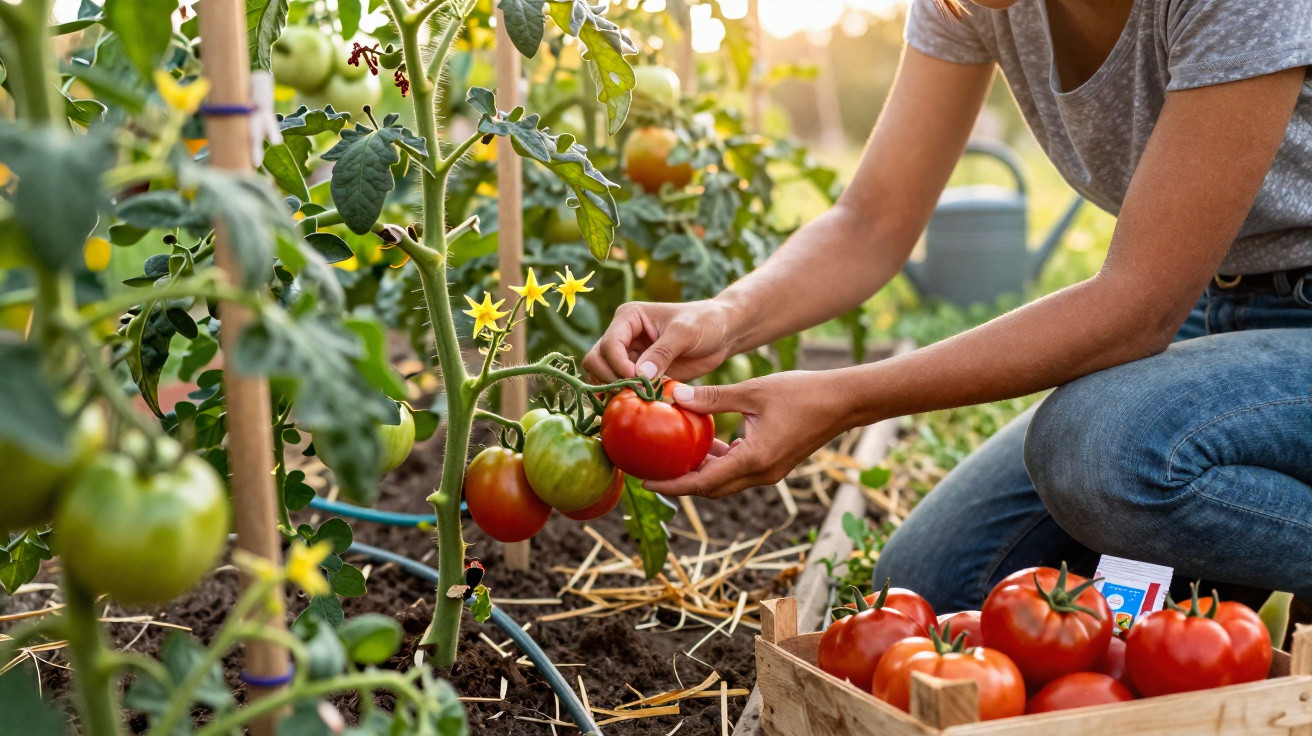
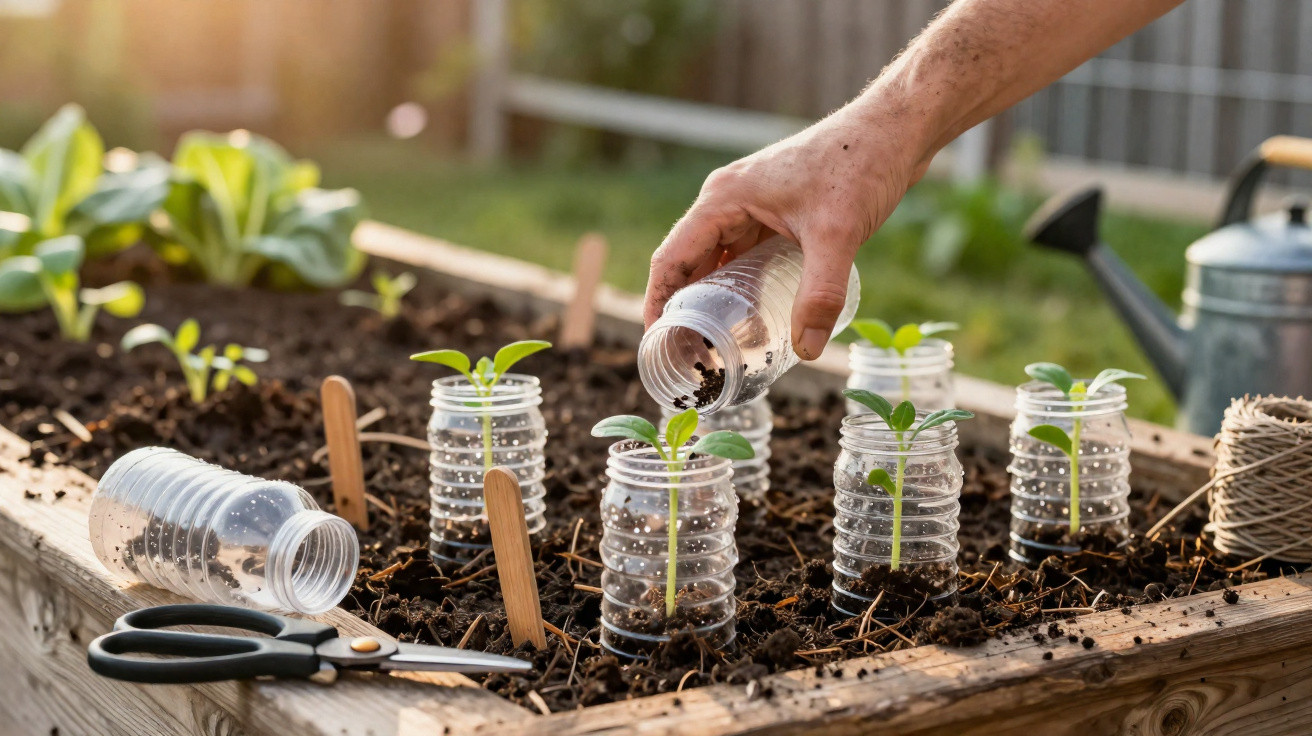
- Vegetables in a raised bed: Use a high proportion of compost with some garden soil, adding sand only where the soil is very heavy. Finish with a 20–30 centimetre layer of the finer mix.
- Window boxes with geraniums and similar plants: Use a moderate amount of compost, alongside peat-free planting compost or good garden soil, plus sand for drainage. Feed heavy-feeding plants later with liquid fertiliser.
- Herb bed: Use less compost and more sand for a leaner mix. Many Mediterranean herbs grow soft and vulnerable when the growing medium is too nutrient-rich.
Over time, this creates a personal ‘compost recipe book’ tailored precisely to the site, climate and plants in each individual garden.
What beginners should know: risks and minor pitfalls
Naturally, homemade compost can occasionally go wrong. Anyone mixing it for the first time should keep a few points in mind:
- Avoid putting heavily weed-infested material, such as perennial root weeds, on the compost heap; otherwise, they will later spread into every bed.
- Only use diseased plant material if the compost gets hot enough; if in doubt, dispose of it separately.
- Always screen compost well before using it in seed containers or small pots.
- Do not use printed or coated card, or coloured glossy packaging.
Those taking a cautious approach can initially replace only some of their bought bags and gain experience. With every season, confidence in the system grows – as does, often, the enjoyment of experimenting with different blends.
Over the long term, this approach to soil and plants strengthens understanding of ecological cycles. Through making their own compost, many hobby gardeners start separating waste more carefully, using less plastic and relying more on natural methods. A simple heap of kitchen scraps can therefore become a central building block of a resilient, living garden that does without plastic bags.

Comments
No comments yet. Be the first to comment!
Leave a Comment