
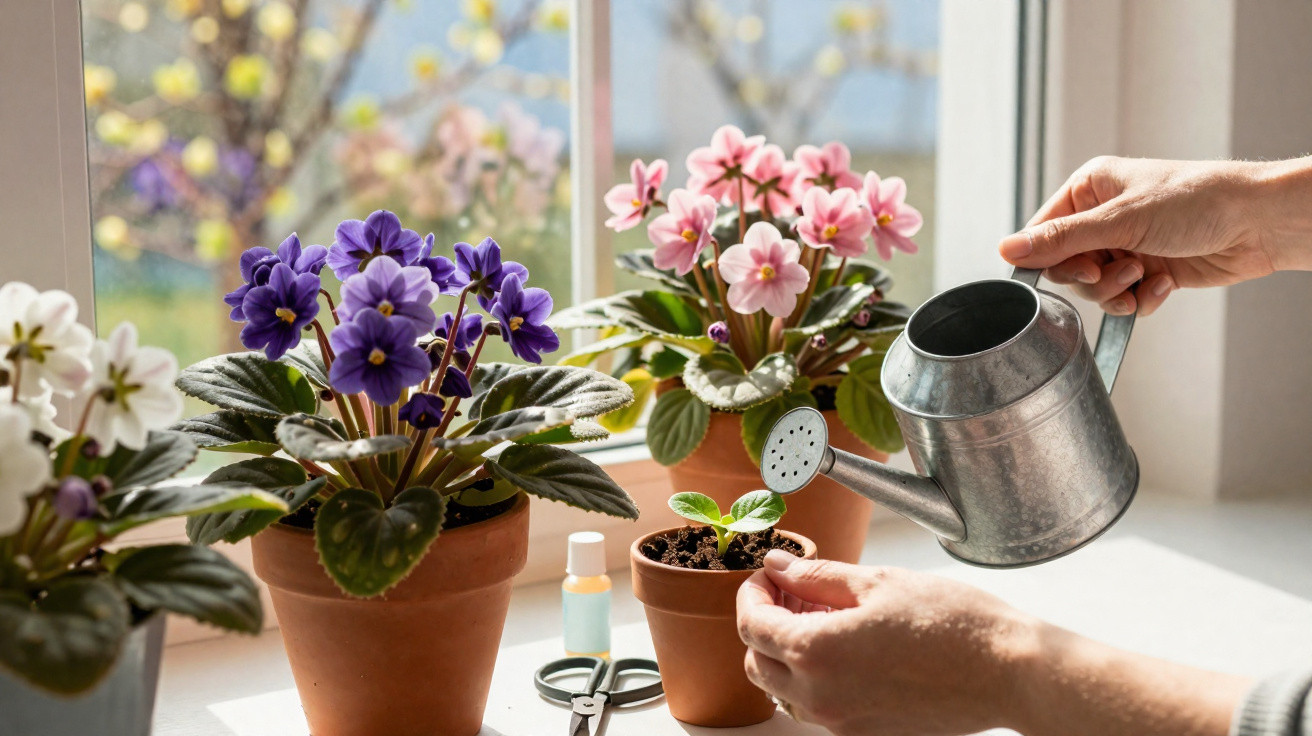
African violets can look rather unremarkable during winter, yet from spring onwards they can become true flowering machines. A few carefully chosen tasks in March make all the difference. Treat them properly now and they can reward you with fresh blooms almost continuously well into summer.
Why African violets reach their peak in March
African violets are houseplants that can, in theory, flower for almost the entire year. During winter, however, they often appear tired, with dull foliage, few flowers and barely any growth. As daylight increases in March, they begin to grow vigorously again.
This is the period that determines whether they will flower abundantly through spring and summer or continue to struggle. More light, adjusted watering, fresh fertiliser and a little “spring clean” are the key combination.
“Anyone who optimises conditions in March sets African violets up for months of continuous flowering.”
Light and temperature: the ideal windowsill position
African violets enjoy bright conditions but cope poorly with direct sunshine. Their velvety leaves can scorch quickly when exposed to unfiltered midday sun.
Choosing the right position in March
- Bright but indirect light
- East- or north-facing windows are ideal
- West- or south-east-facing windows are suitable only with a curtain or some distance from the glass
- Turn the pot slightly on a regular basis so the rosette grows evenly
If the plant is kept in conditions that are too dark, its leaves noticeably stretch towards the window, while flowers fail to appear or become very sparse. Too much sun, on the other hand, produces yellowish, pale or scorched foliage.
Warmth – but not tropical heat
A daytime temperature of 18 to 24°C is ideal. At night, temperatures can be four to five degrees lower. This slight variation encourages strong growth and the formation of new buds.
Placing the plant directly beside a radiator can be problematic. The air becomes too dry, the foliage suffers and buds may dry out. Following repotting, a slightly cooler setting at just below 16°C can even support renewed root growth.
Watering African violets in March: more water, with care
Many African violets receive water only occasionally in winter. Their requirements increase in March, although they remain extremely sensitive to waterlogging.
“The root ball should always be slightly moist – but it must never stand in water.”
How to recognise the right time to water
- The surface of the compost is dry
- The first one to two centimetres of substrate no longer feel damp
- The pot feels noticeably lighter
When these signs appear, water with lukewarm water. Cold water can easily cause marks and limp leaves. The soak or bottom-watering method is ideal: stand the pot in a bowl of water for 15 to 20 minutes, allow it to absorb what it needs, then let it drain thoroughly.
Most importantly, keep the leaves and the plant crown dry. Water droplets in the centre can trigger rot, particularly in cooler conditions.
Fertiliser from March: little, but regularly
As the growing season begins, African violets need nutrients again. They are often fertilised very little, if at all, in autumn and winter, so begin cautiously in spring.
Liquid flowering-plant fertilisers with a balanced nutrient ratio, or specialist African violet products, are suitable. Always add them to the watering water; never apply them undiluted.
Typical fertilising schedules include:
- once a month during spring and summer
- or every two to four weeks at a low dose
- or every four to six weeks when using particularly concentrated specialist fertilisers
Overdoing it can scorch the roots, produce excessive leaf growth and significantly reduce flowering. A weak but consistent supply of nutrients is the better approach.
March is the ideal time for repotting and a “spring clean”
African violets thrive in relatively small, shallow pots. However, the compost becomes depleted over time, so repotting every one to three years is worthwhile.
How to repot successfully
- Choose a slightly larger pot with good drainage
- Drainage holes are essential
- Add a drainage layer of gravel or clay pebbles
- Use loose, free-draining compost, ideally mixed with perlite
When placing the plant in its new pot, do not pull the roots apart roughly. Gentle loosening is enough. Water it well afterwards, but do not drown it.
Removing old leaves
March gives the plant a visible fresh start. Remove yellow, soft or damaged leaves. They may come away with a gentle pull, or you can cut them off at the base with clean scissors.
Do not remove more than around one third of the foliage at once, otherwise the plant may become stressed. This is also a good time to inspect underneath the leaves closely, as spider mites, mealybugs and other pests often hide there.
Dust on the leaves interferes with photosynthesis. Clean the foliage gently using a soft brush or a very lightly dampened cloth.
Propagating African violets in March: leaf cuttings
March is an excellent time to propagate African violets, usually with leaf cuttings. The method is straightforward and suitable for beginners.
- Select a healthy, strong leaf
- Cut off the leaf with a stem measuring 3 to 5 centimetres
- Disinfect the tool beforehand
- Place the stem in loose substrate, such as a peat-perlite mix, or in a glass of water
- Put it in a bright position away from direct sun
After six to eight weeks, small young plants develop at the base of the leaf. With a little patience, this can create a whole collection of African violets that can be maintained for many years.
Common mistakes and how to avoid them in March
Anyone who watches carefully in March can correct issues early. Common signs and their causes include:
| Symptom | Likely cause |
|---|---|
| Leaves are very pale or scorched | Too much direct sunlight |
| Long, soft leaf stalks and hardly any flowers | Position is too dark |
| Limp foliage and a wet pot | Waterlogging; root rot may be developing |
| Strong leaf growth but hardly any buds | Too much fertiliser or excessive nitrogen |
By reacting in time, it is usually possible to stabilise the plant: adjust its position slightly, alter the watering routine, reduce fertiliser or repot if necessary.
What makes African violets so long-lived
With the right care, many African violets can live for ten years or more. They repay attention with reliable flowering cycles, often in several waves each year.
The key is not dramatic action but small, consistent routines: stable conditions, gentle fertilising, careful watering and a clear care check in March. This modest March ritual helps ensure the plant directs its energy towards new buds rather than unnecessary leaves.
Once you have established this rhythm, you can experiment step by step with different flower colours, miniature forms and double-flowered varieties. The basic rules remain the same. An unassuming pot on the windowsill can then become a small, enduring island of flowers from spring into summer.




Comments
No comments yet. Be the first to comment!
Leave a Comment