
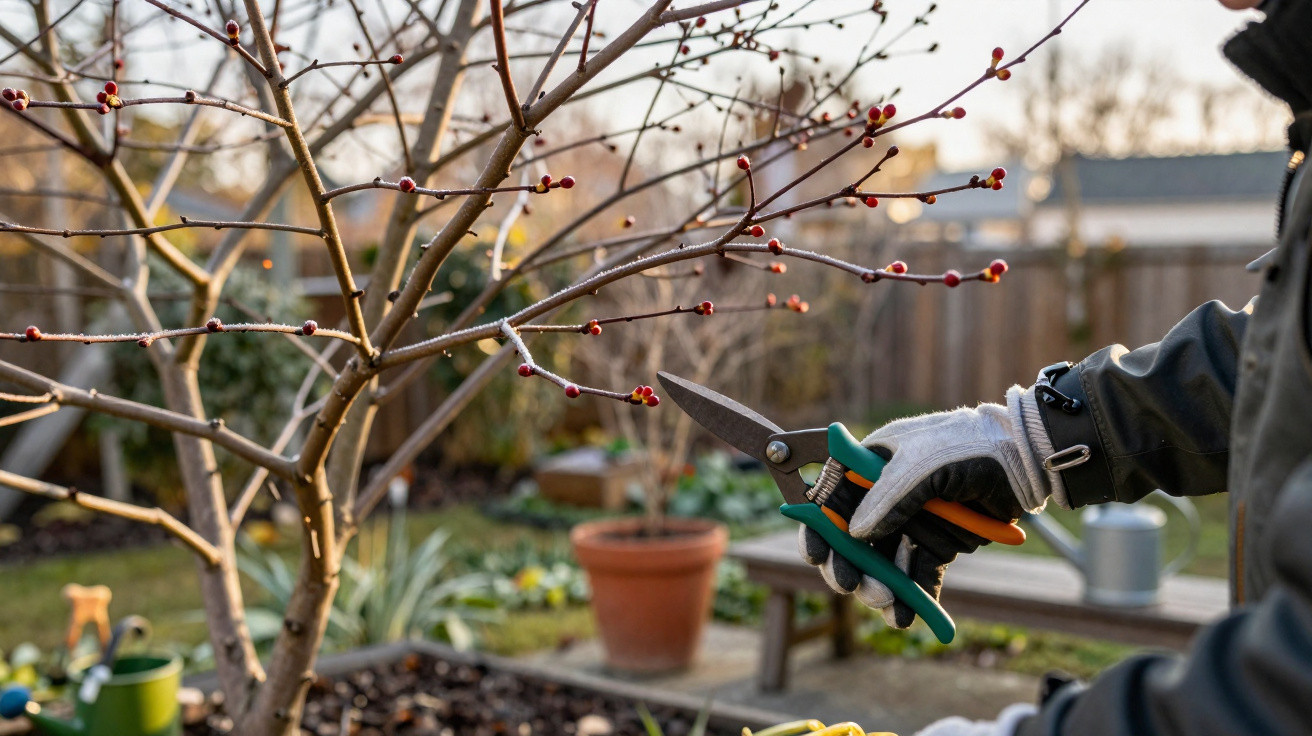
Japanese maples are prized garden specimens: expensive to buy, elegant in shape and spectacular in autumn colour. That is precisely why it is so upsetting when a tree suddenly becomes unhealthy, bleeds or even dies, simply because one cut was made too early or too late. Anyone growing an Acer palmatum in the garden should therefore keep a close eye on the calendar as well as a few key rules.
Why Japanese maples react so sensitively to pruning
Japanese maples are slow-growing, have thin bark and are reluctant to seal larger wounds. These traits make them considerably more sensitive than many other woody plants. An apple tree may cope well with a bold cutback, but the same treatment can be disastrous for an ornamental maple.
The first problem is known as sap flow. As temperatures rise in late winter, the tree begins mobilising its reserves. Its roots move water and nutrients upwards into the canopy and buds. If a thick branch is cut off at this point, conspicuous “bleeding” can occur: clear fluid may drip or run from the cut for hours.
“These saps are then lost to the tree, delaying wound healing and creating an entry point for fungi and bacteria.”
Experts therefore advise pruning Japanese maples only during deep dormancy, when the tree is genuinely dormant and sap movement is minimal. At this stage, it can cope far better with slightly more substantial pruning work.
Winter as the resting period – when the right moment has passed
The best period for maintenance runs from late autumn to midwinter. During this time, the tree is completely bare, sap pressure is low and dead sections are easy to identify. Carefully thinning out and removing dead branches now supports the tree without placing it under stress.
As spring approaches, however, this window becomes increasingly narrow. February in particular is a tricky transitional month. In mild areas, buds may already be swelling and sap movement starts to gather pace. By then, every larger cut becomes a risk.
“Many specialists regard February as the last reasonably safe opportunity – and only for restrained corrections.”
Once this point has passed and the buds are close to breaking, the tree responds with extremely heavy sap flow. Every fresh wound bleeds for a long time, dries out and becomes more vulnerable to frost damage. Months later, this may show up as dead shoot tips and an overall weakened canopy appearance.
What you may still prune on a Japanese maple in February
Anyone intending to work on their maple in February needs a delicate touch. The principle is: as little as possible, as much as necessary. Professional tree carers recommend light interventions only at this time.
- Remove only clearly dead, grey twigs.
- Do not cut back thick branches in living wood.
- Never remove more than around a quarter of the living canopy in one season.
- Do not use powered hedge trimmers on a Japanese maple.
Using hedge trimmers creates numerous small, badly positioned wounds. The shoot tips are effectively “torn off”, weakening the tree and ruining its characteristic delicate outline. Clean cuts made with hand secateurs are preferable; cut directly at the branch collar without damaging the trunk.
How to prune a Japanese maple gently in winter, step by step
For the safest possible care of a Japanese maple, plan major work for deep winter, before the main sap-flow period begins. This allows structural pruning without exposing the tree to dangerous bleeding.
1. Assess the tree while it is dormant
Before reaching for any tools, view the tree from a few metres away. What is its overall shape? Which branches cross or rub against one another? Which sections are visibly dead? This assessment prevents indiscriminate cutting later on.
2. Select the right tools
Pruning tools should be sharp, clean and suitable for cutting wood. Blunt secateurs crush tissue rather than cutting through it. This extends the healing period and increases the risk of infection.
| Tool | Suitable use |
|---|---|
| Hand secateurs | Thin shoots and small dead twigs |
| Loppers | Medium-sized branches up to around 3–4 cm in diameter |
| Pruning saw | Larger branches, only in deep winter |
3. Prune with a clear purpose
Always begin with wood that is obviously dead or damaged. These sections can be recognised by their lack of buds, dull grey colour or brittle texture. Cut directly at the point of attachment, without leaving a long stub. The trunk or a thick main branch must remain undamaged.
Only then should you deal with crossing or rubbing branches. In most cases, removing one of the two competing shoots is enough to restore air and light within the canopy.
Why frost and pruning are a poor combination for Japanese maples
One issue is often underestimated: temperatures below freezing are harmful to fresh cuts. Already weakened tissues expand in frost, contract again during a thaw and can split open completely. On an already sensitive maple, this can quickly lead to larger cracks in the bark.
“Rule: Prune only when the forecast promises several consecutive frost-free days.”
Those living in an area prone to late frosts should schedule larger jobs for a period of reliably cold but non-freezing weather. This is often more likely in December or January than in unpredictable February.
What if you have missed the ideal pruning time?
Many garden owners realise only in March or April that their maple “really ought to be pruned again”. Even then, the secateurs should be deliberately left alone. Major work would make the tree unnecessarily vulnerable at this stage.
Only safety-related measures are sensible: branches at risk of breaking and falling onto paths or buildings must, of course, be removed. Otherwise, care for the tree properly, keep the ground around its trunk free from weeds and protect it with a layer of mulch. The actual corrective pruning can then be planned for the following winter.
How to give your Japanese maple extra support
A healthy, vigorous tree is more likely to withstand minor pruning mistakes. It is therefore worth looking beyond pruning technique alone. Position, watering and soil care all have a major influence on resilience.
- A partially shaded, sheltered position prevents sun scorch and drought stress.
- Consistent watering without waterlogging encourages strong fine roots.
- Loose, humus-rich soil supports fine root growth and nutrient uptake.
- A mulch layer of leaves or bark material retains moisture and protects against temperature fluctuations.
If the tree is grown in a pot, ensure the container is sufficiently large and has good drainage. Waterlogging weakens the roots and leaves the maple more susceptible to disease, especially when wounds are also present on branches and shoots.
Common mistakes when caring for Japanese maples
Alongside pruning at the wrong time, several familiar mistakes repeatedly cause problems. Most are easy to avoid once you know about them.
- Cutting the tree back radically to a stump to reduce its size.
- Regularly shaping it with hedge trimmers as though it were a box hedge.
- Applying fertiliser in late summer, which encourages late new growth.
- Pruning on sunny, very warm days in spring.
Late growth in particular can become problematic when combined with pruning wounds. Young, soft shoots are extremely sensitive to frost and drought. Altering the tree’s structure at the same time places a double burden on it.
Instead, taking time once or twice a year to make a calm assessment helps keep the maple in shape over the long term without putting its health at risk. Anyone uncertain can seek advice from a tree surgeon or nursery before undertaking the first larger job – a brief introduction is usually enough to make sound decisions independently in future.

Comments
No comments yet. Be the first to comment!
Leave a Comment