
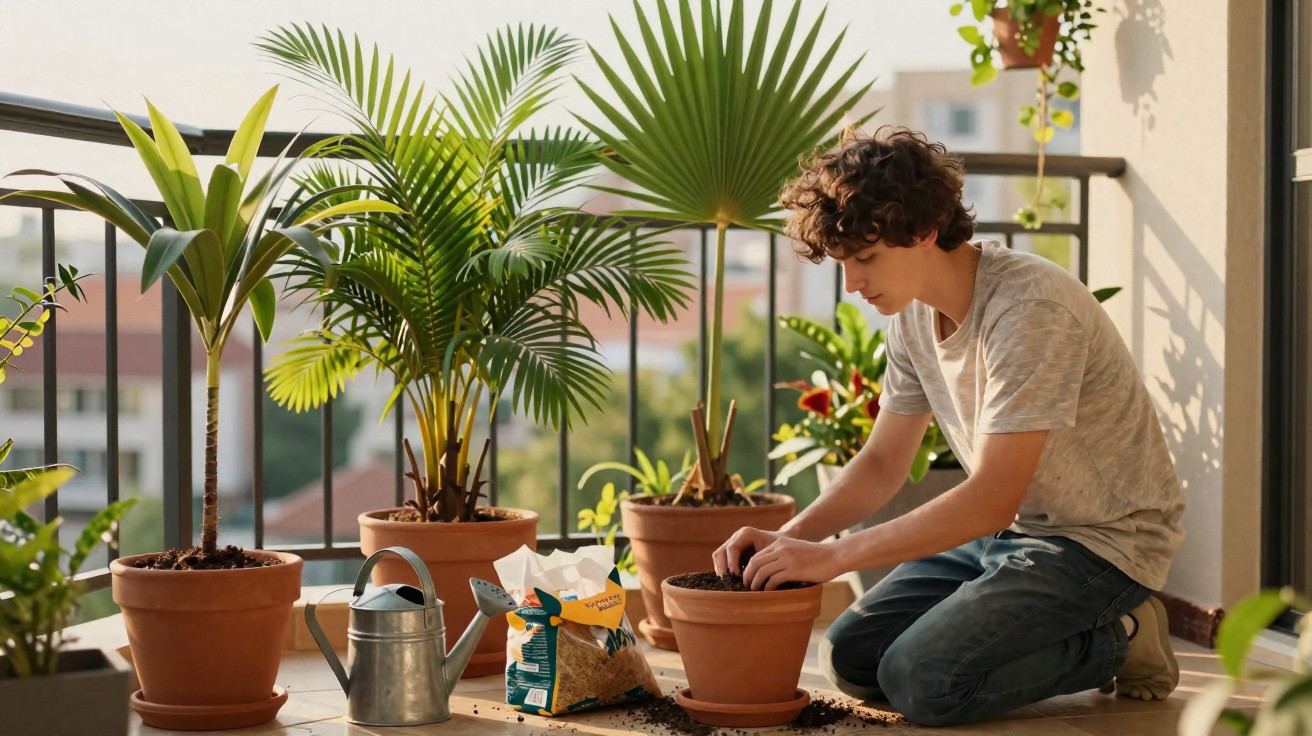
For small balconies, selecting the right plant affects both the overall look and everyday upkeep. Among the species best suited to limited spaces, potted palms stand out for their elegant shape and less invasive roots. They grow comfortably in pots and planters, creating a welcoming setting without damaging the floor or structure.
Which palms are best suited to pots on small balconies?
For flat-dwellers or anyone with a restricted outdoor area, knowing which palms perform best in containers helps prevent future issues. Some become too large or develop very powerful roots, whereas others remain a manageable size, need little room and thrive in pots.
Three palms commonly used on balconies bring together adaptable roots, restrained growth and a good response to container cultivation: the lady palm, the areca palm (or bamboo palm), and the compact fan palm. Each can be grown in deep pots, provided it receives suitable drainage, fertiliser and light.
What are the characteristics of lady, areca and fan palms in pots?
The lady palm has slender, bamboo-like stems and delicate fan-shaped foliage, making it well suited to bright indoor spaces and shaded balconies. By contrast, the areca palm develops dense clumps with arching leaves, producing a green-screen effect that can also provide greater privacy.
In compact varieties, the fan palm has broad, fan-shaped leaves that make a striking visual impression even when planted alone in a pot. All have less aggressive roots than large palm species, but they still need repotting over time to prevent compaction and nutrient shortages.
How should you manage light, watering and compost for potted palms?
Each palm type responds differently to light, so monitoring the balcony throughout the day is very helpful when choosing its position. The lady palm favours partial shade, the areca palm copes better with strong light and filtered sun, while the fan palm generally performs best in abundant light with some protection during the hottest hours.
When watering and preparing the growing medium, minor changes can help leaves remain green for longer and prevent pests caused by excess moisture. A straightforward routine and a balanced compost mix are usually enough to keep these species healthy on balconies.
- Water when the top layer of compost feels dry, without soaking it;
- Do not allow water to collect in the saucer, reducing the risk of fungi and mosquitoes;
- Use a light, free-draining mix: topsoil, organic matter and coarse sand or perlite;
- Feed every two or three months with a fertiliser for ornamental plants;
- Remove dry or damaged leaves to keep the plant looking tidy and encourage new growth.
How do you choose the ideal pot and position palms on the balcony?
For palms with less invasive roots, choose a deep, sturdy pot with effective drainage to avoid waterlogging and prevent it toppling over on windy days. Fibreglass, durable plastic and lightweight concrete are long-lasting materials that work well on balconies, as long as they have drainage holes underneath and a drainage layer.
Positioning should take account of incoming light, foot traffic and the intended visual effect. On small balconies, corners and areas beside the balustrade are often used to create a “green backdrop”, with pots arranged at varying heights and palms placed near armchairs or benches. This turns the area into a pleasant, easy-care urban retreat.
Comments
No comments yet. Be the first to comment!
Leave a Comment