
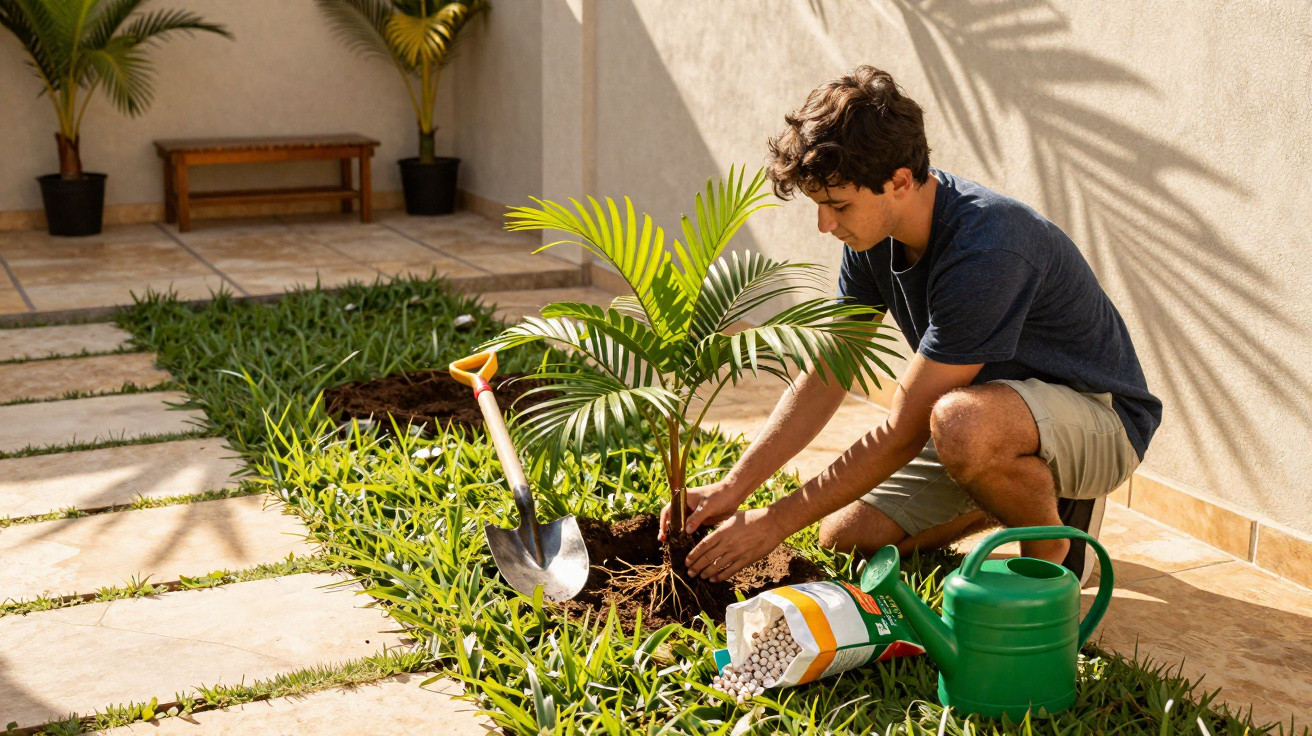
Choosing a palm for a residential garden often raises questions, especially about its roots and the available space. Many householders want a species that provides pleasant shade without damaging paving, paths or nearby structures, favouring more contained roots, straightforward maintenance and good suitability for the local climate.
How do you choose a palm with non-aggressive roots for a garden?
When selecting a palm for garden shade, consider its root system, ultimate height, canopy spread and maintenance requirements. Species with deep, less surface-level roots are generally safer where there is paved ground, paths or pipework nearby.
Among the options most commonly used in residential settings are species that suit gardens of different sizes and provide welcome shade without affecting structures. It is also worth checking their tolerance of full sun, wind and occasional tidy-up pruning.
- Royal palm (Roystonea regia) – a tall palm with a straight trunk and less invasive roots than large native species.
- Lady palm (Rhapis excelsa) – shorter in stature, suitable for areas close to walls and boundary fences, as well as large containers.
- Pygmy date palm (Phoenix roebelenii) – compact in size and well suited to garden corners, deck edges and seating areas.
- Areca palm (Dypsis lutescens) – widely used to create green screens, with unobtrusive roots in well-drained soil.
How can palms be planted and fertilised efficiently in the garden?
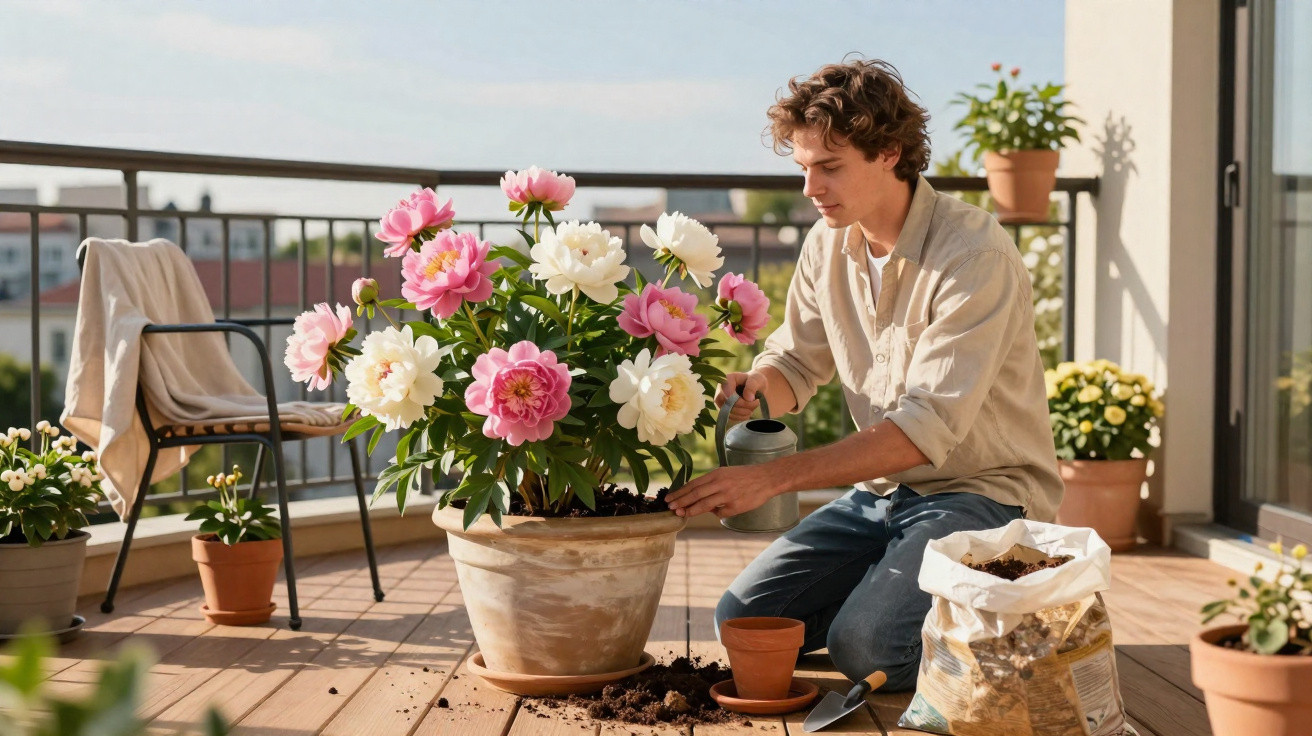
Correct planting has a direct effect on root and canopy development, helping to prevent excessive spreading at the surface. Ideally, prepare a planting hole proportionate to the root ball, with effective drainage and a blend of soil, organic matter and slow-release fertiliser.
The hole should be at least twice the width of the root ball and around 40 to 60 cm deep, allowing the plant to sit with its crown level with the soil surface. Maintenance feeding can be carried out every three months around the trunk, while mulch helps retain moisture and protect shallower roots.
How should you water and manage palms to protect roots and paving?
Watering should be adapted to the climate, soil type and the plant's stage of growth. Newly planted specimens need closer attention, whereas established palms can cope with longer intervals, provided the soil does not remain waterlogged for extended periods.
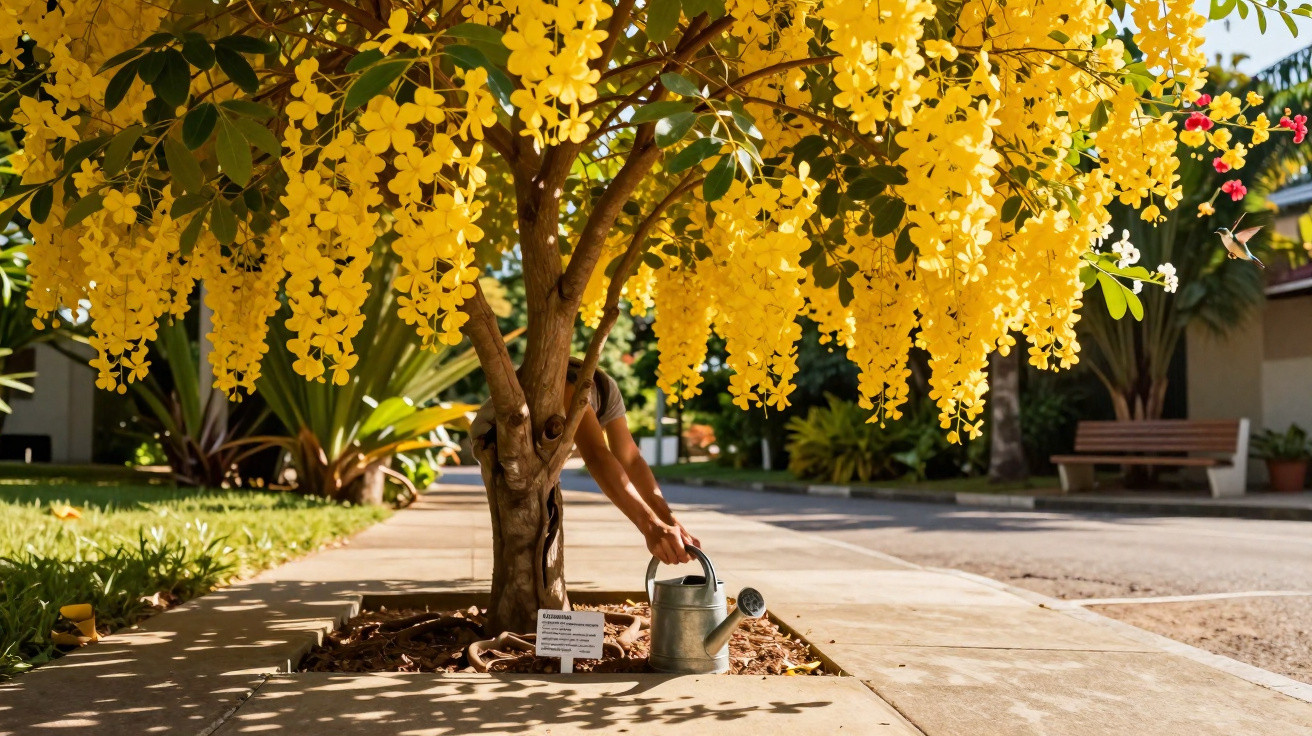
Overwatering may encourage root rot and raise the risk of cracks in poorly drained paving. Monitoring water infiltration and applying organic mulch around the trunk, without allowing it to touch the trunk, helps preserve moisture and encourages deeper roots that are less likely to lift paths.
How can palms create pleasant, safe shade in the garden?
Palms for shade in residential areas can create comfortable places for resting, reading and family gatherings. Positioning them in relation to the afternoon sun and retaining a minimum distance of 1.5 to 2 metres from walls, sensitive paving and plumbing will reduce future risks.
A palm with a taller canopy can be paired with shrubs and partial-shade plants to create a cooler, more pleasant microclimate. With careful planning, the palm becomes a central landscaping feature, supplying practical shade, helping to reduce the feeling of heat and protecting the garden's foundations and surface finishes.
Comments
No comments yet. Be the first to comment!
Leave a Comment