
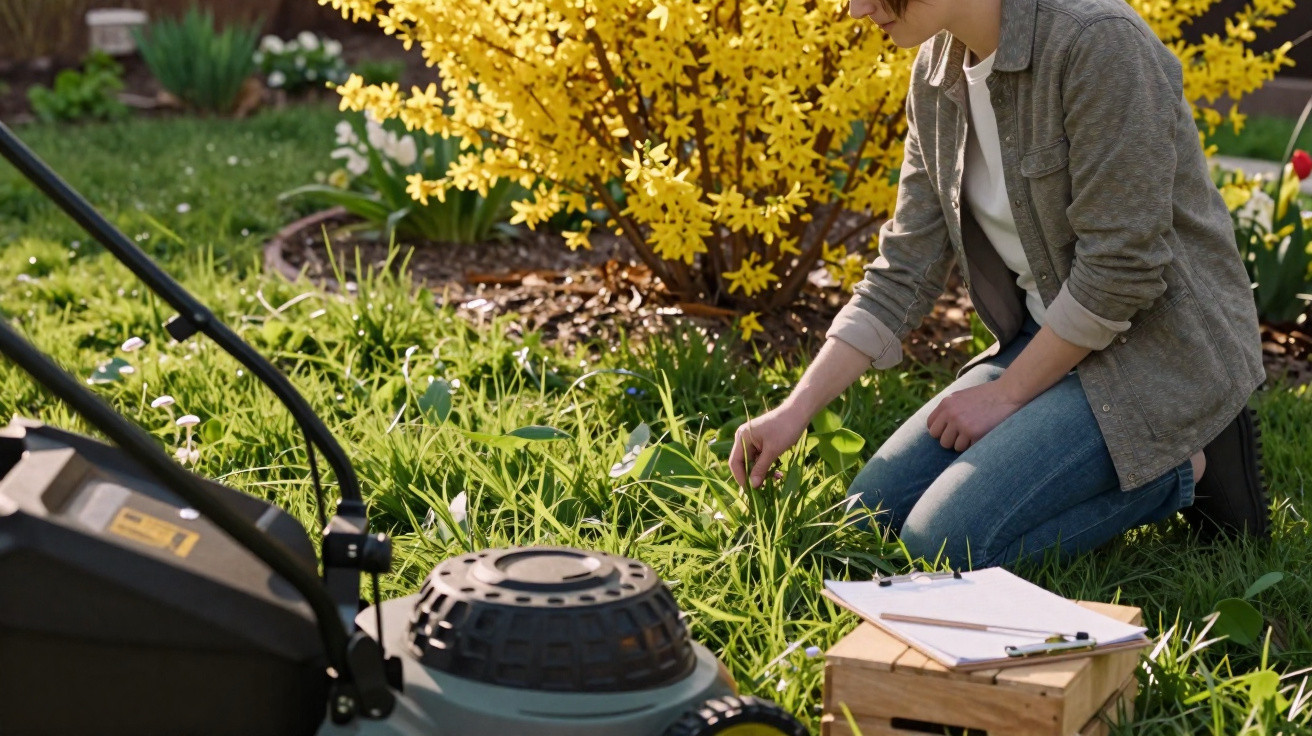
In early spring, the urge to ‘tidy up’ the garden can be particularly strong. However, cutting the lawn too soon can weaken it for the entire season. One unobtrusive yellow garden flower provides a remarkably reliable indication of when the first cut is due – and when it is better to leave the mower in the shed.
Why the timing of the first lawn cut affects the whole year
After winter, very little seems to happen visibly in the lawn at first. The real activity is taking place beneath the surface. Roots are building up reserves, branching out further and preparing for the coming growth period.
Mowing too early forces the grass to direct its energy into producing new blades rather than establishing strong roots. The consequences tend to become apparent later in the year:
- the lawn dries out more quickly;
- bare patches form more easily;
- diseases and fungi have an easier time;
- moss and weeds are more likely to take hold.
The first spring cut determines whether a lawn looks dense, rich green and resilient in summer – or thin, patchy and prone to stress.
Rather than following the calendar, experts pay closer attention to temperatures: overnight temperatures should remain above roughly 4 degrees for several nights in a row, while the soil should be noticeably warming up. Grass generally begins active growth only once the soil temperature reaches around 6 degrees.
Mowing before then achieves very little. The blades barely regrow, the effort offers no benefit to the lawn, and the plants are simply put under unnecessary strain. Waiting a few extra days, on the other hand, pays off for months.
This yellow garden flower is your natural signal to start
Many experienced gardeners use a shrub that almost everyone has seen before as their guide: the yellow-flowering forsythia. Its vivid blooms often emerge on bare branches long before the first leaves appear.
When this shrub is in full flower in your own garden or nearby, it is a strong sign that vegetation has emerged from its winter dormancy, temperatures are suitable and the lawn is preparing to grow. The right time for the first mow is now drawing closer.
When the forsythia is covered in yellow flowers, the first lawn cut can be planned – provided the weather cooperates.
Before making the first cut, it is worth carrying out a quick lawn check:
- the ground should no longer be muddy or waterlogged;
- the turf must not be standing in water;
- grass blades should be dry and flexible;
- the area as a whole should be evenly, lightly green and visibly growing.
If the ground is still slick, the mower is more likely to pull grass out than cut it cleanly. This damages the roots and leaves unattractive holes behind.
How to set the lawn mower correctly for the first cut
For the year's first mow, the rule is simple: it is better to cut too high than too low. Use a high cutting setting for this initial pass, even if the lawn looks a little overgrown.
The most important settings at a glance
- Cutting height: leave at least 4 to 5 centimetres of grass, preferably more.
- Never remove more than one third of the blade length: if the grass is 9 centimetres tall, cut it back to no shorter than 6 centimetres.
- Sharp blade: blunt blades tear the grass, causing the tips to turn yellow and look scorched.
- Mow only in dry conditions: wet grass clumps together, and the mower pulls rather than cuts.
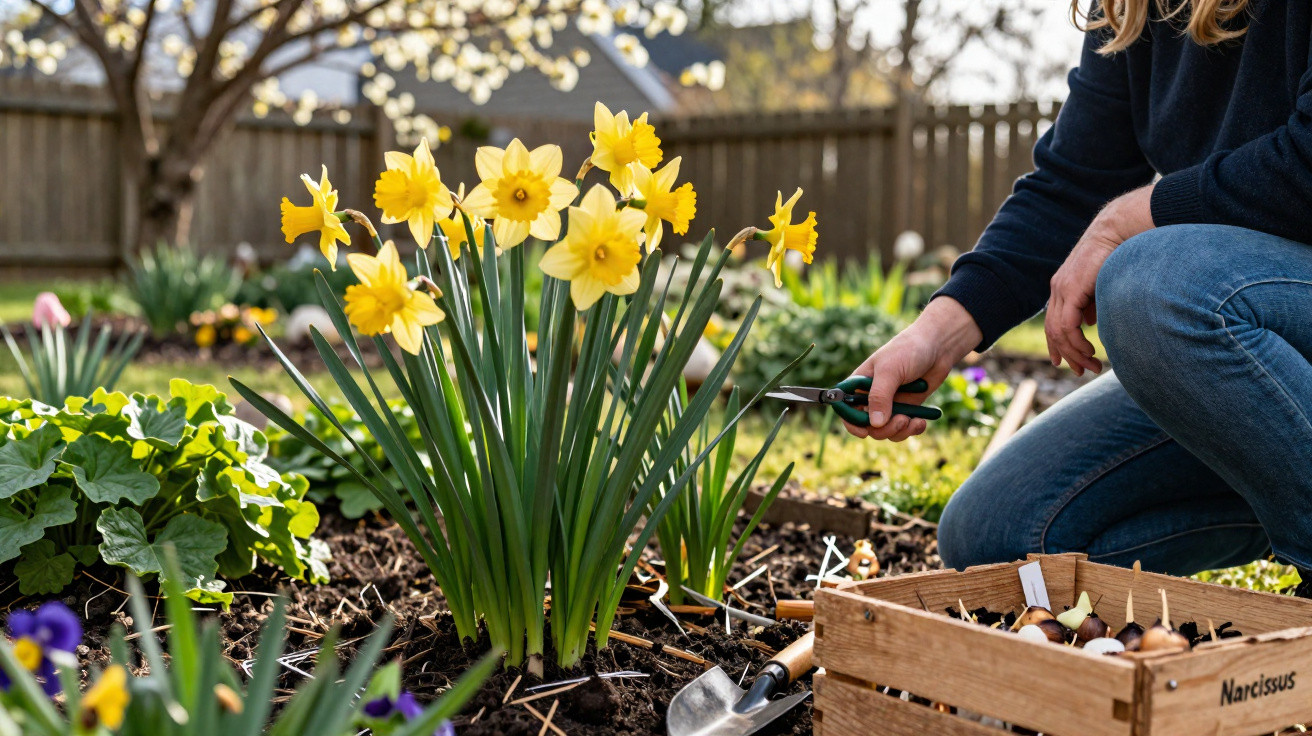
Very importantly, avoid mowing over flower bulbs that still have foliage. Common examples include:
- yellow and white daffodils;
- crocuses;
- early tulips.
Their leaves supply the bulbs with energy for the following spring. If they are cut off too soon, the clumps will be weaker the next year.
Do not cut everything short: why slightly longer grass helps nature
Alongside this seasonal approach, a movement is growing across Europe that is rethinking lawn care. Instead of keeping every part of the garden closely clipped, many householders deliberately allow some areas to grow longer and mow only paths or seating areas regularly.
This idea became widely known through campaigns such as “No Mow May”: mow as little as possible during May to give wild plants an opportunity to grow. Where mowing is reduced, dandelions, daisies and other self-seeded flowering plants can bloom. They provide valuable nectar and pollen early in the year.
A lawn kept strictly short may look neat, but it offers insects almost no food – a flowering strip alongside it makes the garden appealing to them again.
Studies and conservation organisations point out that many insect species are under considerable pressure. Changes in farming and garden maintenance mean that flowering plants can be scarce in spring. This is precisely where private gardens are becoming increasingly important.
What happens when you let parts of the lawn grow?
Gardeners who mow only paths and a seating area while allowing the rest to grow often notice clear changes within just a few weeks:
- more butterflies and wild bees in the garden;
- a wider range of flowers, including species never deliberately sown;
- less mowing because large areas no longer need cutting;
- a more varied garden, with taller and shorter sections.
Dandelions in particular, once often regarded as ‘weeds’, are gaining importance in this context. Their yellow flowers are among the first plentiful food sources for many pollinators. Leaving a few clumps untouched already makes a small contribution to species conservation.
Practical tips for a healthy, lively lawn
A few straightforward measures can significantly improve the start of the season, without requiring major expense.
Checklist before the first spring lawn cut
| Criterion | What to check |
|---|---|
| Temperatures | Several consecutive frost-free nights, with noticeably mild daytime conditions |
| Soil | No longer muddy, shoes do not sink in and there are no puddles |
| Plant signs | Forsythia is flowering strongly and the lawn shows clear, fresh green growth |
| Grass height | Obvious growth is visible and blades can be bent sideways |
| Equipment | Blade sharpened, mower cleaned and cutting height set high |
Before mowing, it is worth making a quick pass with a rake: loose leaves, dead plant material and light patches of moss can be removed without damaging the soil. This gives the grass more light and air.
If you regularly notice heavily compacted areas, for example beside paths or beneath play equipment, you can aerate them locally or overseed in spring. It is best to repair small bare areas immediately after the first mow, while the soil is still moist and primed for growth.
What many people confuse: formal lawn, hard-wearing grass and a natural garden
People often have only one image of the ‘perfect lawn’: uniformly short, dense and without a single flower. In practice, though, there are several lawn types, each requiring different maintenance.
- Formal lawn: very short, dense and visually immaculate – high maintenance, with frequent mowing, feeding and watering.
- Family and play lawn: kept slightly longer, robust and hard-wearing – moderate maintenance, and works well with a cutting height of 4–5 centimetres.
- Natural garden lawn: allowed to grow taller in parts, with islands of flowers – fewer mowing sessions, but more insect life.
Being clear about which type you actually want saves a great deal of work and lets you adapt your mowing plan accordingly. For many households, a hard-wearing, slightly longer play lawn is entirely sufficient, complemented by deliberately retained flowering strips.
Spring is an especially good time to plan this afresh: where should children play? Where would slightly longer grass not be a problem? Where could broad flower islands work well? Anyone who answers these questions can use the yellow flowers not only as a cue for the first cut, but also as the basis for a well-considered gardening year.



Comments
No comments yet. Be the first to comment!
Leave a Comment