
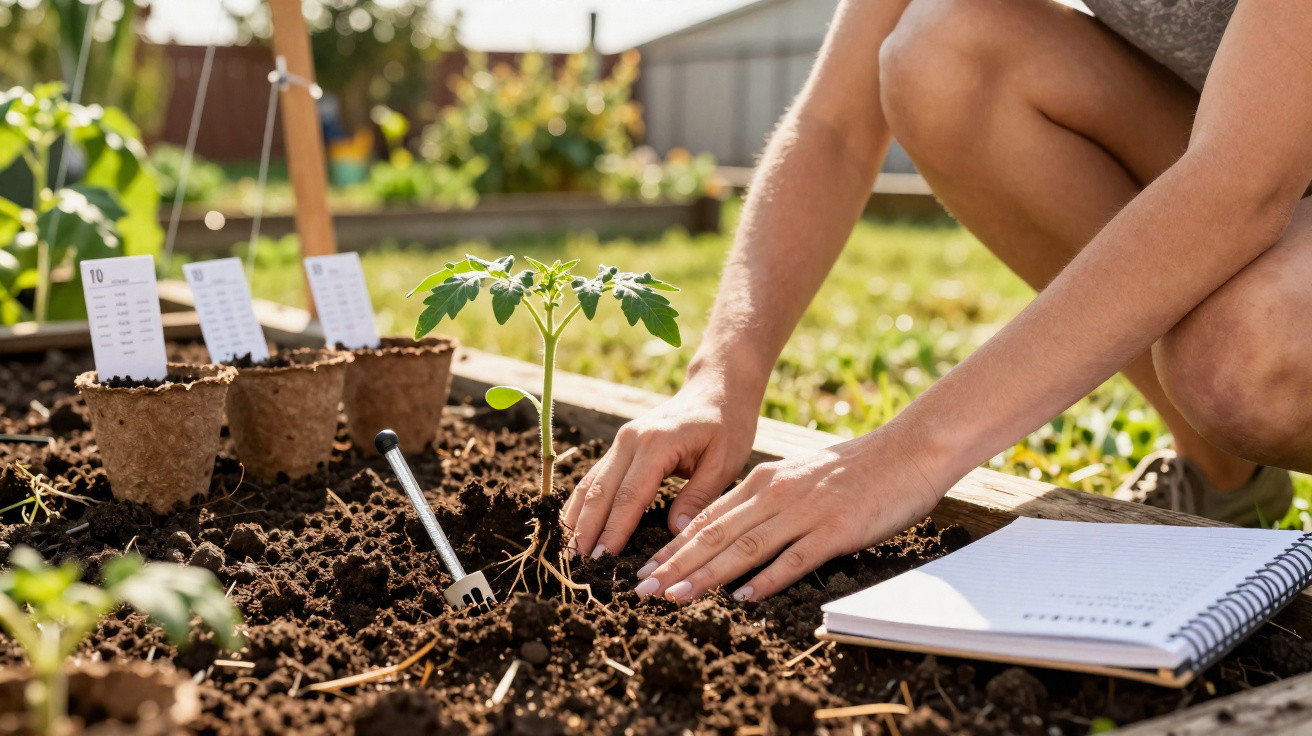
The right timing determines whether you enjoy full bowls or empty beds.
Every year, many home gardeners face the same question: when is the best time to plant tomatoes outdoors? The first warm days in April make us look forward to sunshine, barbecues and fresh vegetables from the garden. Yet chilly nights may still be on the way, slowing down or even destroying young plants. Between impatience and excessive caution lies a narrow but vital planting window that shapes both the yield and quality of the tomato season.
Why the right time to plant tomatoes matters so much
Tomatoes originate in warmer climates and are highly sensitive to cold. Even temperatures only just above freezing can severely damage young plants. If the soil remains cold, the plants effectively pause their growth. They may look reasonably healthy above ground, but very little is happening beneath the surface.
“Those who plant tomatoes too early often lose weeks of growth – and with it part of the harvest.”
Tomatoes need:
- warmer nights with no risk of frost
- soil that has warmed up properly
- strong, well-developed young plants
When all of these conditions are met, the roots quickly grow downwards, the plants establish vigorously, and flowers and fruit form sooner. Being only a few days too early can reverse those benefits: distorted leaves, halted growth and greater susceptibility to fungal diseases such as tomato blight.
The golden rule: three signs must be right
Rather than relying rigidly on a date, it is worth checking three practical garden indicators. Assessing these factors gives a far more accurate planting time than any calendar.
Monitor night-time temperatures carefully
Tomatoes do not tolerate nights below around 7 to 10°C. If the thermometer regularly drops beneath this range, the plants become stressed. A simple outdoor thermometer in the garden makes it easier to keep track. Ideally, wait for a settled spell when:
- no overnight frosts are forecast
- night-time lows remain above 7–8°C
- the forecast does not indicate a sudden cold spell
Soil temperature: the frequently overlooked factor
The soil matters even more than the air temperature. Tomatoes only begin growing properly once the soil is around 15°C. Without a soil thermometer, a rough hand test can help: if the earth still feels persistently cool and damp in the morning, it usually needs a little more warmth.
Heavier clay soils take longer to warm up, whereas sandier ground heats more quickly. A dark layer of mulch or plastic sheeting can speed up the process, but it should be used carefully to avoid heat building up excessively.
The ideal size of young tomato plants
Suitable young plants are 15 to 20 cm tall, compact rather than leggy, and already have several true leaves. Use the following as a general guide:
| Feature | Suitable young plant | Better to wait / avoid |
|---|---|---|
| Height | 15–20 cm | Very small, or over 30 cm, thin and unstable |
| Leaves | At least 4–6 true leaves | Only seed leaves, or yellowish, limp foliage |
| Growth habit | Compact, upright, deep green | Long, pale shoots that topple easily |
Region, climate and altitude: when tomatoes can go outdoors
There is no single planting date across German-speaking regions. The ideal window shifts considerably according to region, microclimate and altitude. Traditionally, many gardeners use the frost-prone period in mid-May as their guide. However, experience of your own garden is more valuable than any date in the calendar.
Warm locations and urban areas
In especially mild settings, such as wine-growing areas or sheltered town courtyards, tomatoes can often be planted one to two weeks earlier. Typical dates here range from late April to early May, provided the three key signals – night temperatures, soil and plant condition – are right.
Temperate lowland areas
Across much of Germany, Austria and Switzerland at lower altitudes, the reliable period generally begins around the middle of May. Planting from mid-May gives gardeners a good chance of plentiful bowls of tomatoes in high summer, without much risk that a late cold night will set the plants back.
Cool areas and higher ground
In upland areas and regions close to the Alps, the planting window can easily move back by two to three weeks. Local experience is particularly useful here: if late-May ground frosts occur regularly in your garden, it is better to wait until early June – or use protective measures such as plastic covers, horticultural fleece or a small greenhouse.
Tomatoes on a balcony, in a greenhouse or in a bed: plan your harvest
The right timing is influenced not only by the region but also by the growing position. A balcony behaves differently from an open bed, while a small greenhouse differs again from a raised bed against a house wall.
Greenhouse and polytunnel: start earlier, but keep control
Air temperatures warm up much earlier under glass or plastic. In many areas, gardeners growing tomatoes in a greenhouse can start two to three weeks before outdoor planting. However, it is still important to:
- check the soil temperature here too
- ventilate or provide protection at night to prevent extremes
- reduce heat build-up on sunny days by ventilating
One common mistake is placing plants in the greenhouse early, only for them to suffer from excessive daytime heat and high humidity. This encourages disease. A moderately early start combined with regular ventilation is the better approach.
Balcony and patio: warmer faster, but exposed to wind
Pots on a balcony warm up quickly in sunshine. This can create a small advantage of several days compared with garden soil. At the same time, plants are much more exposed to wind and dry out faster. Anyone starting early should:
- position pots against a sheltered house wall
- bring containers indoors temporarily during predicted cold snaps, or wrap them in horticultural fleece
- use sufficiently large containers so the roots do not overheat
Outdoor bed: for full baskets in high summer
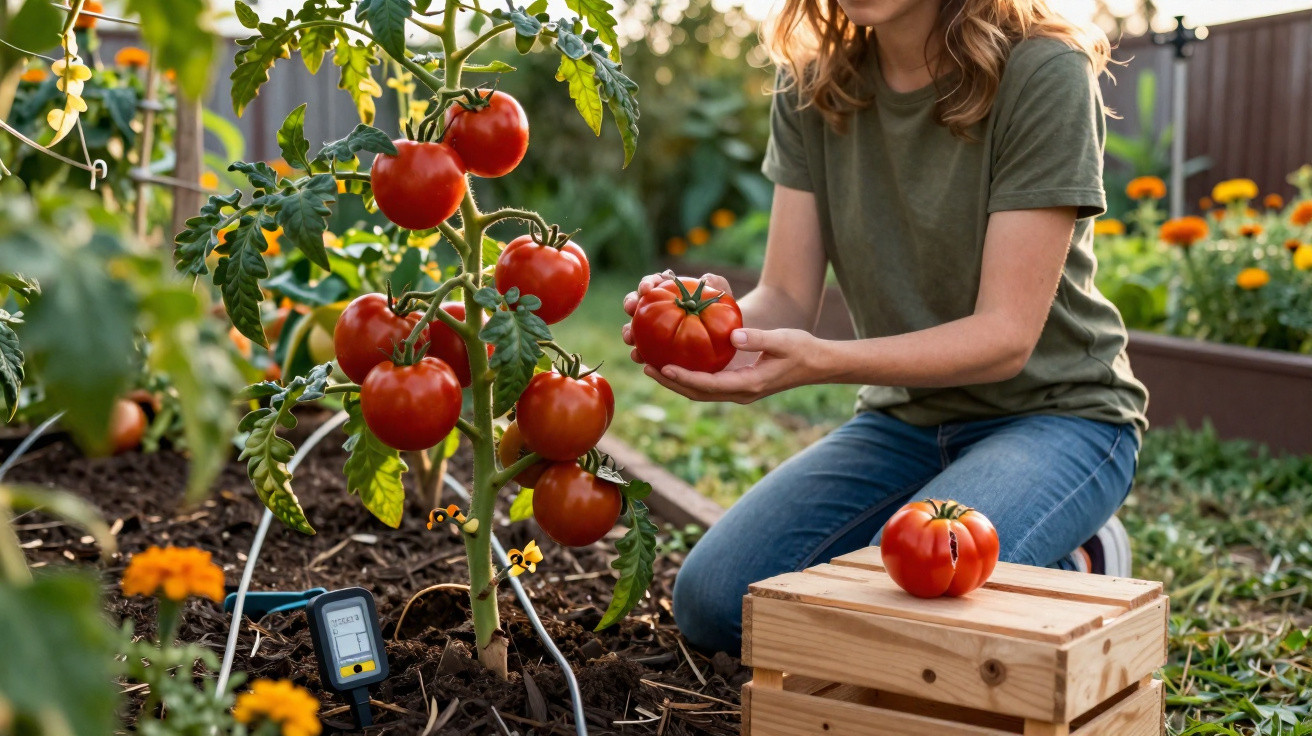
In a conventional garden bed, planting around mid-May produces a harvest from roughly July in many regions. Planting later shifts the main crop towards late summer. Those who take the chance of planting earlier should be ready with covers and frost protection.
“A useful guide: the first tomatoes ripen around three months after planting out young plants.”
Practical advice for strong plants and a long harvest
Planting at the right time is only one part of the formula for success. How the plants are treated during their first few days after planting is equally important.
- Harden off young plants for several days first by putting them outside during the day and protecting them again at night.
- Plant the stem slightly deeper so that additional roots can form.
- Water thoroughly immediately after planting, then allow the soil to dry slightly to prevent waterlogging.
- Put supports or spiral stakes in place straight away so the plants do not bend or snap.
If you grow several varieties – such as early cherry tomatoes and later beef tomatoes – you can extend the harvesting period. Early-ripening varieties provide the first fruit sooner, while robust later varieties continue cropping into late summer.
Risks, alternatives and useful additions to the tomato bed
Rushing into planting often results in smaller plants that lag behind throughout the summer. Even when they survive, they remain more vulnerable to fungal infection, sunscald on the fruit and tomatoes splitting after heavy rain. Patience therefore usually pays off directly in kilograms of tomatoes.
Those who still want to experiment can plant some tomatoes a little earlier and hold back the remainder until conditions are clearly better. This spreads the risk and provides valuable experience of your own garden climate.
A few additional measures make the planting window slightly more flexible: laying ground cover early, using wind-sheltered corners of the garden, installing sturdy supports, and creating a good mixed planting scheme with herbs such as basil or Tagetes among the tomatoes can improve the microclimate and strengthen the plants. This brings the prospect of full bowls of tomatoes in summer much closer – without sleepless nights over possible late frosts.
Comments
No comments yet. Be the first to comment!
Leave a Comment