

Yes, it can be done.
Many gardening beginners instinctively pick attractive flowers at the garden centre, only to find themselves disappointed a few weeks later by dried-out or stunted plants. The problem is rarely down to the gardener alone: fussy species, an unsuitable position and demanding care requirements are often to blame. By choosing a few tough, long-flowering plants instead, you can create a border on a very small budget that largely looks after itself.
Why these 6 plants make gardening beginners happy
Experienced amateur gardeners repeatedly recommend the same approach: plant a small number of resilient species generously rather than assembling a collection of delicate exotics. One particularly successful combination is a trio that carries the border through the seasons like a relay baton: Christmas rose, crocus and hardy geraniums.
“With a clever combination, the border will flower from December well into autumn – without replanting every year or complicated care.”
The principle is simple: each plant takes its turn on duty in the border at a different time of year. While the rest of the garden is still dormant, the first flowers are already opening. Other species then take over later, keeping the display of colour going.
- Christmas rose (Helleborus): usually flowers from December to March
- Crocus: spring-flowering plant, February to March
- Hardy geraniums (Geranium): flower from around May to October
This framework is completed by three more ground-cover plants, which protect the soil, slow weed growth and fill empty gaps: coral bells, bugle and common ivy. All six species cope with ordinary garden soil, forgive watering mistakes far more readily than many other plants and remain in the border for years.
The 6 affordable plants that practically look after themselves
1. Hardy geraniums: a carpet of flowers from spring to autumn
Hardy geraniums, not to be confused with the bedding geraniums used in window boxes, are regarded as a small wonder weapon in the garden. They form loose, rounded clumps or ground cover and, depending on the variety, produce countless pink, purple, blue or white flowers.
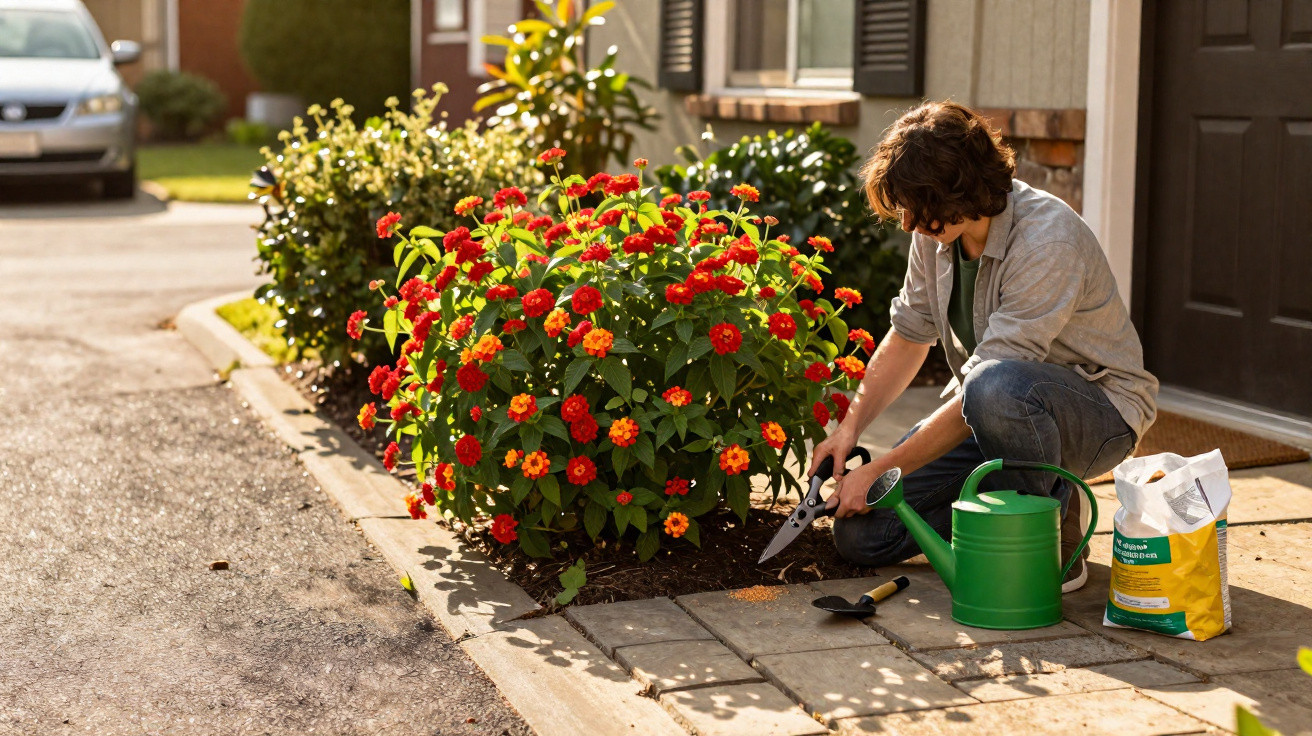
They suit sunny to partially shaded positions, grow in normal garden soil and are remarkably undemanding. Once they have rooted in well, they also tolerate short dry spells. After flowering, simply cut them back with shears; many varieties will produce fresh green growth again.
2. Crocuses: an explosion of colour in late winter
Crocuses are among the cheapest and most rewarding bulb plants available. Plant the bulbs in autumn, ideally in small groups, and they will reappear on their own from the following spring.
They prefer sunny locations, such as the front garden, lawn or beneath deciduous shrubs. Once established, they gradually spread and form larger drifts year after year. They generally do not need additional watering, as rainfall is entirely sufficient.
3. Christmas rose: a winter star for frosty days
The Christmas rose brings life to the border in the middle of winter. Depending on the variety, plants flower from December with white, pink or deep red cup-shaped blooms, often continuing through snow and frost.
They favour partially shaded spots, for example beneath open shrubs or at the edge of woody planting, and thrive in humus-rich soil that is not excessively wet. Christmas roses often become more attractive as the years pass, without requiring much attention.
4. Coral bells: colourful foliage rather than short-lived floral display
Coral bells (Heuchera) are valued less for large flowers than for their foliage. There are countless varieties, ranging from almost black and wine red to lime green, which give borders and containers structure throughout the year.
They enjoy partially shaded places but will also tolerate some sun provided the soil does not dry out completely. One major benefit is that the plants often remain reasonably attractive in winter, making bare areas in the border less common.
5. Bugle: a natural carpet to suppress weeds
Bugle may look inconspicuous, but it is a blessing for gardeners who prefer an easy life. It creates a dense carpet of low foliage, from which blue-purple flower spikes rise in spring.
Its creeping runners fill open spaces, prevent the soil from drying out and crowd out many unwanted weeds. It is ideal for slightly damp, partially shaded areas, such as beneath shrubs or along path edges.
6. Common ivy: evergreen and almost indestructible
Ivy grows on walls, fences and trees, and it can also be used as ground cover. Anyone wanting to green larger areas quickly will find it difficult to overlook. It is particularly suited to shady gardens, where other species struggle.
When kept under control, ivy is easy to maintain: cutting it back occasionally wherever it becomes intrusive is enough. It is less suitable for strictly manicured borders, but it is a very inexpensive solution for naturalistic corners and difficult positions.
How to buy and plant cleverly without stretching your budget
The six species are available from garden centres, supermarkets and sometimes even market stalls. To keep costs down, consider the following:
- Choose perennials in small pots rather than large, expensive specimens
- Buy bulbs in nets: crocuses are often sold in economical bulk packs
- Take advantage of offers in late autumn or spring
- Share plants and bulbs with friends or neighbours
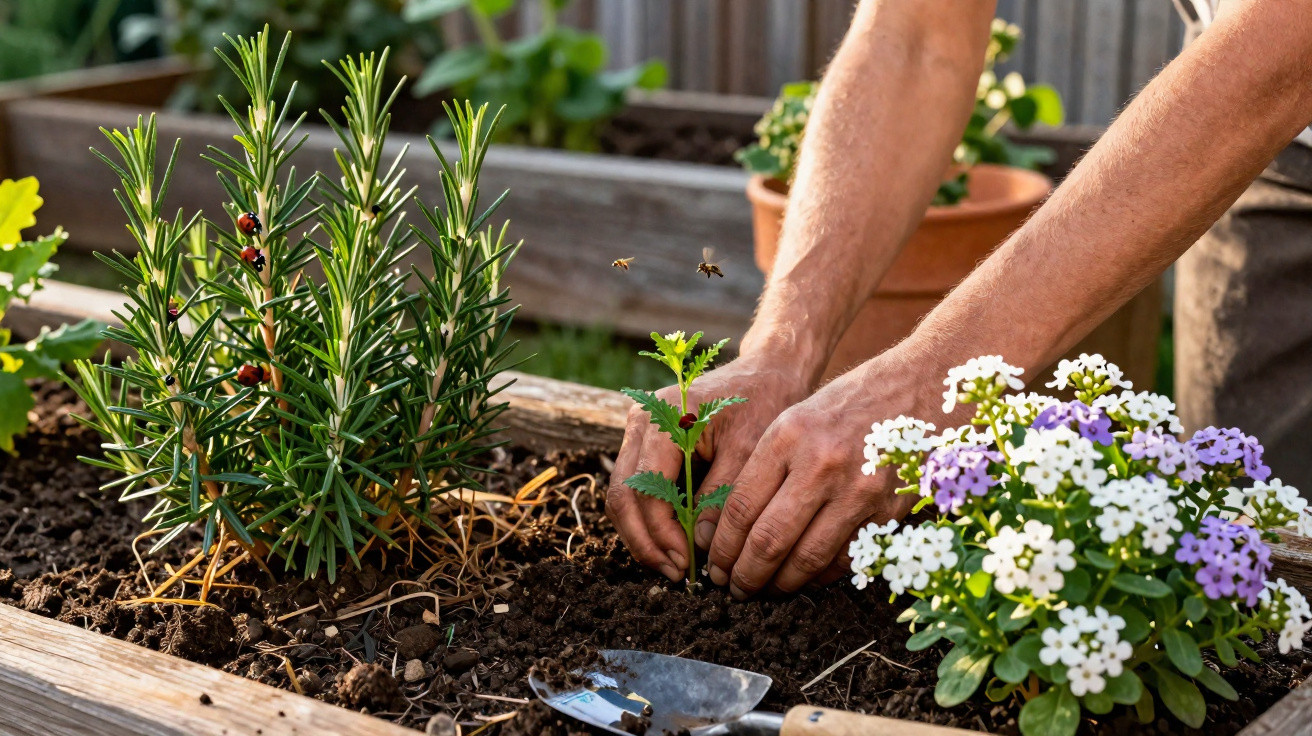
For planting, one straightforward rule is usually enough: loosen the soil, remove larger stones and leftover roots, and work in a little compost if the ground is very sandy. Perennials should be planted so that the root ball is only just covered, while bulbs should go in at roughly two to three times their own height.
Free extra plants: how to multiply your favourites
With a little patience over a few years, you can fill out your garden almost free of charge. Many robust perennials can easily be divided or propagated from offsets.
| Plant | Propagation method | Suitable time |
|---|---|---|
| Hardy geraniums | Divide the clump with a spade or knife | Spring or late summer |
| Coral bells | Divide older plants and replant | Spring |
| Bugle | Separate rooted creeping runners | Throughout the season, except in hot weather |
| Ivy | Plant sections of stem with nodes | Spring to autumn |
Many gardening guides praise these species because they are so easy to spread. A single purchased pot can green half a front garden after a few years, without any further spending.
Keeping animals away without using chemicals
A point many people underestimate is that young plants can be damaged not only by drought or frost, but also by cats and birds. Cats like scratching in freshly worked soil, while birds pull at young shoots or search for insects, sometimes uprooting seedlings in the process.
Gardening advice from the United Kingdom and other countries suggests simple, low-cost countermeasures. One frequently recommended trick is to scatter a little cayenne pepper around sensitive areas. Its pungent smell unsettles many cats and some small animals without harming the plants themselves. The application needs renewing after heavy rain, but it works surprisingly well in small areas.
“Natural deterrence on a small budget: hot spices bother many animals – the plants tolerate them without difficulty.”
If you would rather avoid spices altogether, use wooden sticks, twigs or old cutlery pushed closely into the soil. Birds and cats are then less inclined to land or dig in the border.
What a low-maintenance beginner’s border can look like
One possible small-scale layout for beginners with limited time and money could be arranged as follows:
- Two to three Christmas roses at the back for winter flowers
- Several groups of crocuses in front, planted in autumn
- Hardy geraniums in the middle as a colourful foundation from May to autumn
- Coral bells at shaded edges for foliage colour
- Bugle and ivy between them to close gaps
This combination creates a border that looks attractive in its first year and gradually becomes denser over time. In normal conditions, watering is needed only during high summer and in the first year after planting. Afterwards, much of the work takes care of itself.
What beginners should also know
Terms such as “hardy” and “perennial” confuse many newcomers. Hardy means a plant survives normal periods of frost outdoors. Perennial means it lives for more than two years, although it may die back in winter and return with new growth in spring.
If your soil is very dry and sandy, improve the area with plenty of compost before planting and water a little more frequently during the first two summers. In heavy, waterlogged clay soils, it is worth incorporating sand and compost so that roots are not left sitting in water.
It becomes particularly interesting when you combine the six basic species with a few carefully selected additions. Bulb plants such as daffodils or alliums fit in well between them without creating extra work. Tough herbs including thyme or sage can also fill spare spaces while providing ingredients for the kitchen.
With this approach, there is no need to keep buying new plants or spend every weekend weeding and watering. A garden created step by step from a few well-chosen species can look impressive even with a small budget and little experience, while becoming more beautiful year after year.
Comments
No comments yet. Be the first to comment!
Leave a Comment