
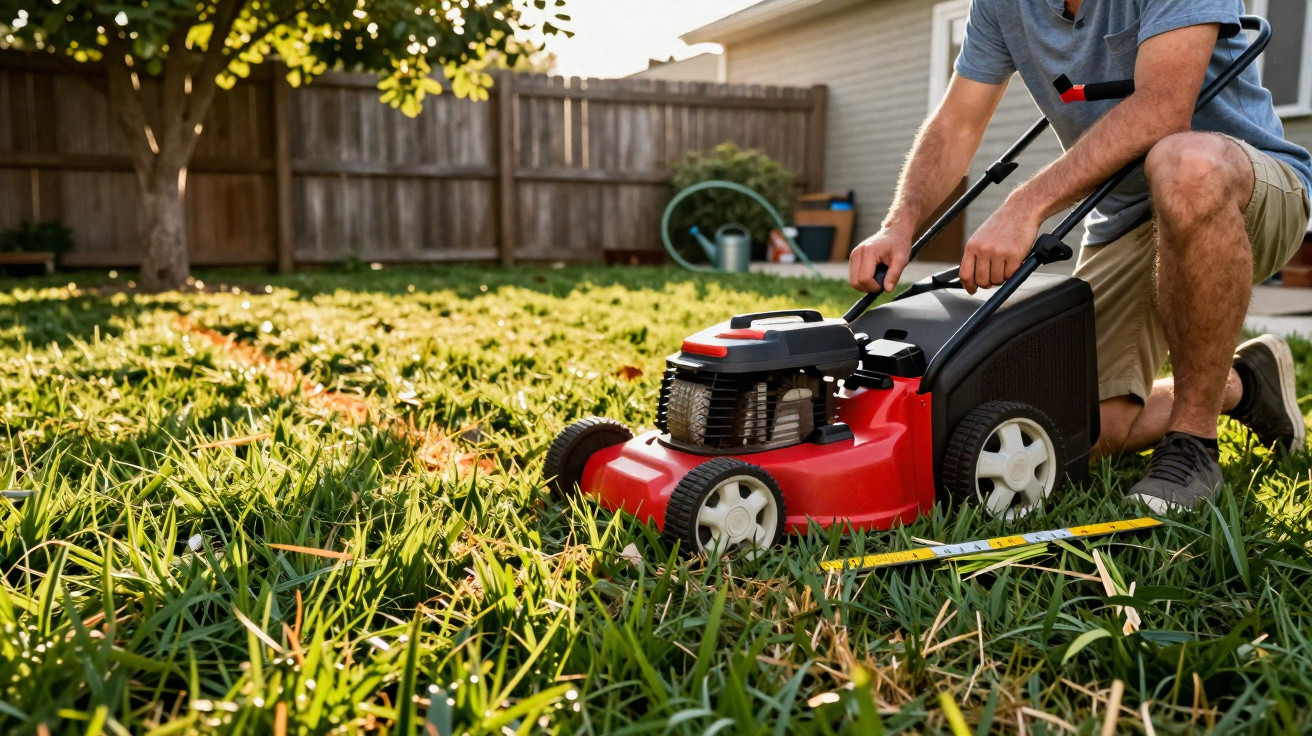
Many gardens look briefly perfect after mowing – then turn yellow, mossy and bare in places.
The cause is often the mower’s cutting-height control being set incorrectly.
When a lawn begins to struggle, most amateur gardeners blame fertiliser, watering or hot weather. Yet one of the key controls is right on the handle of the mower: the height at which its blades cut. Being one or two settings out can place the grass under lasting stress – and later lead to scorched patches, cushions of moss and islands of weeds.
Why the correct lawn cutting height is vital for survival
Every blade of grass needs sufficient leaf area to produce energy through photosynthesis and feed its roots. Cutting too low removes this “solar collector” from the plant. As a result, the roots recede, the ground heats up, the soil dries out more quickly and shallow roots leave the lawn highly vulnerable during dry spells.
The lawn mower’s height adjustment determines whether the turf becomes compacted or scorched.
Garden specialists repeatedly point to a simple rule of thumb that works remarkably reliably: the one-third rule. No more than one third of the grass’s current height should be removed in a single cut. Going substantially lower effectively “scalps” the lawn. It can look as though the soil has been shaved bare in several places – known in the trade as “scalping”.
Temperature is another important factor. Longer grass creates natural shade for the soil. The upper centimetres of growth keep moisture around the roots for longer and slow evaporation. A lawn cut too short, by contrast, resembles a hot, dried-out mat.
How often to mow – and why mowing wet grass is almost always a bad idea
Mowing frequency is directly linked to cutting height. When the lawn is growing strongly, such as in spring, intervals of four to seven days may no longer be enough. During growth periods of more than 2.5 centimetres per week, two cuts may be needed.
Many people try to compensate with a “radical cut” – mowing very short once, then leaving it for a long time. That is exactly what severely weakens the grass. It is better to set the mower slightly higher and trim regularly.
Mowing in wet conditions is another source of stress for the turf. Damp blades clump together, flatten over and are torn rather than cleanly cut. If it really cannot be avoided, these emergency rules can help:
- Raise the cutting height by one or two settings.
- Use the grass collector rather than mulching.
- Avoid walking on the grass before mowing wherever possible.
- Work only with sharp blades.
Blunt blades tear open the grass, leaving ragged cut surfaces. Pathogens can enter more easily through these edges, while the tips develop an unattractive brown colour.
The ideal height for each lawn type and level of use
A family lawn used for play needs different care from an ornamental lawn or a rarely walked-on edge of the garden. The key areas at a glance:
| Lawn use | Recommended cutting height |
|---|---|
| Family and play lawn | 3–5 cm |
| Ornamental lawn (lightly used) | 2–3 cm, or 4–5 cm in hot weather |
| Lawn in shade | 5–6 cm throughout the year |
| Large areas with minimal maintenance | 5–8 cm |
In shaded areas, extra leaf surface is worthwhile. The longer the blades, the more light they can capture. This often keeps the lawn considerably denser and greener despite receiving less sunlight.
Differences between grass species: why lawns do not all respond alike
Many ready-made seed mixtures contain several grass types. However, anyone who knows which species dominate can adjust the cutting height even more precisely.
- Cool-climate grasses, including various meadow grasses, usually thrive at between 6 and 9 cm.
- Festuca varieties, or fescues, generally prefer 7.5 to 10 cm.
- Ryegrass lawns, often found in play lawns, tolerate 5 to 7.5 cm.
- Warm-season lawn types such as Bermuda grass or Zoysia grass can be maintained much shorter, sometimes between 1.5 and 4 cm – mainly in southern regions or on specialist sports surfaces.
If you do not know the exact mixture in your garden, a range of 3 to 5 centimetres is a surprisingly safe choice for a typical domestic lawn in central Europe.
Adjusting cutting height through the year keeps the lawn stable
The best setting is not a fixed number; it changes over the course of the year.
Spring: a dense carpet rather than long straggly growth
Growth accelerates in spring. At this point, a lower setting within the recommended range is worthwhile, provided the one-third rule is not broken. Shorter grass encourages side shoots, making the lawn appear fuller and more even – individual clumps become a carpet.
Summer: raise the mower to limit drought stress
As soon as heatwaves are likely, the setting can be raised noticeably. Heights of at least 5 to 6 centimetres shade the soil, protect roots and visibly reduce evaporation. Mowing intervals should also be extended slightly. Let the grass grow somewhat before the next cut, as long as no more than one third is removed.
Autumn and winter: ease gently out of the season
In autumn, the cutting height can be lowered slightly again to send the lawn into the cold period looking neat. During winter, a few relatively high cuts are enough when the ground is frost-free and dry. Never mow frozen or waterlogged grass, as this causes foot damage and deep tracks in the turf.
Young or neglected lawn: take special care with the first cut
A newly sown area is extremely sensitive to mistakes.
The first mow should take place only once the grass is around 8 to 10 centimetres high. It should then be reduced to 5 to 6 centimetres. This keeps young plants stable, prevents widespread bending over and gradually develops a denser root system.
For an overseeded lawn, many specialists work in two stages: first, cut from roughly 8 cm to 5 cm; later, once the roots are well established, reduce it from 5 cm to around 3 cm if a shorter ornamental lawn is wanted.
Returning from holiday can bring a shock: grass 20 centimetres high, with some blades flopped over. Patience is the only solution. The one-third rule still applies. Several cuts a few days apart will gradually bring the lawn back to its normal range. When growth exceeds 15 to 20 centimetres, professionals usually begin with a brush cutter or scythe attachment before switching to a standard mower.
How to set the cutting height correctly
The scale on a lawn mower is often only a rough guide. Relying on “setting 3” or “setting 5” can sometimes leave you well off the intended height.
A simple piece of cardboard and a ruler are enough to identify the ideal height to the millimetre.
Practical method:
- Place a cardboard tile or piece of card on the lawn.
- Set the mower and make a narrow test pass.
- Measure the cut grass height with a ruler.
- Adjust the control until the desired height is reached.
Important: before making any adjustment, fully switch off the engine and remove the battery or disconnect the cable. Safety comes first, even for small changes.
For a clean finish, have the blades sharpened, or sharpen them yourself, after around every 20 to 25 operating hours. Clean-cut edges close more quickly, the grass appears a richer green and the lawn recovers faster from periods of stress.
Why short golf greens rarely work at home
Many garden owners take inspiration from golf courses and turn the mower setting down too far. That works only in specialist circumstances. The extremely short greens, at roughly 1 to 1.5 centimetres, rely on particular grass species, highly precise cylinder mowers and professional maintenance involving controlled irrigation and intensive fertilising.
In an ordinary home garden, this ambition nearly always results in scorched patches, moss and gaps that weeds soon fill. A family lawn deliberately maintained a little higher may not look quite as “razor-sharp”, but it will remain more resilient, more hard-wearing and easier to maintain.
Additional tips for a resilient, dense lawn
Getting the cutting height right provides the foundation. The lawn will become even denser and more robust when several other measures are added:
- Aerate regularly or scarify lightly to reduce thatch.
- Fertilise according to need, matched to the season and soil type.
- Water deeply and less often rather than sprinkling continually.
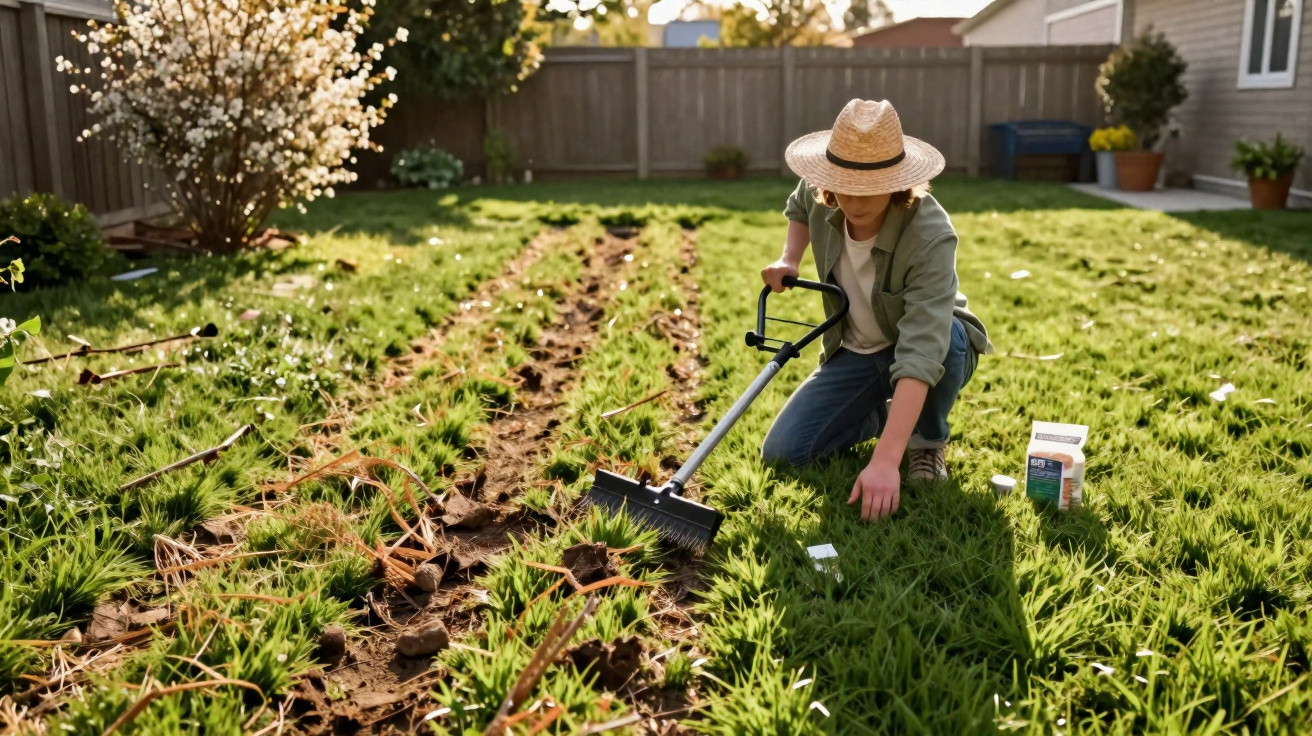
- Overseed sparse areas in spring or early autumn.
Combining these steps with the correct mower setting means radical measures are rarely needed. Often, a few extra millimetres of height and a sharp blade are enough to turn a tired, patchy area back into a durable, rich-green summer lawn that genuinely looks like a carpet – rather than only for two days after mowing.




Comments
No comments yet. Be the first to comment!
Leave a Comment