
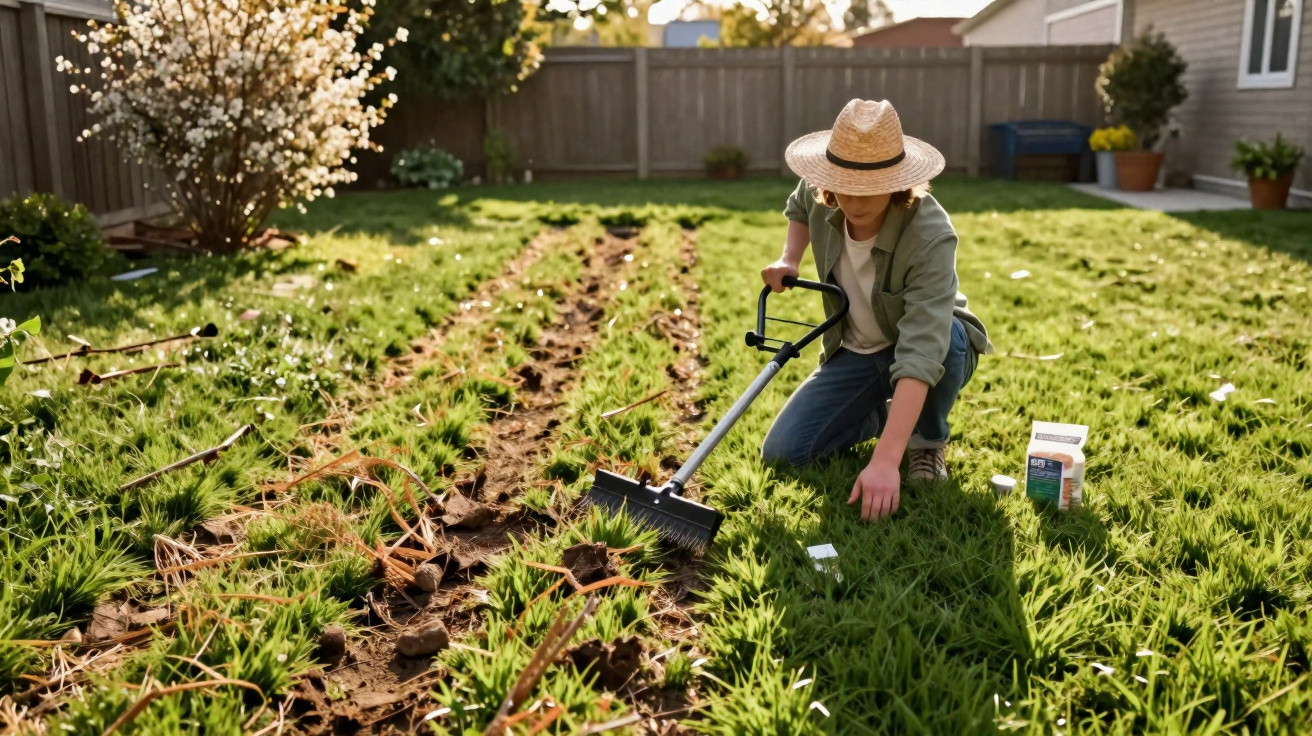
After a wet winter, the lawn often resembles a green sponge, covered with moss, yellowing blades and soggy ground. It is tempting to scarify it vigorously straight away. However, acting too hastily can leave you with bare, scorched patches rather than a lush lawn. Getting the timing and soil conditions right is crucial - and, above all, avoiding overdoing it.
The biggest spring mistake: scarifying too early and too aggressively
The main spring error may sound obvious, but it can have serious consequences: many people scarify when the lawn is freezing cold, waterlogged or still weakened, while setting the machine far too deep. The blades then pull out not only moss and thatch, but also young roots. Within a few days, the lawn can deteriorate, dry out or become completely covered in algae.
“Scarifying must never be the first step in spring; it should be the final stage of a sequence of targeted preparation.”
If you begin immediately after winter, these conditions are often still present:
- The soil remains cold, at below around 8°C.
- Grass plants have produced hardly any new growth.
- The lawn is saturated, with water remaining after rain.
- Many areas are weak or thinly covered.
This is precisely when grass is most vulnerable. Scarifier blades tear out the shoots instead of merely loosening the thatch. The result is brown patches, spreading weeds and an even stronger return of moss.
How to tell when your lawn is ready for scarifying
Before considering scarifying, inspect the lawn closely and feel the ground underfoot. Several clear signs indicate whether this treatment is necessary and worthwhile:
- A spongy feel: If the ground feels like a soft carpet beneath your shoes, there is likely a build-up of thatch and dead material.
- Water does not drain away: If puddles remain on the lawn for several minutes or longer after rain, the soil is compacted.
- Moss is dominant: Moss cushions cover large sections, while grass grows only sporadically between them.
- Thin growth: A great deal of soil is visible, the blades are widely spaced and turning yellow.
A simple test is often enough: take a sturdy metal rake and pull it firmly through the grass. If lots of brown plant matter, old grass and moss collect in the tines, the lawn has a thick thatch layer. Scarifying can then genuinely help - provided the time is right.
The ideal time to scarify in spring
For gardens in central Europe, the suitable period is generally between March and May. The calendar matters less than the condition of the lawn and soil.
The following conditions should be met:
- Soil temperature is consistently above roughly 8–10°C.
- The lawn has already been mown two or three times.
- No further frost is forecast and the ground is not frozen.
- The lawn is not waterlogged, but is slightly damp.
A very young lawn can barely tolerate this level of stress. If it was newly sown the previous year, it is generally best to wait one to two years, until the turf is dense and well rooted. In any case, scarifying should not be done more than once or twice annually, otherwise the lawn is placed under excessive strain.
Preparing the lawn correctly before scarifying
A common misconception is that scarifying marks the beginning of spring lawn care. In fact, it belongs in the middle of the process - after a light boost and before targeted overseeding.
A sensible sequence is as follows:
- Apply a light feed: At the start of the season, use a moderate amount of lawn fertiliser so the grass has the strength to recover.
- Mow short: Cut the lawn to around 3 to 4 centimetres. Remove all clippings carefully.
- Check the soil: Does the surface feel lightly damp rather than muddy? If so, conditions are favourable.
“Before scarifying, the lawn should be growing but not stressed - richly green, not limp and not dried out.”
The correct scarifier setting
Alongside poor timing, excessive depth is the second major mistake. Many people set the machine too aggressively in the hope of “a proper airing in one go”. This usually backfires.
These guidelines have proved effective:
- Working depth of just 2 to 3 millimetres: The blades should only score the surface and lift out thatch, rather than cutting deep grooves.
- Even passes: Work across the entire lawn in one direction first.
- Work crosswise: In heavily thatched sections, make another pass at right angles to the first.
- Push slowly: Rushing back and forth increases root damage.
Afterwards, a considerable amount of material will usually remain on the surface. It must be removed completely, either with a rake or using the lawnmower collection box.
What must happen after scarifying
Once moss and thatch have been removed, the lawn can look alarmingly bare. Soil may be visible in many places, and the surface can appear scratched up. This is the stage that determines whether the treatment becomes a fresh start or whether moss and weeds take over the gaps.
Relieve the soil and adjust the pH value
Moss thrives in damp, acidic soil. Rather than using so-called moss killers containing iron sulphate, which may burn the moss but make the soil even more acidic, many specialists now favour lime products such as dolomitic lime. These rock powders gently raise the pH value and improve soil structure.
“Anyone who wants to reduce moss in the lawn permanently must improve the soil - not simply burn away the symptoms.”
After scarifying, such a soil conditioner can be spread evenly across the lawn. Over time, it works into the top layer and reduces acidity. It is also worth checking for other causes: waterlogging in heavy soils, permanent shade and mowing too low can all encourage moss.
Fill gaps and strengthen the lawn
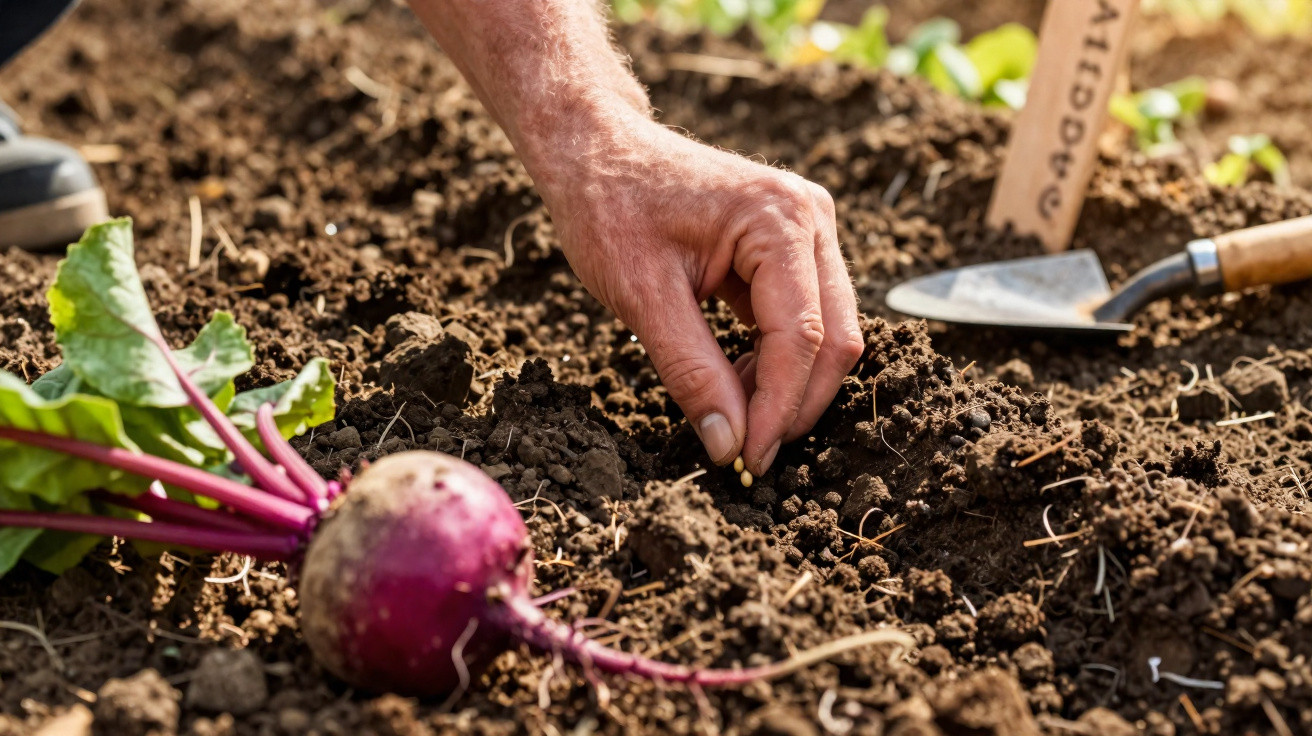
Wherever soil is visible, seed belongs there. A specialist overseeding mix for domestic lawns helps refill bare areas quickly. The following points are important:
- Lightly loosen the soil or roughen it with a rake.
- Spread lawn seed thinly but evenly over the whole area.
- If needed, sieve a thin layer of lawn topsoil or fine sand over it.
Applying a mild lawn fertiliser afterwards supports the growth of young shoots. During the first few weeks, keep the soil consistently slightly damp, without allowing puddles to form. Careful watering is sensible during dry spells.
Importantly, keep foot traffic on the area to a minimum until the new grass has established itself. Freshly scarified lawns are particularly sensitive to pressure and can develop further bare patches under heavy use.
Common lawn problems - and what scarifying can actually achieve
Many gardeners expect scarifying to act as a kind of reset button for every problematic lawn. In reality, it is one element of a wider care routine and addresses certain issues, but not all of them.
Scarifying is well suited to:
- A thick thatch layer made up of dead grass and moss.
- Slightly compacted topsoil without deep-seated waterlogging.
- Lawns that have been mown for years but received little other maintenance.
It is less useful for:
- Extremely sandy soils that already retain very little water.
- Areas made up largely of weeds - in these cases, complete re-establishment is usually the better option.
- Very young lawns or lawns that are severely dried out.
Anyone with recurring moss problems should consider drainage, targeted soil improvement, an appropriate mowing height and the choice of hardier grass varieties alongside scarifying.
Why the right mowing height is crucial
One aspect is frequently underestimated in gardens: mowing height. Constantly cutting a lawn to “golf-course level” weakens every turf surface. The grass cannot build up reserves, roots remain shallow, the soil overheats in summer and weeds establish themselves quickly. Moss immediately takes advantage of this weakness.
For most domestic gardens, a cutting height of 4 to 5 centimetres offers a good compromise. In shade, leave it around one centimetre longer, and do not cut the lawn drastically during dry periods.
This is how the measures work together: a stable mowing height, moderate fertilising, suitable watering and targeted scarifying once a year all support one another. The lawn remains denser, moss has fewer opportunities, and spring scarifying changes from a risk into a genuine helping hand.



Comments
No comments yet. Be the first to comment!
Leave a Comment