
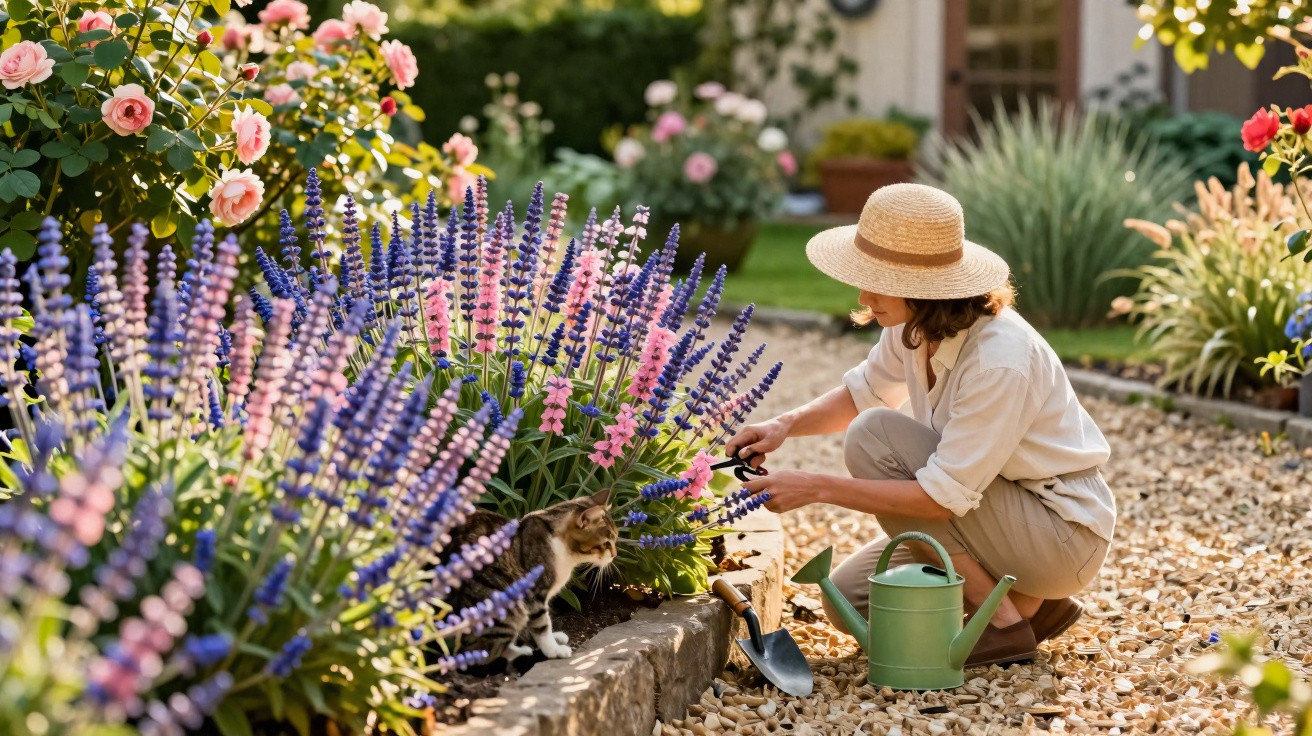
Anyone walking past their flower bed at the height of summer and still seeing dense carpets of blooms despite the heat has usually planted with real care. Rather than choosing delicate roses or thirsty summer flowers, more and more home gardeners are opting for tough perennials that cope easily with heat, drought and poor soil. One plant currently attracting plenty of attention is Nepeta, commonly known as catmint or catnip.
Why this perennial flowers in blue and pink all summer
Nepeta is one of those perennials that virtually looks after itself in the garden. Depending on the region, it begins flowering in May and, in a suitable position, continues until late summer. Crucially, it does not produce merely a few scattered flowers: it creates genuine clouds of small flower spikes that can partly conceal the foliage.
Typical characteristics include:
- flowering from spring until the end of summer
- a usual height of around 30–40 centimetres – ideal for bed edges
- dense, semi-spherical cushions rather than isolated bare stems
- numerous small flowers in shades of blue, lavender or pink
“Nepeta looks like a light veil of flowers in a bed, lasting for weeks while needing very little care.”
This perennial has grey-green, gently hairy leaves. Narrow flower spikes rise from the foliage cushion, closely covered with tiny tubular blooms. Seen in quantity, they give the impression of a coloured carpet – often pale lavender blue, deep indigo or soft pink, depending on the variety.
Another major advantage is that the flowers attract bees, bumblebees and butterflies. Anyone creating an insect-friendly garden while still wanting a neat, harmonious appearance gets both benefits in one plant.
The best Nepeta varieties for a blue-and-pink flowering border
There is now a wide range of varieties bred specifically for long flowering and compact growth. For a balanced combination of blue and pink, it is worth mixing varieties deliberately.
Proven classics for large beds
Varieties bred from Nepeta faassenii are particularly widespread. They are considered especially hardy and winter-hardy, including in colder areas of central Europe.
- ‘Six Hills Giant’: One of the best-known varieties. It forms broad, loose cushions with pale blue flowers and is ideal for filling larger spaces.
- ‘Summer Magic’: Compact, sturdy growth, a long flowering season and intensely blue flower spikes. Well suited to bed edges and mixed planting schemes.
These types branch freely, quickly close gaps in a bed and tolerate frost well below -20 degrees. In a typical garden, placing four to five plants per metre along a path is enough to create a continuous band after one or two years.
Pink accents for romantic beds
Those wishing to introduce pink alongside blue can choose varieties specifically bred in this colour direction. Professional selections include varieties such as ‘Dawn to Dusk’ and ‘Pink Dawn’, representing a wider group of pink-flowering Nepeta.
For a lively garden display, use:
- one group of blue-flowering catmint
- a clearly visible neighbouring group in pink
- taller companions behind them, such as old-fashioned roses or delicate cosmos
“Alternating blue and pink Nepeta varieties creates a flower bed that shows colour almost continuously from May until late summer, with very little effort.”
This perennial is also highly effective in large containers. In these, it develops a rounded mound of leaves and flowers about 30 centimetres high – ideal for patios, front steps or a sunny house wall.
Position, soil and water: how little Nepeta really needs
Only a few basic principles are needed for the plant to perform at its best. Sunlight and suitable soil matter far more than fertiliser and continual watering.
| Factor | Nepeta requirement |
|---|---|
| Position | Full sun to very bright conditions; light partial shade is tolerated but produces fewer flowers |
| Soil | Loose and well-drained, preferably sandy or stony, with no waterlogging |
| pH value | A broad range, from slightly acidic to slightly alkaline (approximately pH 5 to 8) |
| Water requirement | Very low after establishment; drought tolerant |
Nepeta reaches its limits in heavy clay soil. In such conditions, incorporating plenty of sand, gravel or grit can help. Soil that remains too wet causes the roots to rot, especially in winter. In freely draining ground, however, it will thrive for years without difficulty.
Planting and caring for catmint: making Nepeta almost self-sufficient
Catmint barely features on the maintenance calendar. Most of the work is required during its first year, while the perennial establishes roots and builds up strength.
Step by step to a dense cloud of flowers
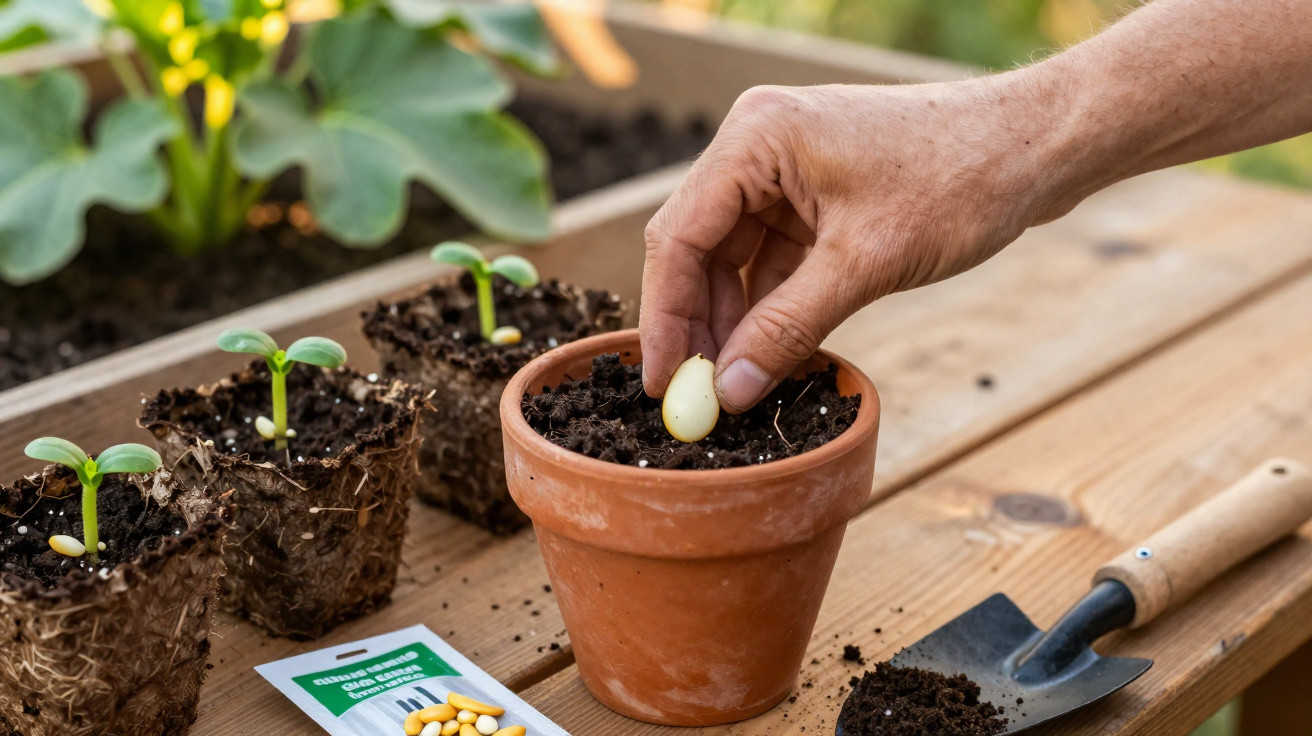
- Choose a planting time: Spring or early autumn is ideal, allowing the perennial to root before heat or frost arrives.
- Prepare the soil: Loosen the ground, remove stones and thick roots, and incorporate sand or grit into heavy soils.
- Set out the plants: Leave 25–40 centimetres between plants, depending on the variety. For bed edges, plant more closely together.
- Water in: Give the plants a thorough watering immediately after planting so the soil makes good contact with the root ball.
- Monitor the first year: Water during prolonged dry spells in the first summer; afterwards, water only during extreme drought.
Many gardeners use a simple rule of thumb for perennials: “The first year they sleep, the second year they creep, and the third year they leap.” This describes Nepeta particularly well. After a relatively unremarkable start, the plants visibly spread in their second and third years, reliably filling empty spaces.
A trick for a second flush in late summer
To extend the flowering period even further, use shears in summer. Immediately after the first main flush of flowers – usually in July – cut back the faded spikes substantially. The plant will then produce fresh shoots and flowers that may continue into early autumn.
“A bold cut-back after the first wave of flowers often brings a second explosion of colour towards the end of summer.”
Nepeta generally does not need fertiliser. In very poor soil, a thin layer of compost in spring is sufficient. Extra nutrients do not result in more flowers; instead, they often lead only to soft, weak growth.
Planting partners that showcase Nepeta beautifully
The grey-green foliage and delicate flowers work perfectly with other drought-tolerant perennials. Combinations that use contrasting forms and heights are especially interesting.
- With roses: Catmint softens formal rose beds and conceals bare rose stems near ground level.
- With silvery perennials: Plants such as Russian sage or lamb’s ear strengthen the soft, light overall effect.
- With airy summer flowers: Delicate cosmos or gypsophila add height and lightness above it.
- In a rock garden: Planted between stones, Nepeta resembles flowering mist that softens hard outlines.
For those who prefer a modern, structured garden, this perennial can also be planted in broad swathes beside gravel paths or patios. Combined with grasses, it creates a Mediterranean feel without requiring an olive tree.
Practical guidance on longevity, division and potential concerns
Nepeta is not a short-lived perennial, although it can be rejuvenated after several years. If the centre of an older plant becomes bare, dig it up in spring, divide it and replant the younger outer sections. This keeps the flowering cushion full and unbroken.
One point of interest for many cat owners is that the plant’s scent appeals to some cats. Certain animals will even roll around in the cushions. Anyone wishing to avoid this should grow sensitive or expensive varieties in containers, or place them in areas of the garden that are less accessible to pets.
For people, the plant is generally unproblematic and is not considered highly toxic. As always when working in flower beds, gloves remain sensible, particularly for people with sensitive skin.
Its fragrance provides an additional benefit: the essential oils in the foliage release a gentle minty scent. Many gardeners find this pleasant, particularly on warm evenings. Some even report that mosquitoes are slightly less common in the immediate vicinity of the plants – not certified protection, but a welcome side effect.
Anyone aiming to make their garden more climate-resilient will find that Nepeta helps reduce boredom, watering-can stress and sparse-looking summer beds. A few well-positioned perennials can turn a fairly high-maintenance area into a notably robust yet richly coloured refuge for people and insects.



Comments
No comments yet. Be the first to comment!
Leave a Comment