
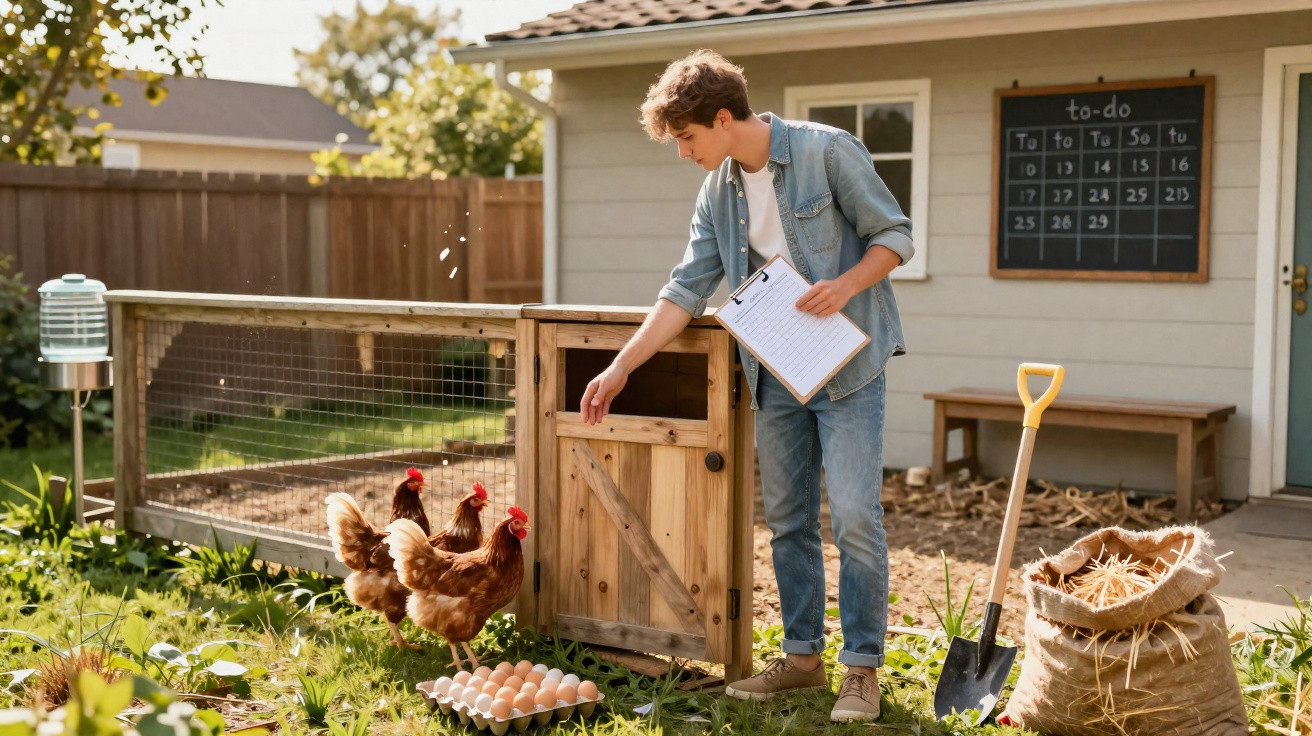
Keeping chickens at home promises fresh eggs and a touch of country life, but the decision brings daily demands that are often underestimated.
The idea appeals to many families. Children collecting eggs early in the morning, kitchen scraps being reused and a previously quiet patch of garden brought to life all make an appealing picture. That picture is real, of course, but it can overlook the smells, care, costs and organisation these animals require every day of the year.
Eggs do not always offset the costs
At first, the maths seems straightforward: a few chickens, a few eggs each week and lower grocery bills. In reality, spending begins before the birds even arrive.
A sturdy coop must shield them from wind, rain, cold weather and predators. You will also need suitable fencing, feeders, drinkers, bedding and a run large enough to reduce mud and conflict between the birds.
“For a small flock of three to five chickens, the set-up can cost between €800 and €1,000 when the coop and protection are properly planned.”
There are also ongoing expenses: grain mix or complete feed, straw or wood shavings, parasite treatments, possible worming products and, in some cases, veterinary bills. Food scraps cannot meet all their nutritional requirements. An unbalanced diet can weaken the birds and affect the quality of their egg laying.
Egg production does not remain consistent throughout a chicken’s life. A young hen may lay regularly before her rate slows as she ages. After two years, the decline often becomes noticeable. After four years, some will still lay, but far less reliably. The bird will nevertheless need feeding and care for several more years.
Chickens at home: calm can quickly give way to noise
Cockerels are known for being noisy, but hens can make plenty of noise too. After laying an egg, some cluck loudly for a long time. In a closely built-up estate or a courtyard surrounded by houses, the sound can easily carry beyond the fence.
Smell can become an issue even sooner. Built-up droppings, damp bedding and a poorly ventilated coop release ammonia. This sharp smell is particularly unpleasant during hot or wet spells.
- Remove the dirtiest bedding several times a week;
- Replace all bedding at regular intervals;
- Clean the perches and nesting boxes;
- Prevent spilled water from turning the ground into mud;
- Place the coop as far as possible from neighbouring homes.
Flies quickly gather around a poorly maintained area. They are not simply an eyesore: particularly in summer, they can trigger disputes with neighbours.
A routine with no weekends or holidays
A chicken is not an animal you can neglect for two days because the weather is poor or your schedule is full. Every morning, the coop needs opening, the water checking, food providing and the flock’s behaviour observing. Each evening, you must make sure every chicken is back inside before securely closing the coop.
“Forgetting to close it cannot always be put right: a fox or a pine marten can kill several birds in a single night.”
During winter, water can freeze in the drinker. In summer, high temperatures put poultry at risk, especially when the run has little shade. They need constant access to drinking water and somewhere sheltered from the sun. A dry patch of soil also allows them to take dust baths, a natural behaviour that helps them maintain their feathers.
Going away for a few days requires proper planning
Holidays need to be arranged before you leave. The person chosen must visit daily, checking water, food, eggs, the birds’ condition and whether the coop is closed. A brief visit every other day is not always enough, particularly during a heatwave, frost or a predator attack.
Automatic systems can offer some convenience, including a programmable door, a large water reservoir or an automatic feeder. They reduce certain jobs, but they do not replace human supervision. A mechanism may jam, water can become dirty or a chicken may fall ill.
Parasites and illness are part of everyday chicken keeping
Chickens may look hardy while scratching at the ground, yet they can suffer from numerous health problems. Coccidiosis particularly affects young birds and causes digestive issues. Intestinal worms can lead to weight loss and poor condition.
Red mites are among the most common unwelcome surprises. These tiny parasites hide in cracks in the wood and emerge mainly at night to feed on the poultry’s blood. An infestation can severely tire the birds, leaving them paler, less active and sometimes less productive.
| Sign to watch for | Useful response |
|---|---|
| Chicken isolated or lethargic | Separate it from the flock and seek advice from a vet |
| Pale comb, reduced egg laying | Check the diet, parasites and general condition |
| Itching or restlessness at night | Inspect the perches and cracks in the coop |
| Very unusual droppings | Monitor developments and seek advice promptly if it continues |
Avian flu outbreaks can also make managing a small household flock more difficult. When authorities require housing measures, poultry must be kept away from contact with wild birds. This may last for several weeks. The space must then remain clean and sufficiently large to prevent stress and fighting.
Local rules should be checked before buying chickens
Before putting up a coop, it is best to check local authority rules, planning regulations and, where applicable, the rules of your property management arrangement. Restrictions may apply to the location, distances from property boundaries, lightweight structures or nuisance issues.
Keeping a few chickens does not mean ignoring your neighbours. Complaints can arise if smells, flies or noise become recurrent. Letting neighbours know in advance, keeping the area very clean and selecting a discreet location can prevent many tensions.
Preparing the ground before the chickens arrive
A run that is too small deteriorates rapidly. Chickens repeatedly turn over the soil in search of worms, seeds and insects. The grass disappears, the ground becomes bare and then turns muddy as soon as it rains. If space allows, rotating between two areas gives the ground time to recover.
Fencing must also be designed to prevent intrusions. A pine marten can squeeze through a surprisingly narrow gap. Slightly burying the bottom of the fence, or otherwise securing it, limits access underneath. Covering the enclosure can also protect against wild birds and certain predators.
These demands do not prevent the enjoyment of keeping a few chickens. They simply require viewing the project as welcoming living animals rather than as a simple source of eggs. For children, helping to fill the drinker or collect eggs can become a practical and educational activity, provided an adult retains genuine responsibility for the daily routine.





Comments
No comments yet. Be the first to comment!
Leave a Comment