
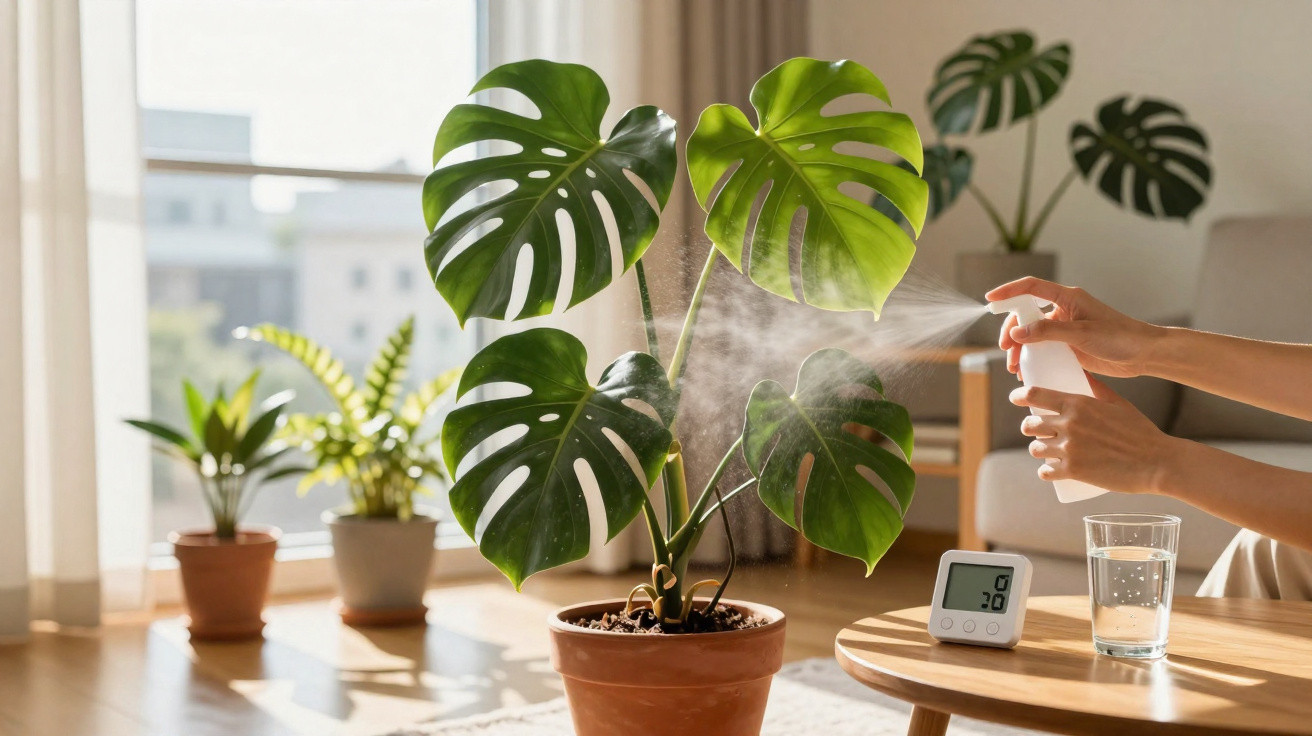
The Monstera deliciosa, often known as the Swiss cheese plant, is now found almost everywhere: in living rooms, offices and cafés. Its untamed jungle appearance attracts Instagram likes while adding a hint of holiday atmosphere to everyday life. Yet beyond its decorative appeal, does it deliver measurable benefits for indoor air quality, or is the excitement around its air-purifying qualities more of a pleasant extra than a genuine miracle cure?
What a Monstera actually does indoors
The principle is straightforward: like every green plant, a Monstera carries out photosynthesis. It absorbs carbon dioxide from the air and releases oxygen. Its large leaves provide plenty of surface area, supporting this gas exchange.
A Monstera can noticeably improve the indoor environment – but it works best as part of a team, rather than as a stand-alone air purifier.
Its strikingly large, often split leaves can have several effects:
- Gas exchange: absorption of carbon dioxide and release of oxygen in daylight
- Dust capture: fine airborne particles settle on the surface of the leaves
- Humidity: through transpiration, the plant releases water into the air and can increase humidity levels
This humidity effect can be particularly helpful in centrally heated homes during winter: mucous membranes are less likely to dry out, the air can feel more comfortable, and some people report less of a scratchy throat or fewer dry-eye symptoms.
How effectively does a Monstera purify the air?
The long-standing NASA study on houseplants and air purification is frequently mentioned in this context. It found that certain plants can filter harmful substances from enclosed spaces. Although Monstera was not its focus, later research places it around the middle of the field.
| Substance | Effect of the Monstera | Note |
|---|---|---|
| Carbon dioxide | Moderate uptake | Only through photosynthesis in daylight |
| Formaldehyde | Minor reduction | Several large plants are needed for a measurable effect |
| Dust particles | Good capture | Large leaves act as passive filter surfaces |
| Benzene and similar substances | Very limited effect | Other species are more efficient here |
Scale is the crucial factor: one Monstera in a living room will not transform air quality overnight. Laboratory studies often use very small, sealed spaces with a high number of plants. The situation is very different in a 20-square-metre flat.
Estimates from specialists broadly suggest that two large plants are needed for roughly nine square metres before measurable effects on certain pollutants can be expected. In a typical three-room flat, this would mean building up a genuine indoor jungle collection – something that is simply unrealistic for many people.
Comparing Monstera with established air-filtering plants
Some houseplants perform considerably better than Monstera in studies. These include, in particular:
- snake plant (Sansevieria), often called mother-in-law’s tongue
- spider plant
- devil’s ivy
These species can break down certain volatile compounds, such as formaldehyde or benzene, more effectively. Anyone specifically looking for natural air filters will be better served by a mix of these varieties than by a single large Monstera in the corner.
Monstera scores more highly for atmosphere and appearance, and less as a destroyer of chemical pollutants.
One clear advantage of Monstera is that, under suitable conditions, it produces a comparatively large amount of leaf mass and therefore oxygen and moisture. This can be noticeable in dry new-build homes or heavily heated older properties.
Getting the most from your Monstera
For a Swiss cheese plant to have any effect on the air, it needs proper care. A half-dead, dried-out plant delivers little beyond frustration and almost no benefit.
Position and light
A bright spot away from direct midday sun is ideal – for example, set back slightly from a south-facing window, or placed directly by an east- or west-facing window. Insufficient light slows growth and, in turn, reduces photosynthesis and humidity release.
Watering, humidity and nutrients
Useful rules of thumb for a healthy Monstera include:
- Watering: Wait until the top two centimetres of compost are dry, then water thoroughly and remove excess water from the outer pot.
- Humidity: 60 to 80 per cent is ideal. In dry homes, bowls of water, humidifiers or regular misting can help.
- Feeding: During the growing season, feed approximately once a month with a balanced liquid fertiliser.
- Cleaning: Wipe leaves regularly with a damp cloth so that dust does not block their pores.
- Repotting: Move the plant into fresh compost around every two years to ensure it has sufficient space and nutrients.
The more healthy leaf surface the plant has, the greater its oxygen production, humidifying effect and dust capture. Neglected plants lose leaves, grow very little and consequently contribute less.
Monstera as part of a green system at home
Anyone wanting to make a genuine difference to their indoor environment should not rely on just one species. Combining several plant varieties creates a small, stable system, much like one found in nature.
Suitable combinations include:
- one large Monstera for visual impact and humidity
- several spider plants or devil’s ivy plants for greater pollutant reduction
- snake plants in the bedroom, as they also release oxygen at night
Every species offers its own strengths. Together, they create a noticeably more pleasant indoor feel without the need to install an entire living wall.
Plants do not replace technology; they complement it. Fresh air primarily comes from ventilation and good filters – plants are the green extra on top.
What plants can do – and what they cannot
Even though a Monstera can contribute in several ways, serious air-quality problems at home require other solutions. Pollutants released by furniture or paint, fine particles from outdoors and mould spores can only be tackled to a limited extent with plants. Regular purge ventilation, effective filtration devices and building measures are much more effective in these cases.
However, plants – especially striking varieties such as Monstera – offer another often underestimated effect: they can be calming. Studies show that people in planted spaces feel better able to concentrate, experience less stress and work more productively. For some people, simply looking at large green leaves can lower their pulse slightly.
So, placing a Monstera in the living room provides more than a design feature. It adds oxygen, slightly raises humidity, catches some dust on its leaves instead of leaving it airborne, and simply makes the space feel more pleasant. Combined with regular ventilation, sensible cleaning routines and perhaps an air purifier, it forms part of an overall approach that can make a home noticeably more comfortable to live in.
For many plant enthusiasts, the conclusion is clear: Monstera is not a medical miracle cure, but it is a valuable element of a greener, healthier home. Those who keep expectations realistic and care for the plant properly can benefit from a combination of improved indoor conditions, less dry air and a clear boost in living comfort.

Comments
No comments yet. Be the first to comment!
Leave a Comment