
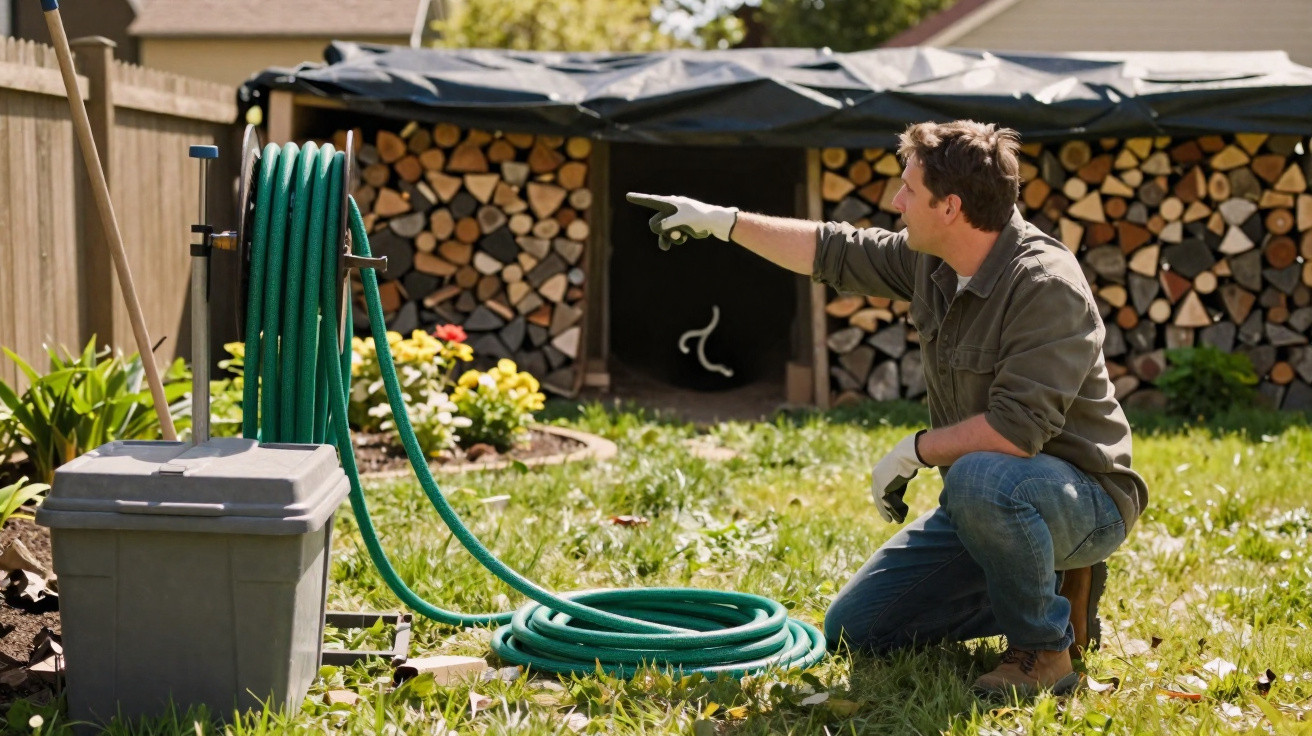
With the first warm days of the year, many people take the mower, watering can and gardening gloves out of the shed. Yet this is also precisely when snakes become active again. What many people do not realise is that an everyday item left carelessly on the ground can create ideal conditions for these animals - increasing the chance of encountering one at uncomfortably close range.
Why snakes suddenly appear in gardens in spring
For many native snake species, winter dormancy ends between mid-March and late May. At this point, the animals are sluggish because their bodies have not yet reached their operating temperature. As cold-blooded creatures, they must warm themselves using external heat. They therefore actively seek out small warm pockets in gardens where they can shelter and where temperatures remain as stable as possible at around 25 to 30 degrees Celsius.
They particularly find these places at boundaries within the landscape: alongside hedges, walls, fences, dense scrub or long grass. These areas combine shade, moisture and cover, creating ideal hiding places in which snakes can rest, hunt and warm up without disturbance.
The risk arises when these refuges overlap with the usual routes people take around the garden - such as near the water connection, lawn, patio or garden shed.
In some European countries, more than a thousand snake bites are recorded each year, with vipers responsible for a large proportion of them. Most incidents do not occur deep in woodland, but close to homes - while people are clearing up, stacking wood or carrying out garden work.
The overlooked attraction: why garden hoses draw snakes in
The seemingly harmless culprit is the garden hose left on the ground after watering. When it is coiled up or arranged in loose loops, it can quickly become the perfect snake retreat.
How the ideal “snake hotel” is created
- Heat store: The hose material becomes noticeably warmer in sunshine and releases that heat gradually.
- Camouflage: Many hoses are green or grey, blending into grass, soil or gravel - providing a secure spot for animals that want to stay unseen.
- Moisture: After watering, a small amount of moisture often remains on the hose and the ground, creating a pleasant microclimate.
- Close to the ground: Just above the sometimes damp surface, a narrow stream of cooler air forms, making it ideal for regulating body temperature.
To a snake, a coiled hose resembles a sheltered burrow: warm, inconspicuous and confined enough to feel safe. Larger species, including the green and yellow snake found in southern Europe and reaching up to 1.50 metres in length, can comfortably curl up inside it.
The difficult moment comes when someone later wants to pick up that very hose. Anyone who grabs it without first checking may startle a resting snake directly with their hand or foot - the classic trigger for a defensive response.
Other risk areas: tarpaulins, sheets and wood piles
A garden hose is not the only item that can become a springtime snake trap. Anything that retains warmth while forming a dark cavity underneath falls into the risk category.
Common “snake garages” in the garden
- dark protective tarpaulins lying flat on the ground
- corrugated sheets or metal panels placed directly on soil or gravel
- old Eternit or fibre-cement sheets
- haphazard piles of buckets, watering cans and empty containers at ground level
- wood piles placed directly on soil or grass without any clearance
Measurements show that beneath a dark tarpaulin in the sun, temperatures can easily become considerably higher than the surrounding air. With an air temperature of 15 degrees Celsius, temperatures of 28 degrees Celsius beneath a black tarpaulin are not unusual. Snakes use precisely these spots to regulate their body temperature.
Where warmth, darkness and peace come together, a snake sees a perfect refuge - even if it merely looks like “clutter” to a person.
How to make your garden less attractive to snakes
Anyone wishing to reduce the likelihood of an unwelcome encounter does not need to dig up the entire garden. A few straightforward changes are enough to make many hiding places less appealing.
Store the garden hose properly
- Wind the hose onto a wall-mounted holder or hose reel after every use.
- Do not leave it lying in grass, gravel or along the edge of a wall.
- Before picking it up, visually inspect its full length.
- Keep the hose as dry as possible and repair leaks promptly.
Reduce the risk from tarpaulins, sheets and panels
- Fold protective tarpaulins upright, or hang them over pallets or frames.
- Store metal or fibre-cement sheets raised off the ground rather than flat on it.
- Clear away damp, cluttered corners around the water connection.
Stack wood and garden materials correctly
- Keep wood piles at least 20 centimetres above the ground, for example on timber bearers or a rack.
- Ensure gaps are well ventilated and avoid creating a dense “rodent paradise”.
- Do not leave wellington boots and work clothes outdoors permanently and uncovered.
Act safely: how to respond without risk or breaking the law
When handling possible hiding places, protecting yourself matters just as much as protecting the animals. In many European countries, all native snake species are strictly protected by nature conservation laws. Killing or catching them, or deliberately destroying their refuges, can result in fines.
For maximum safety, follow several basic rules:
- Wear protective clothing: Use sturdy shoes or wellington boots, long trousers and thick gloves.
- Look before touching: Never reach blindly beneath tarpaulins, boards or hoses.
- Use the object as a shield: Lift suspicious items in a way that keeps them between your body and any animal that may be there.
- Stay calm: If a snake appears, step back slowly and leave it an escape route.
Most bites happen when people unexpectedly trap or corner snakes - not because the animals are trying to attack.
Venomous species bite only when they feel cornered. Non-venomous snakes are generally harmless to people. Children should nevertheless be taught not to touch reptiles in the garden and always to get an adult.
How snakes behave - and how this can work to your advantage
A better understanding of snakes in the garden can prevent many risks from the outset. The animals seek three things: safety from predators, a reliably warm location and access to prey - usually mice, lizards or frogs. A garden with patches of long grass, a dense pile of rubbish and plenty of rodent activity can seem almost like an invitation.
Mowing the lawn regularly, maintaining compost neatly and reducing food sources for mice all make a garden less attractive to snakes in several ways. At the same time, it can retain enough structure for other, less problematic garden visitors, such as insects, hedgehogs and birds.
There is another frequently underestimated point: many people mistake harmless snakes for vipers. Learning the distinguishing features can help. Keeping photographs of common species from your region on your phone is useful, as it allows you to quickly check what you are looking at if in doubt.
A tidy, well-planned garden design has a practical added benefit: you can move around your own property more comfortably. If you know the hose is properly hung up, tarpaulins are stored upright and the wood pile is not directly on the ground, you are less likely to think about hazards when heading into the garden - and can simply enjoy warm days more.
Comments
No comments yet. Be the first to comment!
Leave a Comment