
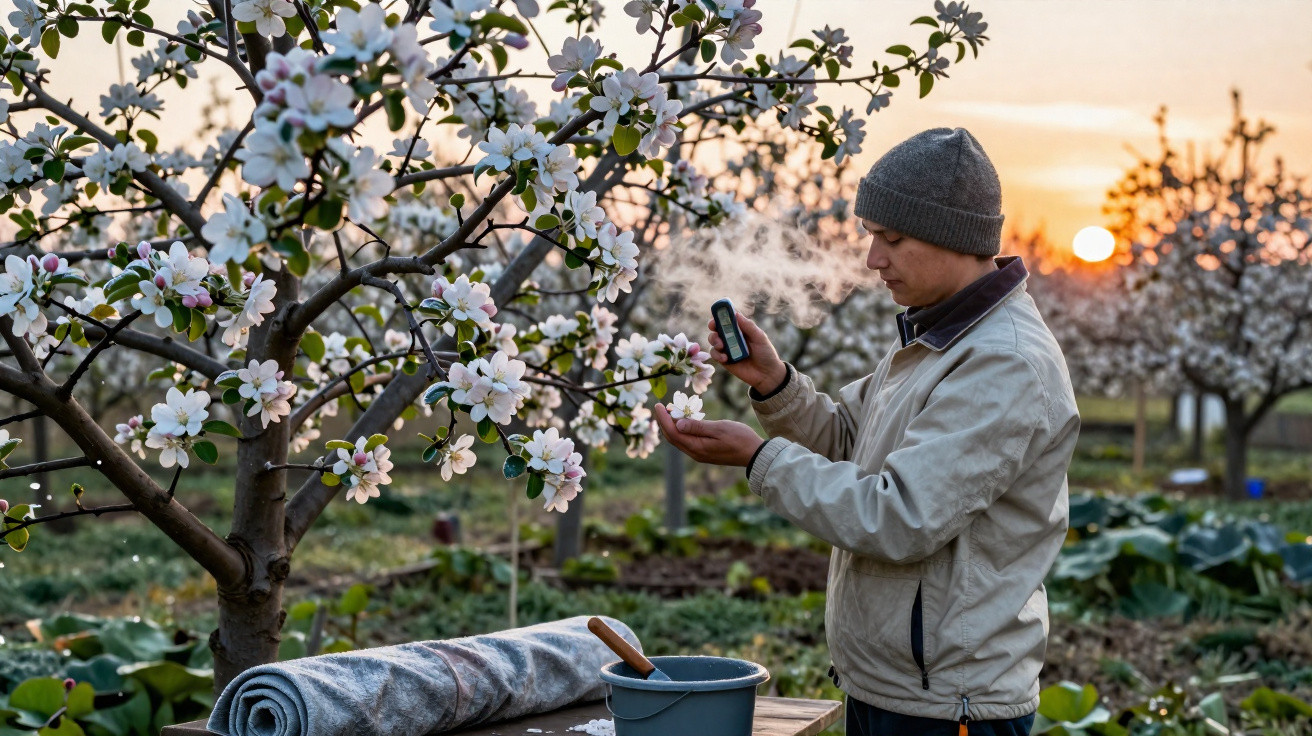
The blossoms gleam, bees are buzzing and everything appears steady – yet a single night can be enough to ruin the harvest.
Anyone looking at their apple tree in April will usually assume all is well. Sap is rising through the tree, buds have opened and the first tiny apples are becoming visible. This deceptive calm is precisely what makes the month so risky: within just a few hours, hopes of a full harvest basket can disappear, quietly and without obvious warning.
Why April becomes a trap for apple trees
Spring creates a false sense of security. Days grow longer, temperatures rise and sap surges up into the crown. Many trees then make what seems like a turbo-charged start. Branches that looked bare only days earlier turn into a cloud of white or pink blossom.
That is exactly where the trouble begins. Open flowers are as delicate as glass. Although the plant may look vigorous, the fate of the summer apples is already being decided inside each bloom. The tree continues to grow even when its blossoms have been damaged, which is why the loss is so easy to miss.
The greatest danger in April: the tree looks healthy while the harvest has already been lost.
Late frosts are especially unforgiving at this stage. If night-time temperatures fall noticeably below freezing, even briefly, the sensitive pistil can freeze. It turns brown, the flower dies and no apple will later form in that position.
Late frost – the silent overnight enemy
Clear skies, still air and dry conditions may sound like the recipe for a lovely spring night to home gardeners. For apple blossom, however, this weather often means red alert. Without cloud cover, stored warmth radiates away into space; the ground cools sharply, followed by the air in the garden.
Brownish flowers or buds that look wilted the following morning are the result of this effect. The tree may have looked healthy the day before, only for entire areas of blossom to be ruined by the next day. In many cases, it takes several hours before the outward signs become clear.
Gardeners who have experienced this before tend to pay closer attention to weather forecasts. Looking only at daytime highs is not enough. The crucial warning comes when meteorologists predict clear nights with minimum temperatures just above freezing: in your own garden, it can easily be one or two degrees colder.
What to do when a cold night is forecast
Acting early can save a great deal. A few straightforward measures can raise the temperature around the crown slightly and protect vulnerable flowers.
Protective measures at a glance
- Place lightweight horticultural fleece over the crown – put it on in the late afternoon
- Do not pull the fleece tight – blossoms must not be crushed
- Water the soil moderately – slightly damp ground holds warmth better
- Avoid cold traps – do not leave open containers of water beneath the tree
- Use a weather app – keep an eye on minimum temperatures for the coming nights
So-called winter-protection fleece has proved particularly useful for young or smaller apple trees. It acts like a thin blanket and can lift the temperature around buds by one or two degrees. That is often enough to get past the critical threshold.
If possible, water the soil around the trunk lightly in the early evening. Moist earth stores more heat than dry soil. Do not overdo it, though. Waterlogging weakens the roots, creating the next garden problem.
Commercial orchards sometimes use misting or spray systems. A fine layer of water freezes around the flowers and releases heat as it turns to ice. This approach requires expertise and properly suited equipment, so fleece is generally the more practical option for a home garden.
Keep an eye on blossoms, leaves and tiny apples
The end of the frost risk does not mean the threats are over. Diseases and pests take full advantage of the same period in which the tree is putting energy into growth and setting fruit.
Once conditions stay damp and mild for several days, pressure from fungal diseases increases. Two issues occur particularly often in German gardens: leaf spots or scab, and powdery mildew.
The most common apple tree diseases in spring
| Problem | Identifying feature | Possible consequence |
|---|---|---|
| Leaf spot or apple scab infestation | Olive-green to dark-brown patches on leaves and later on fruit | Distorted leaves, cracked fruit, reduced storage life |
| Powdery mildew | A whitish, flour-like coating on young leaves and shoots | Delayed growth, weaker flowering the following year |
Spending a few minutes inspecting the tree once a week helps identify many issues in good time. Check leaves on both sides, inspect young shoots and look over the transition areas within the crown – this brief routine prevents diseases from spreading unnoticed.
Looking early saves many sprays and interventions later on.
Aphids and worms in apples: take action in time
As soon as shoots become soft and full of sap, aphids are ready to move in. They commonly gather at the tips of young branches and feed on plant sap. Busy ants often reveal that aphids have already arrived, as they “milk” their honeydew like a tiny herd of livestock.
Glue bands or sticky barriers around the trunk are a simple but effective measure. They break the ants’ route upwards. Attracting songbirds into the garden brings further allies: tits, robins and other birds enthusiastically pick caterpillars and other pests from the crown.
The well-known “worm in the apple” is usually the larva of the codling moth. Pheromone traps, hung up early in the year, can help. They confuse males while they are looking for a mate. Fewer pairings mean fewer eggs – and therefore fewer maggots in autumn.
Fertilise properly: nourishment for fruit, not just foliage
At the point when a blossom becomes a tiny apple, the tree needs plenty of energy. This stage is called fruit set, or nouaison. If nutrients are insufficient, the tree sheds some of its young fruit as a kind of built-in self-protection.
Many home gardeners reach for nitrogen-rich fertiliser too quickly and use too much. The tree then produces vigorous new growth and plenty of fresh green foliage. However, its energy is directed more towards leaves than fruit. Young foliage attracts aphids again, and the cycle starts all over.
A balanced nutrient supply works better:
- Mature, well-rotted compost in the root area
- Organic fertiliser with a higher potassium and phosphorus content
- No overfeeding; apply smaller amounts instead
Potassium strengthens cell structure, encourages firm fruit development and improves resilience. Phosphorus supports root formation as well as flower and fruit development. Moderate feeding steadies the tree without pushing it into uncontrolled growth.
Natural helpers: strengthening rather than constant stress
Many garden enthusiasts also use simple plant-based preparations. Used correctly, these can make the tree more resilient without putting soil and beneficial organisms under strain.
Nettle feed provides trace elements and a gentle growth boost. It must be diluted sufficiently so that leaves do not “burn”. Overdoing the concentration is more likely to weaken the tree than help it.
Horsetail feed is another classic option. It contains silica, which makes leaf surfaces more resistant to fungal infection. Regular spraying during damp periods can reduce the risk of powdery mildew and leaf spots.
Strengthening products should support the tree, not make up for every mistake in its care.
The right routine until the Ice Saints have passed
The main requirement for keeping apple trees healthy through spring is timing. Constant intervention is unnecessary. It matters more to respond quickly at key moments – when frost is forecast, when the first leaf marks appear or when unusually large numbers of ants are climbing the trunk.
In German-speaking regions, the Ice Saints period in May remains a useful point of reference. Until this spell has passed, there is still a risk of late frost. During that time, avoid planning major pruning work or putting trees under extra stress with heavy applications of fertiliser.
Instead, observe the tree, strengthen it moderately and provide short-term protection in cold weather to improve the chances of generously filled harvest baskets. There is more drama behind April’s seemingly harmless weeks of blossom than first appears – but a few sensible steps can often still turn things around.


Comments
No comments yet. Be the first to comment!
Leave a Comment