

By planting your balcony thoughtfully, you can prevent precisely this situation.
Many people automatically reach for chemical sprays or light scented coils that smell more like a campsite than a dream holiday. Yet a handful of carefully chosen herbs and fragrant plants can create a kind of natural scent bubble that confuses mosquitoes while turning the entire balcony into a pleasantly scented miniature garden.
How plants confuse mosquitoes – the science behind it
Mosquitoes do not find us by chance. They primarily follow two signals: the carbon dioxide we exhale and our body odours. This is exactly where certain aromatic plants come into play.
Their leaves and stems contain essential oils that are released into the air and thoroughly disrupt mosquitoes’ “nose sensors”.
These fragrances form a veil over the scent signals produced by people and pets, making it considerably harder for mosquitoes to locate a source of blood. A 2023 study by the French research institute INRAE shows that correctly positioned plants can reduce the number of mosquitoes in an area by up to 45 percent. This is not wishful thinking, but a measurable effect.
Scented geraniums rather than decoration: the true balcony guard
When people hear “geranium”, they often picture the familiar red balcony plants hanging in window boxes everywhere. They may look attractive, but they do little to deter mosquitoes. It only becomes interesting with scented geraniums, particularly the variety often sold as a rose geranium (botanically Pelargonium graveolens).
Its leaves contain abundant essential oils. Brushing over them briefly or snapping a leaf releases an intense fragrance with rose and citrus notes. Mosquitoes strongly dislike this aroma and keep their distance.
A strongly scented rose geranium placed directly on a windowsill can act like an invisible curtain, allowing far fewer mosquitoes to enter the home.
In practical terms, rose geraniums should be positioned as close as possible to doors and windows, ideally in planters guarding the transition between the indoors and the balcony.
Citronella: the classic with an immediate effect
The second major classic among mosquito deterrents is the citronella plant, a tropical sweet grass species. Many people know the name from candles or coils, but the living plant is the more powerful option.
Its long, narrow leaves are packed with lemon-scented compounds. These disrupt the insects’ nervous systems, keeping them at a distance. In the UK climate, citronella needs a warm, sheltered position and is usually grown in a pot on the balcony.
- Position: sunny and sheltered from wind
- Container: a fairly large pot, as it can grow vigorously
- Placement: as close as possible to the seating area or balcony door
Combining citronella with scented geraniums creates a strong first line of defence that is both visually appealing and intensely fragrant.
Edible and effective: lemon basil and peppermint
Lemon basil: protection and summer flavour in one
Lemon basil is still something of an insider tip in the UK. Unlike the classic basil associated with pesto, this variety has a strong citrus scent. That is exactly what mosquitoes dislike.
It also has a practical advantage: its leaves enhance salads, fish dishes and fruit bowls, and work wonderfully in homemade lemonade. Place the pot close to the balcony railing or beside a sun lounger to create protection while keeping fresh seasoning within easy reach.
Peppermint: powerful scent, vigorous roots
Peppermint is exceptionally hardy and contains plenty of menthol, the substance responsible for its familiar cool mint fragrance. Mosquitoes are sensitive to it.
Peppermint is ideal for beginners, but it must be kept under control because its roots can quickly take over an entire planter.
The answer is to keep peppermint in its own pot, then place that pot inside a larger container or balcony planter. This keeps it manageable and lets you position it deliberately in “problem areas”, such as beside a small table or at the head of a sun lounger.
The perfect combination for a balcony planter
The approach becomes truly effective when several of the plants mentioned work together as one system. Their different fragrances overlap, saturating the air more evenly with active compounds.
The more varied scent sources there are in a small space, the denser the “scent curtain” mosquitoes would need to pass through.
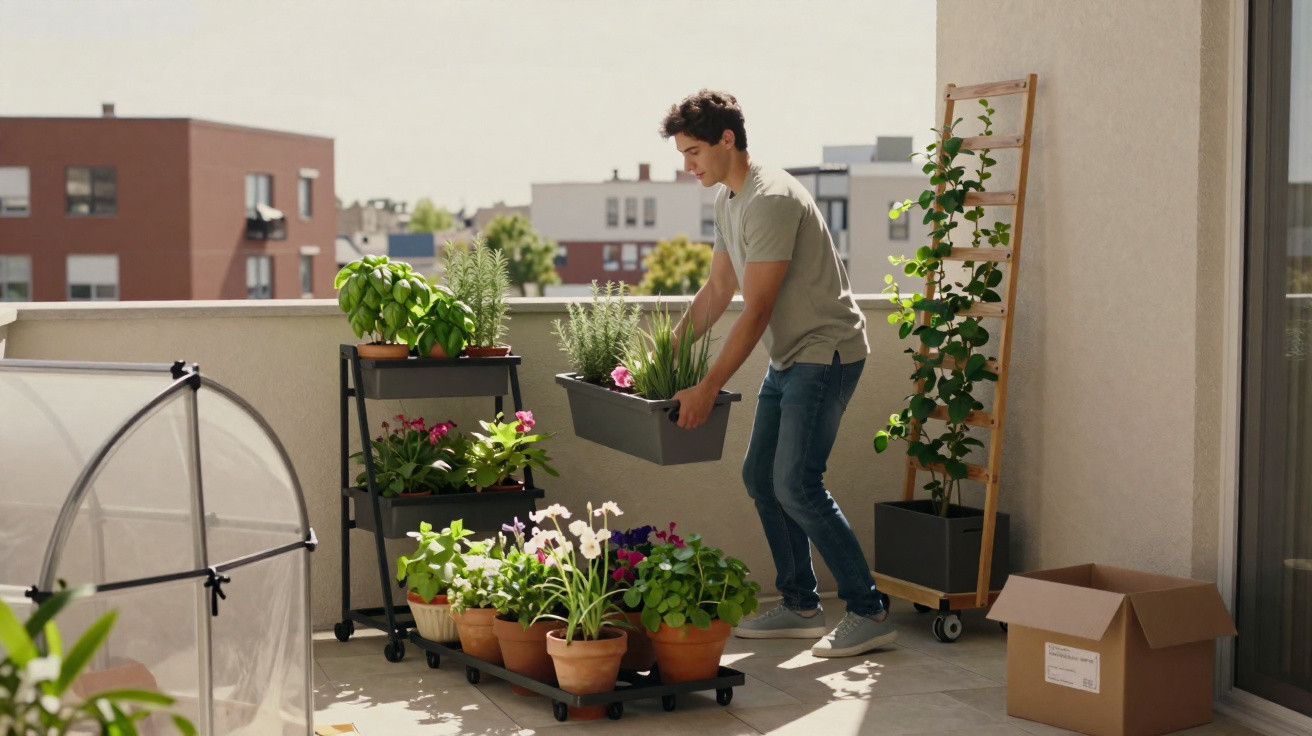
A combination for a long balcony planter could look like this:
- Two rose geraniums as strongly scented “end posts” at either side
- One citronella plant in the centre as a tall focal point





Comments
No comments yet. Be the first to comment!
Leave a Comment