
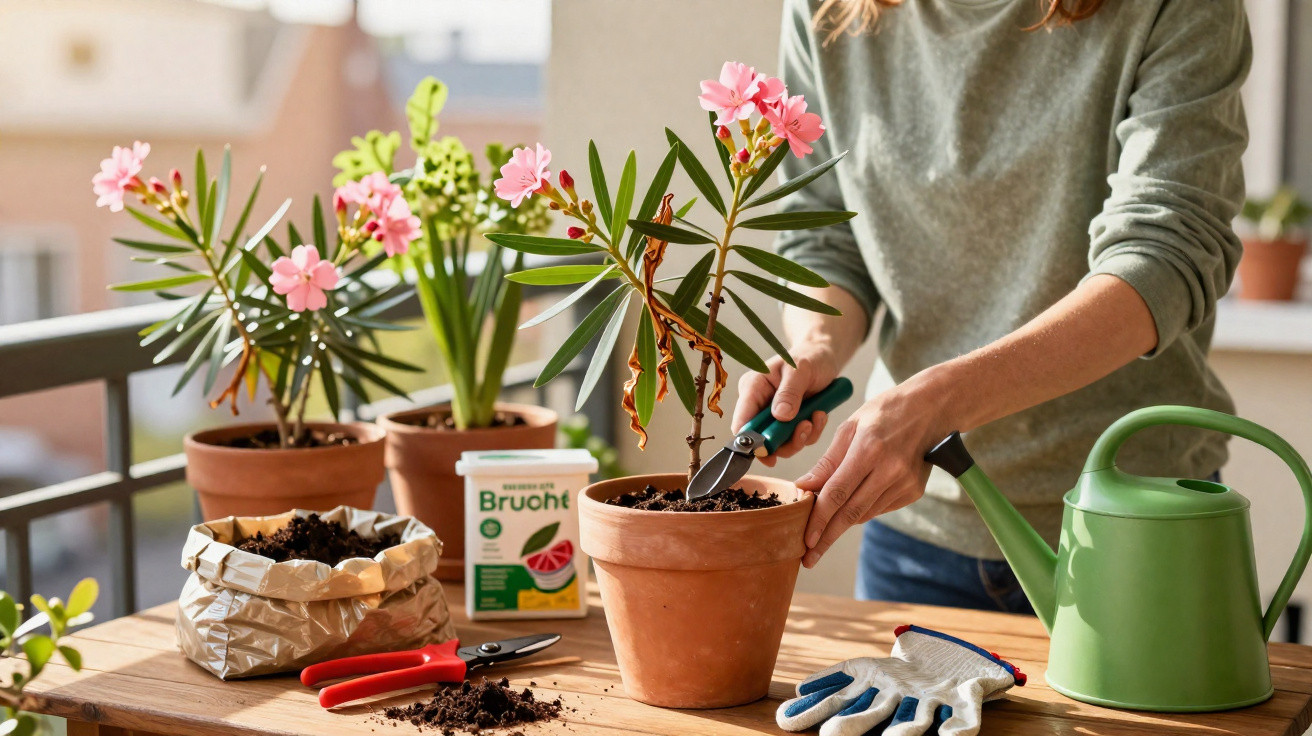
With the right approach, however, the shrub can make a remarkably quick recovery.
When gardeners bring their oleander out of its winter quarters in spring, the sight is often alarming: leaves that appear scorched, brown branches and a dispiriting scene instead of Mediterranean charm. Even so, patience is worthwhile. A clear plan involving diagnosis, gradual reacclimatisation, careful pruning, root care, suitable fertiliser and measured watering can usually save this ornamental shrub – and encourage it to flower impressively.
First check whether the oleander is still alive
Before reaching for secateurs or fertiliser, establish which parts of the shrub are genuinely still viable. Many plants look dead even though the damage is only superficial.
The simple bark scratch test
Use a fingernail or knife to gently scrape away a small area of bark:
- If the tissue beneath is green and moist, the shoot is alive.
- If it remains brown and dry, that section has died.
It is equally important to inspect the base of the shrub closely. This is usually where shoots have the best protection from frost. Small swollen buds show that the oleander still has the energy to produce new growth, even when the upper sections have suffered badly.
When to move it out of its winter quarters
Oleander originates from the Mediterranean and is highly sensitive to prolonged or late frosts. Putting it outdoors too early can cause further damage.
Use temperatures as a guide:
- No more frosty nights are forecast.
- Night-time temperatures should ideally remain above 10°C.
- Depending on the region, this is usually from late March to mid-April.
For a potted shrub, begin by placing it in partial shade for a few hours each day, then return it to its sheltered quarters. Only after several days should it remain outside permanently. If the oleander is planted in a bed, remove fleece and other coverings gradually, while continuing to watch for possible cold snaps.
“Anyone who gradually acclimatises their oleander to sunshine and outdoor temperatures prevents a second shock after the winter break.”
Targeted pruning encourages vigorous new oleander shoots
Once the danger of frost has passed, pruning determines how abundantly the plant will flower later on. Oleander blooms on young shoots that develop from older wood. A bold but considered cut is therefore worthwhile.
What should be removed – and what should remain
Using clean, sharp secateurs:
- cut back black, soft or completely dry branches to healthy green wood;
- remove shoots that cross over or grow inwards;
- shorten overly long, sparsely leafed shoots by one-third to two-thirds, depending on the extent of the damage.
If a specimen is severely affected, it may need radical pruning to around 40 centimetres above ground level. This will often reduce flowering in the current year, but it promotes strong, healthy new shoots the following year, which can then set buds generously again.
Spring pot check: roots, compost and a new home
Oleander in containers is particularly affected during winter. Its roots are tightly packed, while the compost is often depleted and poorly aerated. A spring refresh can determine how well it performs through the rest of the season.
When a larger pot is required
Signs that the container has become too restrictive include:
- roots emerging from the drainage holes;
- a rootball that occupies almost the entire pot, with hardly any compost between the roots;
- the shrub drying out very quickly despite watering.
In this case, choose a pot only slightly larger than the existing one. Oversized containers remain wet for longer and can encourage rot. A free-draining compost mix is suitable, for example:
- high-quality flowering-plant compost;
- a proportion of coarse sand or expanded clay;
- a little well-rotted compost to provide nutrients.
If the current container is already heavy enough, a “partial refresh” is often sufficient: remove around five centimetres of the top layer of compost and replace it with fresh, nutrient-rich compost.
Fertilising wisely: potassium makes the difference
To regain strength after winter and form plenty of buds, oleander needs feeding – but in the right amount and with an appropriate balance of nutrients.
“From March to September, a potassium-rich fertiliser is especially beneficial for oleander, as potassium strengthens flowers and shoots.”
The following options have proved effective:
- liquid fertiliser for flowering plants, added to the watering can every one to two weeks;
- slow-release fertiliser applied in spring, supplemented with occasional further feeding;
- avoid high nitrogen applications, so the shrub produces flowers as well as leafy growth.
Important: never apply highly concentrated fertiliser to bone-dry compost. Water first and fertilise afterwards, otherwise the roots may be damaged.
Watering: how much a weakened oleander really needs
After winter, many people overwater their shrub out of concern. Yet excessive moisture is almost as dangerous to the already stressed root area as frost.
The right watering routine in pots and beds
For container-grown plants, this rule of thumb works well:
- Allow the compost surface to dry slightly between waterings.
- Water less often but thoroughly.
- Empty saucers after around 20 minutes so that waterlogging cannot develop.
In garden soil, two thorough waterings each week will often provide sufficient moisture during hot summer periods. Sandy soil may require slightly more, while clay soil generally needs a little less. A mulch layer around the root area retains moisture for longer and prevents overheating.
No flowers without sun: choosing the right position
Oleander loves sunshine. Anyone hoping for abundant flowers must provide a bright, warm location.
| Factor | Recommendation |
|---|---|
| Light | Several hours of direct sunshine, ideally a south- or south-west-facing position |
| Wind | As sheltered from wind as possible, especially cold easterly winds |
| Heat source | In front of a warm house wall or garden wall, the shrub benefits from the microclimate |
Moving an oleander straight from winter quarters into blazing sunshine risks sun scorch on the leaves. A few days in bright partial shade as a transition will prevent this.
Common mistakes that prevent flowering
Many issues with oleanders that fail to flower or look unhealthy can be traced back to a handful of common pitfalls:
- placing them outdoors too early, resulting in late-frost damage;
- moving them abruptly from a cool veranda into full sun without acclimatisation;
- leaving the pot permanently wet in a saucer, which causes roots to rot;
- repeatedly over-fertilising when the compost is dry;
- choosing a dark position with insufficient light for bud formation.
Those who remove these obstacles in good time will often see a tired, almost bare shrub turn into a densely leafed, flowering plant within a few weeks.
How long does recovery take – and how hopeful should you be?
Many amateur gardeners give up on their oleander too soon. After a harsh winter, the plant simply needs time to rebuild its reserves.
A realistic guide is:
- the first delicate new shoots often appear two to four weeks after it has been moved outdoors;
- dense, fresh foliage develops after around two to three months;
- full flowering splendour generally arrives only in high summer.
The more frost-damaged branches had to be cut away, the later flowering will begin. In return, it is usually all the more impressive the following year if the shrub has been able to build up strength.
Toxicity, safety and smart garden combinations
All parts of oleander contain toxic substances. Children and pets should not chew its leaves or flowers. It is sensible to wear gloves when pruning and to wash hands thoroughly afterwards, as the plant sap can irritate some people’s skin.
In the garden, oleander pairs well with other sun-loving plants such as lavender, rosemary and Mediterranean perennials. These combinations enhance the southern character of a patio and create a stable, warm microclimate that benefits them all. Keeping the shrub in a container also allows it to be moved easily: into full sun in summer, then back to a sheltered place in late autumn before the nights become too cold.
With a little patience, a clear care plan and the confidence to prune, an oleander badly weakened after winter can often still become exactly what many gardeners want: a compact, vigorous shrub carrying bright flowers for weeks on end – from the first warm days of May well into autumn.






Comments
No comments yet. Be the first to comment!
Leave a Comment