
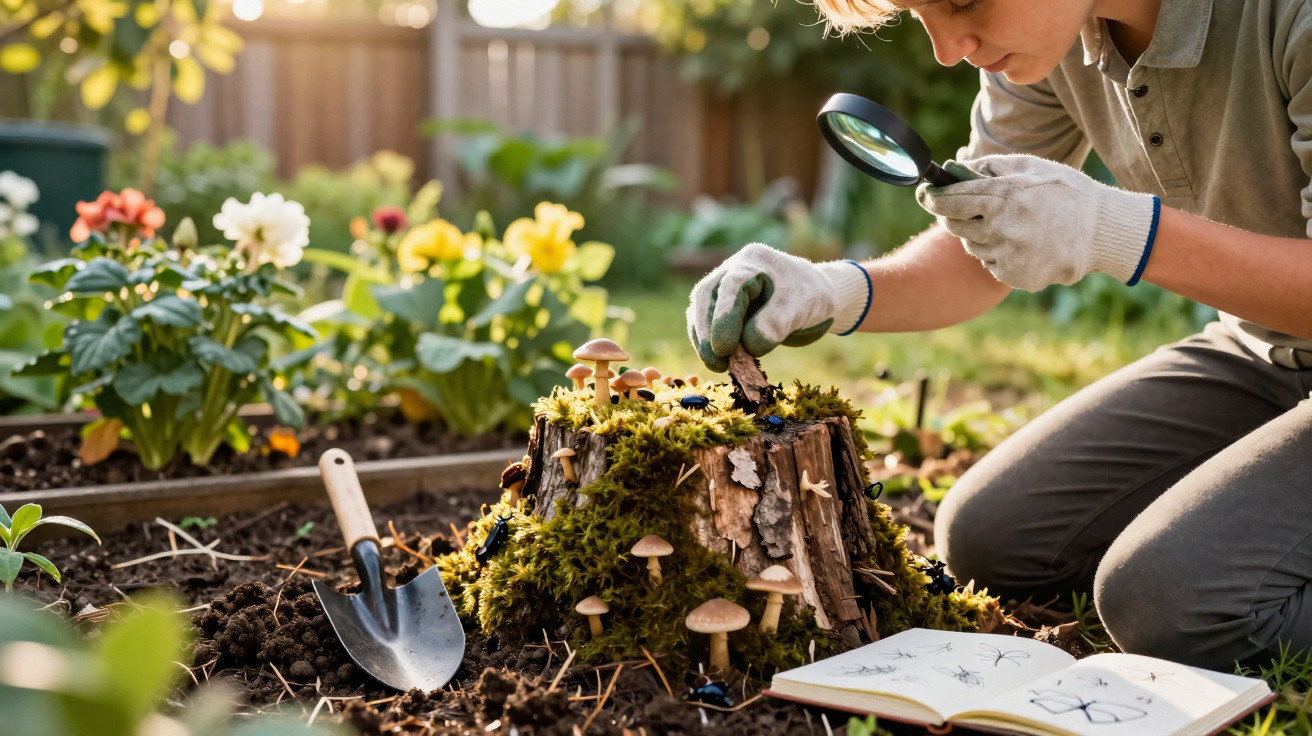
After a tree has been felled, the remaining stump can look like nothing more than an unattractive grey obstacle in the middle of the lawn. The instinct is usually simple: get rid of it. Garden maintenance firms earn good money grinding out or digging up stumps. Yet an increasing number of biologists, conservationists and practical gardening professionals are saying: stop - leave the stump where it is, because it can still work for your garden.
Why a tree stump is suddenly seen as a problem - and why that is mistaken
Traditional gardening guides long treated an abandoned tree stump as evidence of neglect. It gets in the way of mowing, can be a trip hazard for children at play, and clashes with the image of a “perfect”, smooth lawn. Once plans are made for a patio, swimming pool or formally arranged border, the stump may seem like an unwanted object that has to be removed.
Several removal options are offered by contractors, including heavy machinery, stump grinders, mini-diggers and chemical products intended to break down the root stock over many months. These methods require time, money and often patience, particularly where garden access is limited or the ground is badly disturbed.
Experts point out that a tree stump is not waste, but a valuable stage in the garden’s natural cycle.
Many building and gardening guides now explain that a stump can be left in place, provided it presents no immediate danger, does not obstruct people walking through the area and the felled tree was not affected by an infectious disease.
Hidden life in dead wood: what is really happening inside a tree stump
An old root stock may appear to be little more than grey, cracked timber. Beneath its surface, however, a highly active process is taking place. Its dry fibres gradually become a living feast for beetles, worms, fungi and micro-organisms. This so-called “rotting” wood creates a small nature reserve in the garden.
A tree stump as a hotel, larder and fertiliser factory
Gardeners with an ecological outlook often describe this type of wood as serving three purposes:
- Shelter: Cracks and cavities provide protection for insects, spiders, beetle larvae and many other small creatures.
- Food source: Fungi and bacteria decompose the timber, then become food for other animals in turn.
- Soil improver: As the wood breaks down, it produces humus, nutrients and a crumbly texture that loosens the soil.
British author and environmental campaigner Isabel Losada sums this up in a widely quoted gardening guide: leaving dead plant material in the garden automatically feeds an entire chain of organisms - and ultimately nourishes the soil itself. Her central point is that decay is not a sign of neglect, but a natural service.
Major gardening organisations such as the Royal Horticultural Society express similar views. They highlight the considerable value of standing and fallen dead wood for wildlife: many beetle species depend directly on it, while numerous solitary bees use cracks and boreholes as nesting sites. Even fungal fruiting bodies, which many gardeners find visually unappealing, form an important link in this chain.
When a tree stump is in the way: creative alternatives to a digger
Anyone who dislikes the sight of a grey block in the lawn does not necessarily need to arrange for its removal. Specialists suggest several ways to turn a “problem stump” into a design feature.
Rather than destroying a tree stump, it can be turned into furniture, a planter or even a work of art - while continuing to provide habitat.
Ideas for making a tree stump useful and attractive
- Natural seating: Smooth the top and, if needed, sand it slightly to create a rustic stool or small table surface.
- Mini border: Cut a hollow into the top, fill it with compost and plant perennials, herbs or succulents.
- Support for climbers: Plant a vigorous climbing rose, clematis or honeysuckle; after a few years, flowers and foliage will cover the stump.
- Wood sculpture: Those who wish can hire a chainsaw artist to carve the stump into a figure or abstract form.
These approaches bring together garden design and ecology. Even where part of the timber is worked, cracks, roots and deeper sections remain available as habitat. It also gives children an interesting place to observe beetles, woodlice, millipedes and fungi right outside the door.
When a tree stump genuinely needs to be removed
Despite its benefits, there are circumstances in which specialists clearly recommend removal. Not every stump is suitable as a permanent garden feature.
| Criterion | Stump can remain | Removal makes sense |
|---|---|---|
| Location | Away from main paths and outside play or vehicle areas | Directly beside a driveway, pavement, house entrance or heavily used space |
| Health of the tree | The tree was healthy, with no signs of fungal or bacterial disease | Confirmed infectious tree disease or wood-destroying fungi that pose a risk to other trees |
| Future use | No major renovation or construction is planned for the site | A patio, garage, pool or house extension is planned directly above the root area |
| Proximity to buildings | Clear distance from foundations and utility lines | Very close to a house wall or known pipework, with a risk of damage from roots or decay |
In these situations, using a specialist contractor is worthwhile. Many experts advise against chemical treatments because they can harm soil organisms and may spread into groundwater or neighbouring beds. Mechanical removal by grinding or excavation is more labour-intensive, but remains controllable.
More variety in the garden: why a stump offers more than an empty patch
For anyone who likes to keep a garden “tidy”, the first summer with a stump can take some adjustment. Grass may grow taller around it, fungi can appear on damp days, and birds may peck at the decomposing timber. Over time, the garden begins to feel more alive.
A stump creates its own microclimate. The wood retains moisture, provides shade and helps protect the soil from drying out. Small animals benefit especially during hot summers. At the same time, the extra insect food attracts birds and hedgehogs. For those seeking greater biodiversity in their garden, one old root stock can often achieve more than expensive insect hotels bought from a garden centre.
Practical tips for living with a tree stump
- Avoid constantly digging around the stump, so that soil life and fungal networks can develop.
- Leave some fallen leaves in place during autumn, as they offer protection and additional material for decomposers.
- Do not use toxins, including garden chemicals that sound “harmless” but can affect micro-organisms.
- On very smooth cut surfaces, saw or drill a few small cracks and holes to speed up colonisation by fungi and insects.
Gardeners with fruit trees can strengthen this effect by leaving fallen fruit in one corner of the garden. Certain butterfly species feed on the fruit juice there in late summer, while beetle larvae continue their work within the stump. With little effort, this creates a small but complete ecosystem.
From a professional perspective, a tree stump fits perfectly into a modern garden adapted to the climate. Instead of keeping every surface sterile, many designers now favour features that retain water, provide shade and offer habitats. Dead wood plays a central role, whether as a stump, a deadwood pile or decoratively arranged branches.
So, the next time you stand in front of the stump left behind after felling a tree, think beyond the next time you mow the lawn. What appears to be a useless remnant offers a lasting benefit for the soil, wildlife and, ultimately, the resilience of the whole garden.


Comments
No comments yet. Be the first to comment!
Leave a Comment