
Many amateur gardeners reach for blue pellets in frustration when they find nothing but chewed leaves in the vegetable patch each morning. Yet this chemical solution affects more than just slugs: it can harm the garden’s entire ecosystem. There is, however, a remarkably straightforward method that uses no poison at all – and is often much more dependable.
Why slug pellets become a problem in the vegetable garden
When you wake up to hole-riddled lettuce leaves, nibbled courgettes and damaged strawberries, slugs are the obvious suspects. Garden centres offer packs of colourful pellets that promise a quick fix. They seem convenient, affordable and effective.
That is precisely where the problem starts. Traditional slug pellets often contain the active ingredient metaldehyde. Although intended to kill slugs, it can:
- be dangerous for dogs, cats and hedgehogs;
- harm birds and other wildlife;
- seep into groundwater;
- disrupt the ecological balance of the garden.
Even products containing ferric phosphate, which are promoted as “organic”, interfere with natural processes. Legally, they are classed as plant protection products and are not entirely neutral towards other soil organisms.
“Slugs are not merely pests – they break down plant material and provide food for hedgehogs, beetles, toads and birds.”
Spreading poison widely also removes a food source for these beneficial creatures. In the longer term, this can lead to more slugs, as their natural predators are missing. For this reason, many gardeners want to protect their plants without ruthlessly eradicating everything.
A new view of slugs: pests and helpers at once
Slugs can seem entirely unwelcome in a garden bed, but they are part of the garden ecosystem. They:
- decompose dead plant matter;
- contribute to soil formation;
- provide vital food for ground beetles, hedgehogs and toads;
- indicate areas that are especially damp and rich in nutrients.
The smart approach is therefore not “destroy everything”, but rather to protect only what is genuinely vulnerable. This is where a simple, almost surprisingly ordinary solution comes in – using an item that is plentiful in nearly every household.
The bottle method: a mini greenhouse against slugs
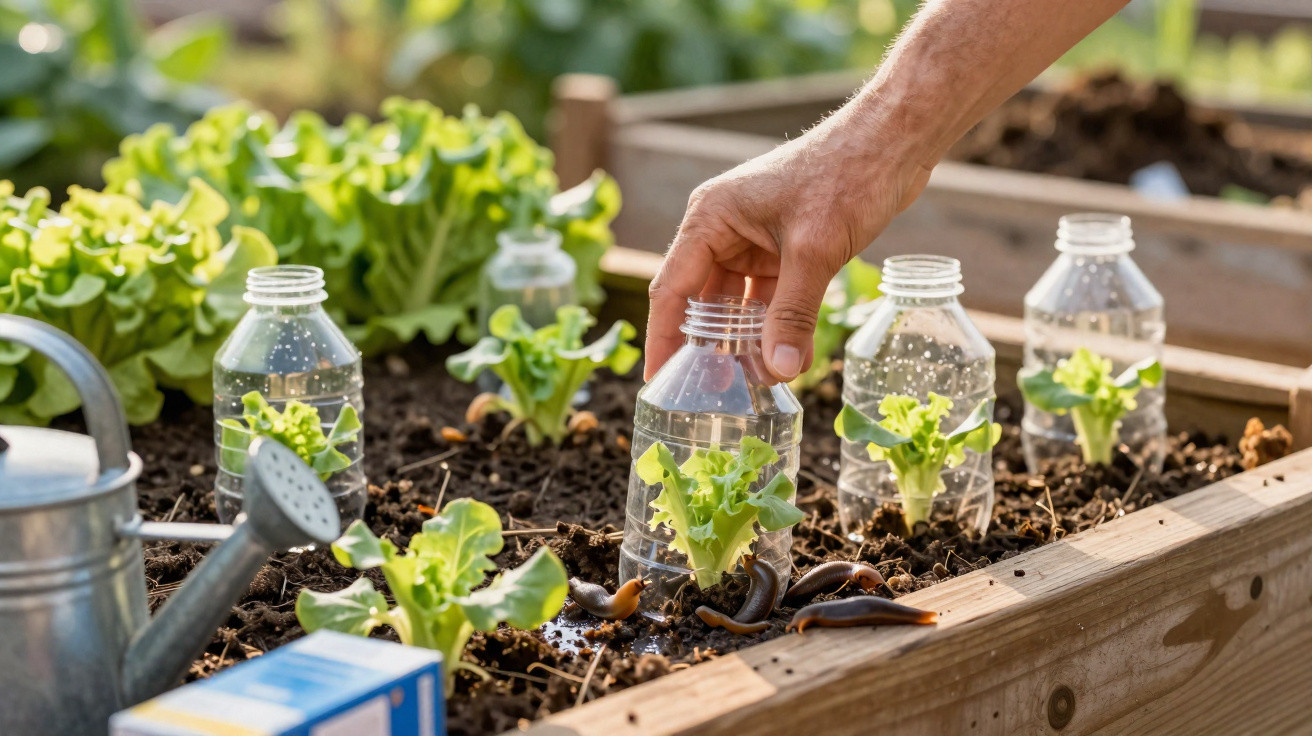
The concept sounds almost too easy: an empty plastic bottle can become an effective slug deterrent. Instead of putting poison in the bed, it creates a small transparent barrier around each at-risk plant.
“A transparent bottle acts like a protective cloche: slugs stay outside, while the microclimate inside helps the plant establish itself.”
How the “bottle cloche” works
You need only a few items:
- a clean plastic bottle (1.5 or 2 litres);
- a sharp knife or sturdy pair of scissors;
- some adhesive tape, if desired;
- sand, wood ash or crushed eggshells if needed.
Step by step, here is how to make the slug protection:
- Rinse out the bottle and remove its label so that sufficient light can pass through.
- Cut off the base around 3–5 centimetres above the bottom edge of the bottle.
- If the soil is very wet, make several small holes in the bottle so condensation can escape.
- Place the bottle over young lettuce, courgette or strawberry runners.
- Push the lower edge 2–3 centimetres into the soil so that no slug can crawl underneath it.
You can scatter a ring of sand, ash or eggshells around the bottle’s edge. Many slugs avoid this dry, rough area, which further improves the protection.
Which plants benefit most from the bottle method
Young plants are particularly susceptible to slug damage. The bottle method is especially effective for:
- all types of lettuce;
- young brassicas, including broccoli, Savoy cabbage and red cabbage;
- courgettes, squashes and cucumbers;
- young strawberry plants;
- marigolds, dahlias and other ornamental plants with tender shoots.
The bottle functions like a small greenhouse. It shelters plants from wind, retains a little warmth and even offers protection from light hail. Especially in spring, plants often establish themselves visibly faster beneath this cloche.
How long bottles should remain in the bed
The protection is only needed for a limited period. Usually, the following is enough:
- around two to three weeks for lettuce;
- three to four weeks for courgettes and squashes;
- until after the last frosts for sensitive crops.
Once plants have developed robust leaves and stronger stems, the bottles can be removed or raised. If preferred, cut off the top and use only the lower section as a “collar” – this allows more air to circulate while still keeping many slugs away.
How to get the most from the bottle trick
The bottle cloche works best when it forms part of a broader garden strategy. A few simple measures can significantly strengthen its effect.
Gentle measures that reduce slug pressure
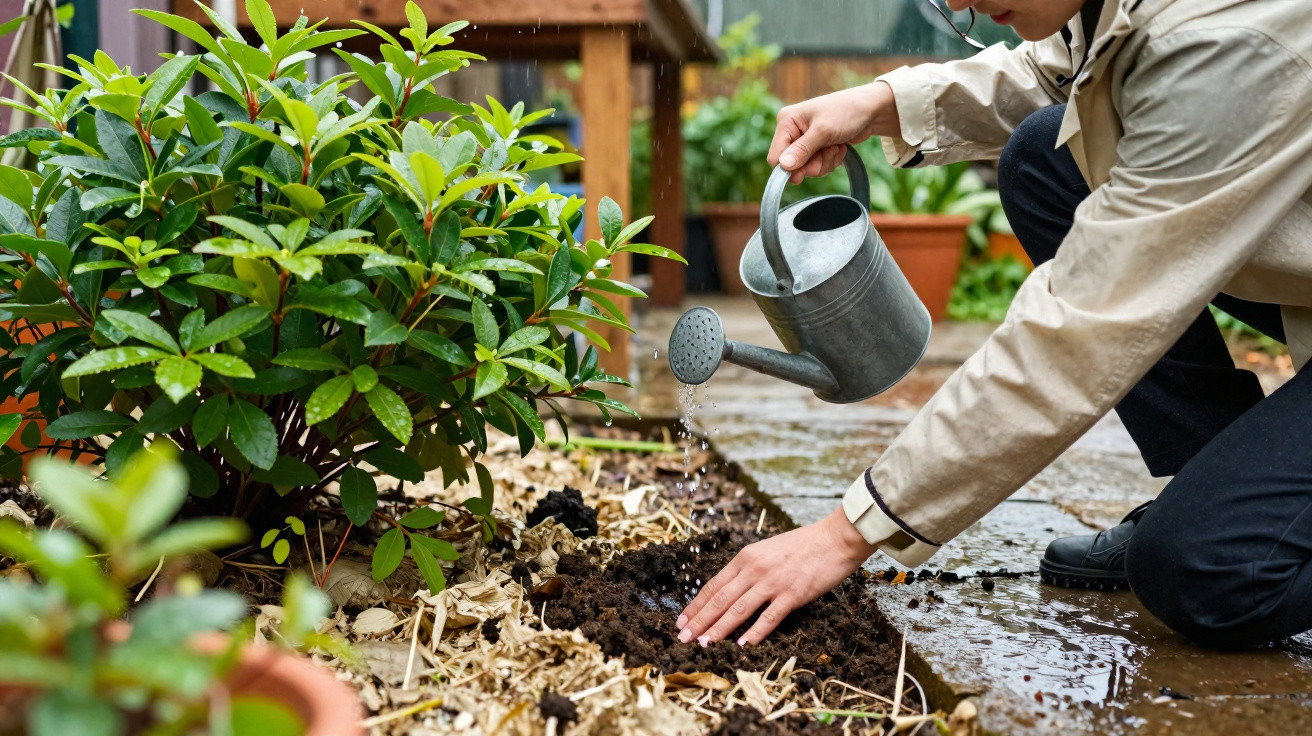
- Water only in the morning: Wet soil in the evening attracts slugs as if by magic. Watering in the morning takes away their food source at night.
- Leave shelters for beneficial wildlife: A pile of leaves, dead wood, stone walls or a hedgehog tunnel provides refuge for hedgehogs, toads and ground beetles.
- Use mixed planting: Plants such as garlic, wormwood and fennel are often avoided. Planted close to beds, they act as a natural deterrent.
- Apply mulch selectively: Fresh grass cuttings directly around lettuce are an invitation to slugs. Use dry mulch instead, or apply it only between rows.
“Anyone who wants to slow down slugs does not need a sterile space, but a living garden with plenty of predators.”
If desired, you can also place traditional traps made from boards or overturned plant pots a few square metres apart. Slugs gather beneath these shelters during the day, making them easy to collect.
Plastic in the garden: use it wisely rather than throwing it away
Using plastic bottles in the garden may initially seem contradictory. However, the bottles do not go straight into the bin; instead, they gain a second, useful long-term purpose. Many gardeners reuse the same bottle sections for several years in succession.
Anyone wishing to avoid plastics in the bed as far as possible can choose alternatives:
- glass cloches or old preserving jars;
- cut-open large yoghurt pots;
- homemade wooden frames with fine wire mesh.
In every case, a close seal against the soil is essential. Even a small gap is enough for slugs to reach the tender greenery.
Risks, limitations and smart combinations
The bottle method will not solve every slug issue, but it can noticeably reduce the pressure. A few points require attention:
- In strong direct sunshine, the bottle can become very hot – if necessary, ventilate it briefly around midday.
- Heavy condensation encourages fungal diseases; extra ventilation holes can help.
- Where slugs occur in very large numbers, additional measures are needed, such as collecting them or using copper-tape barriers on raised beds.
In particularly rainy years, combining several approaches is worthwhile: bottle cloches for the most sensitive plants, drier periods created by morning watering, plenty of refuges for beneficial wildlife and only carefully targeted mulching. This keeps the garden alive, while lettuces are more likely to end up on your plate than in a slug’s stomach.
Once you have tried the principle, you will quickly get the hang of it. An empty bottle, a sharp knife and a few minutes of time – and the night-time feeders suddenly face a crystal-clear boundary.


Comments
No comments yet. Be the first to comment!
Leave a Comment