
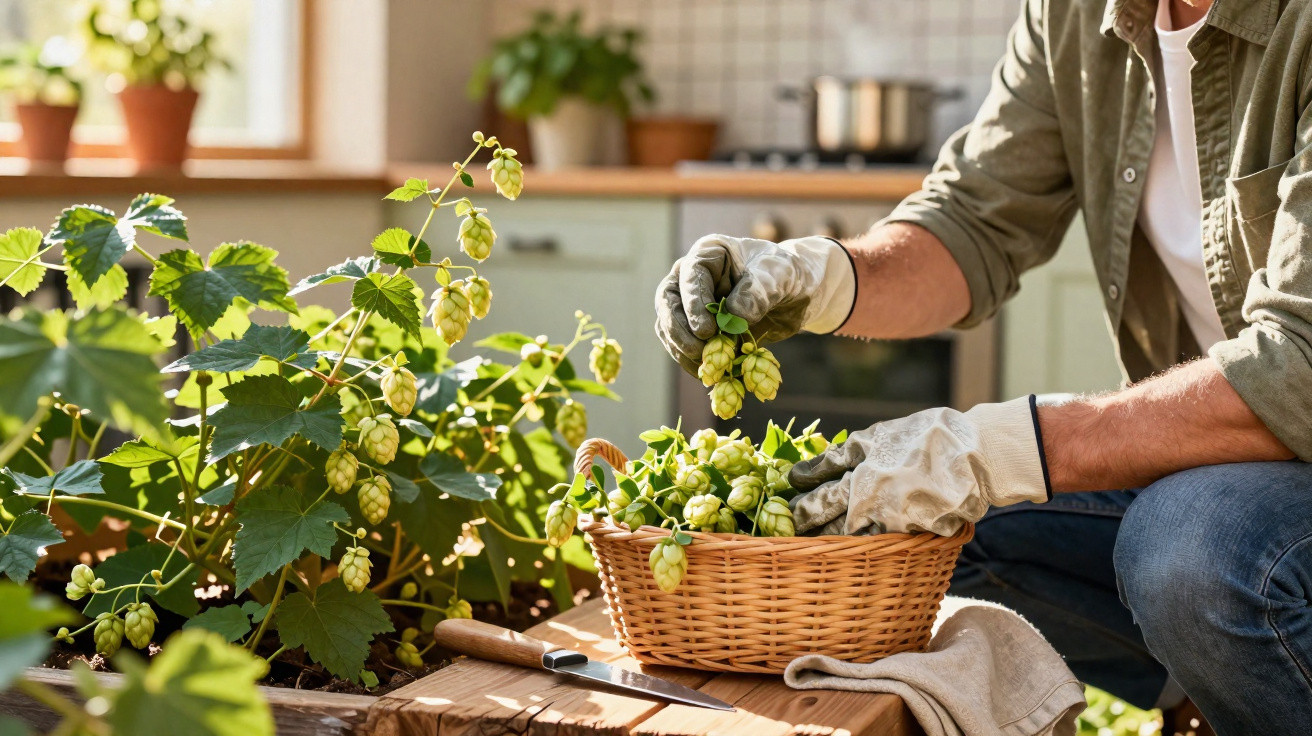
Between thuja, privet and hazel hedges, the same scene plays out every year: a green vine climbs upwards, blankets shrubs and looks invasive and troublesome. The usual response is to reach for the secateurs and remove it all. Yet few people realise that, if correctly identified in spring, this apparent nuisance is one of Europe’s most expensive wild vegetables.
The ‘truffle of the North’: the costly climbing plant explained
The unassuming vine is wild hops. More precisely, it is the young shoots that emerge from the soil in March and April. In top restaurants, they are known by names such as the ‘truffle of the North’ and ‘poor man’s asparagus’ – with good reason.
“For carefully graded, ultra-fresh wild hop shoots, gourmets pay up to €1,000 per kilo in spring.”
There are several reasons for this high price. Harvesting is exceptionally labour-intensive: every individual shoot must be found, identified, carefully cut away and then sorted again. What is more, the edible section is very small. Only the top two to three centimetres of each shoot are considered tender enough for cooking; the remainder soon turns woody.
A single fresh shoot weighs only around one gram on average. Gathering a kilo therefore requires hundreds, and more likely thousands, of individual shoots. This is why the delicacy remains scarce even at specialist markets and is found almost exclusively in high-end restaurants.
How to identify wild hops safely in the garden
Wild hops are perennial, vigorous climbing plants. During summer, they can grow several metres in a single season and completely cover fences. To identify them in a garden or along field margins, look for a combination of distinguishing features.
Typical identifying features of wild hops
- Growth habit: Rough, vine-like tendrils that wrap themselves around any available support.
- Direction of growth: As they grow, the shoots always wind clockwise – from left to right around a supporting stem.
- Leaves: Arranged opposite each other, with a palmate shape, pronounced lobes and coarsely toothed edges.
- Habitat: Damp, nutrient-rich places, including hedges, stream banks, woodland edges and overgrown corners of gardens.
- Texture: The stems feel rough, almost slightly scratchy to the touch.
In early spring, the edible parts look markedly different from the mature summer plant. At this stage, small and delicate stems first push up from the ground.
What the valuable spring shoots look like
The sought-after shoots have a highly recognisable appearance: they are slender, flexible and usually light green with a faint violet tinge. Those growing in shade can appear almost pale. Their tips curl into spirals. Rub them between your fingers and they release a resinous, spicy scent with a subtle citrus note.
There is one crucial point for anyone gathering them: some climbing plants can look similar at first glance, including species that are poisonous. Bryony, a native poisonous plant, can particularly confuse inexperienced foragers. However, it has different leaves and does not produce the rough, clockwise-twining hop vine.
“Anyone who is even slightly unsure should keep them out of the frying pan – with wild plants, safety always comes before enjoyment.”
Not just a weed: how gourmets use wild hops
In good restaurants in Belgium and in some parts of Germany and France, wild hop tips appear on spring menus as a seasonal speciality. They are generally prepared in much the same way as asparagus or delicate leafy vegetables.
Classic ways to cook wild hop shoots
- Like green asparagus: Blanch briefly, then toss in butter or olive oil with a little salt and lemon.
- In risotto: Stir the tips into the creamy rice dish only at the end, so that they retain their bite.
- In an omelette or scrambled eggs: Fry them briefly and combine with eggs, a little cheese and herbs.
- As an accompaniment to fish: Their gentle bitterness works well with mild fish fillets or scallops.
- With pasta: Fry in butter and garlic, spoon over fresh tagliatelle and finish with a little Parmesan.
In flavour, the shoots recall a blend of young beans, asparagus and a hint of hazelnut, with a mild bitterness that brings beer to mind. It is precisely this combination that appeals to chefs searching for unusual flavours.
More than a vegetable: other uses for hops
Most people know hops only from brewing. The familiar hop cones, which are the flower clusters, give beer both its bitterness and its aroma. Wild hops can also be used in principle to flavour home-brewed beer or as an ingredient in herbal blends.
Dried hop cones have long featured in traditional herbal remedies. They are used in teas and pillows that are said to have a calming effect. Many people swear by them for restlessness or difficulty falling asleep, often together with valerian or lemon balm.
How home gardeners can harvest responsibly
Anyone now viewing their own hedge differently should still approach harvesting with restraint. Wild hops are widespread, but, as with any wild harvest, certain rules apply.
- Do not cut everything back: Pick only a few young shoots from each plant so it can recover.
- Harvest early in the morning: In the cooler hours, the shoots stay crisp and are less likely to wilt quickly.
- Use only the tip: Snap off the upper two to three centimetres, as the rest soon becomes fibrous.
- Chill quickly: Wrap harvested shoots in a damp cloth and place them in the fridge without delay.
- Cook them fresh: Ideally, prepare them on the same day, as both flavour and texture deteriorate rapidly.
From a legal perspective, gathering wild plants in protected areas or national parks is often prohibited or tightly restricted. Naturally, the situation is different in your own garden or on private land with permission. Anyone harvesting along field margins should also avoid areas that have been heavily sprayed.
Risks, lookalikes and what allergy sufferers should know
In addition to the risk of confusing wild hops with poisonous climbing plants, there are other considerations. Some people have a mild allergic reaction to hops, such as skin irritation when picking them. Those working in commercial hop cultivation know this as ‘hop picker’s dermatitis’.
This is rarely severe in a home garden, but people with sensitive skin are still advised to wear gloves. When eating the shoots, people with a severe pollen allergy can cautiously test whether they tolerate them before consuming larger quantities.
Why it is worth taking a closer look at the hedge
Wild hops are a clear example of how relative the term ‘weed’ can be. The very same plant regarded as an irritating climber in summer becomes a sought-after delicacy and commodity in early spring. For home gardeners, it offers the chance to create a distinctive ‘gourmet bed’ without planting a single new crop.
Looking more closely at hedges and untidy corners of the garden does more than introduce an intriguing plant. It also reveals how many overlooked ingredients grow right on the doorstep – and makes it easier to understand why chefs and foragers are prepared to pay astonishing sums for a few grams of the right shoots.

Comments
No comments yet. Be the first to comment!
Leave a Comment