
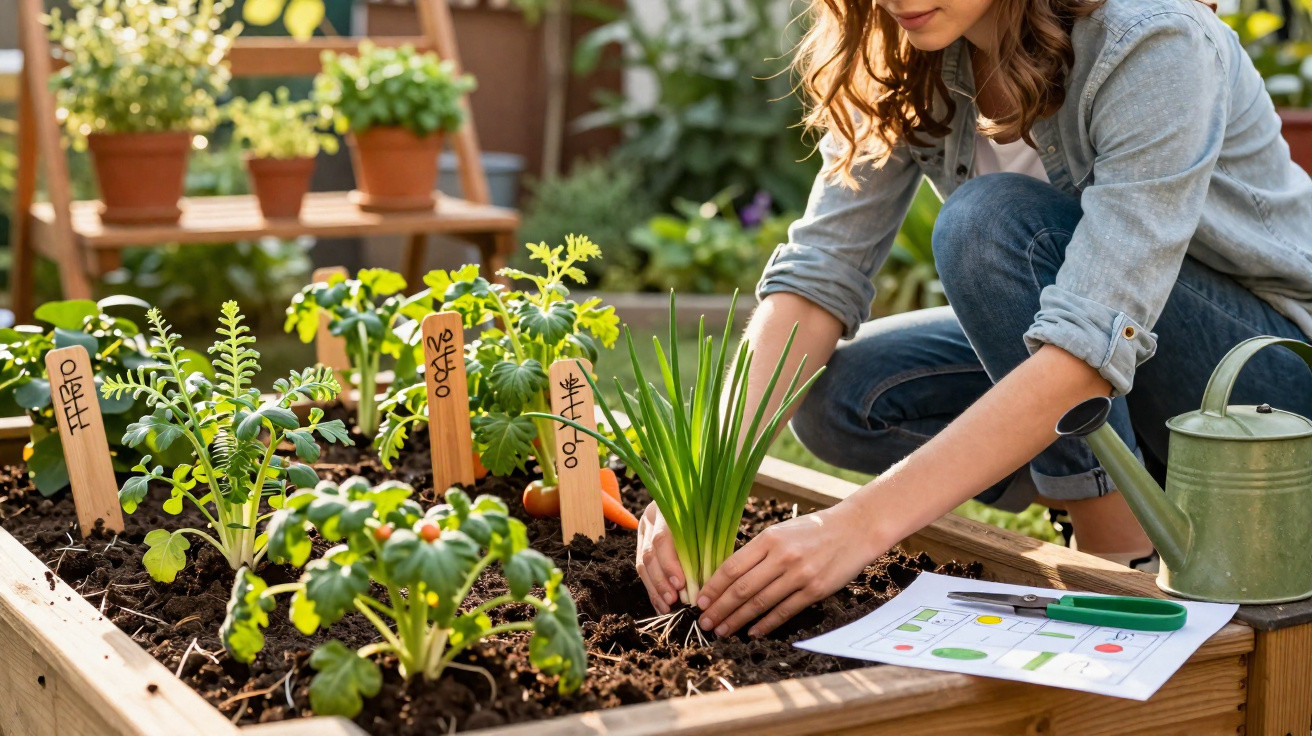
Anyone who grows tomatoes, strawberries and roses will know the issue: aphids, fungal diseases and chewed foliage can appear before the first crop is even ready. Rather than immediately resorting to chemicals or labour-intensive homemade remedies, increasing numbers of home gardeners are using a straightforward approach: placing the right plants alongside one another. An old favourite plays a surprisingly important part in this method – ordinary chives.
Why chives make such an effective companion plant
Chives (Allium schoenoprasum) are hardy members of the onion family. Their roots stay very close to the surface, reaching down only a few centimetres. This means they can sit easily among tomatoes, strawberries or roses without competing for their water or nutrients.
“Chives act like a small protective umbrella: they repel pests, reduce fungal diseases and attract beneficial insects at the same time.”
Their familiar onion-and-garlic aroma comes from sulphur-containing compounds, particularly allicin. This blend unsettles many pests, encouraging them to look elsewhere for a target. Gardeners report that chives are especially useful for keeping the following unwelcome visitors under control:
- Aphids
- Spider mites
- Carrot flies
- Certain beetle species on cucumbers
- In some areas, even slugs around strawberries
At the same time, these sulphur compounds have a mildly antifungal effect. For instance, they may lower the pressure from black spot on roses, scab on apple trees and certain fungal problems on strawberries. Chives are not a miracle cure, but they can take the initial momentum out of many diseases.
There is another benefit: their purple flower heads attract bees, hoverflies and other pollinators. Hoverfly larvae consume aphids in large numbers, making this an exceptionally effective pairing right beside the bed.
The 13 best companion plants for chives
The combination is what matters: chives provide protection, while neighbouring plants either use deeper soil layers or shade the ground. The following companion plants are particularly well suited to chives:
- Tomatoes: fewer aphids and mites on shoots and leaves.
- Carrots: the scent confuses carrot flies.
- Strawberries: ripe fruit is more likely to be spared by slugs.
- Lettuce: cos lettuce, loose-leaf varieties and similar crops are less often attacked by sap-sucking insects.
- Cucumbers: chives can help against certain beetles and aphids.
- Peppers: leaves show less feeding damage.
- Broccoli and other brassicas: aphids and flea beetles are generally less severe.
- Roses: fewer aphids, with fungal infection often reduced.
- Tulips: the bulbs appear to become slightly less appealing to voles.
- Apple trees and other soft fruit plants: gentle support against fungal diseases.
- Grapevines: added protection around the sweet grapes.
- Mixed culinary herbs: basil, coriander and parsley grow harmoniously in the same planter.
- Parsley in a pot: a practical long-term duo right next to the kitchen.
These mixed plantings work so well because the roots grow at different depths. Tomatoes, cucumbers, peppers, grapevines and fruit trees extend their roots deeper into the soil, while chives remain near the surface. There is therefore very little competition for water and nutrients. With shallow-rooted crops such as lettuce, strawberries and carrots, it is primarily the scent that helps: specialist pests find the crop harder to detect because the chives interfere with its smell.
Positioning chives correctly in the bed
In a vegetable garden, it is worth including chives as a permanent part of the plan rather than simply tucking them into a spare corner. Here is how to do it:
- Bed edging: plant small clumps along bed borders, spaced roughly 30 to 40 centimetres apart.
- Interplanting: place individual clumps between tomatoes, carrots, lettuces or strawberries.
- Rose border: arrange three to five plants in a circle, around 30 centimetres from the base of the rose.
In an orchard, a ring of chives is useful in the area where rain drips from the branches. This brings their scent and active compounds especially close to the leaves and fruit.
“Anyone who has problems with aphids or fungi in the same places every year can establish groups of chives precisely in those spots.”
A sunny or partially shaded site with loose soil is ideal. In Central European conditions, young plants can be put into the ground from April onwards. Leaving 25 to 30 centimetres between clumps allows air to circulate, helping the foliage dry quickly after rain.
Using chives in pots and on balconies
This protective technique also works without a garden. On a balcony, plants with similar watering needs should share the same container. For example, a deep, well-drained pot is suitable for a combination of peppers, chives and a few carrots. The herb deters aphids, carrot foliage shades the soil, and the pepper makes use of the deeper growing space.
A dedicated kitchen planter near the patio door is also highly popular. A typical combination includes:
- Chives
- Basil
- Coriander
- Parsley
All four thrive in consistently moist, nutrient-rich compost and provide a complete set of seasonings for the kitchen. They also benefit from the protection offered by the clumps of chives.
Beans and peas are less suitable for the same planter. They prefer different soil conditions and can be sensitive to plants from the onion family. Mediterranean herbs such as thyme, rosemary and lavender also favour a lean, dry growing medium. It is better to grow these species in a separate container.
Care, harvesting and useful extra tips
Chives are among the least demanding herbs. Regular watering and an occasional addition of compost or organic fertiliser are all they need. The important point is not to cut them back too low. Repeatedly snip individual stems just above ground level; this encourages continual new growth and keeps the plant young.
Allowing plenty of flowers to remain for insects means sacrificing a little kitchen flavour, but it strengthens the garden as a whole. A good compromise is to let some clumps flower while harvesting others consistently.
A useful detail: faded stems produce seeds that fall easily. In loose soil, new young plants will then emerge naturally the following year. Any unwanted seedlings can simply be lifted and replanted elsewhere – for example, beside roses that are troubled by aphids every year.
How strong is the effect likely to be?
Chives do not replace complete plant care, but they provide a subtle and lasting pressure against pests and diseases. Gardeners who already rely on resilient varieties, crop rotation and good airflow can use carefully positioned chives to gain the final few per cent from their system.
| Companion plant | Main effect of chives |
|---|---|
| Tomatoes | fewer aphids and mites |
| Strawberries | reduced slug pressure, a more stable microclimate |
| Roses | fewer aphids, fungal infection reduced |
| Apple tree | gentle protection against fungal diseases |
| Lettuce | sap-sucking pests occur less often |
When chives are particularly worthwhile
Chives are especially interesting in places where spraying is difficult: densely planted raised beds, balcony containers or miniature beds in urban gardens. Where numerous plants grow close together, the scented layer has its strongest effect. That close planting also carries a greater risk of fungal disease, but chives can help restore the balance to some extent.
Anyone new to companion planting should begin with a simple set-up: tomatoes, strawberries or roses, supplemented with several sturdy clumps of chives. After one season, it will usually become clear which parts of the garden benefit most from this green protective team.
Comments
No comments yet. Be the first to comment!
Leave a Comment