
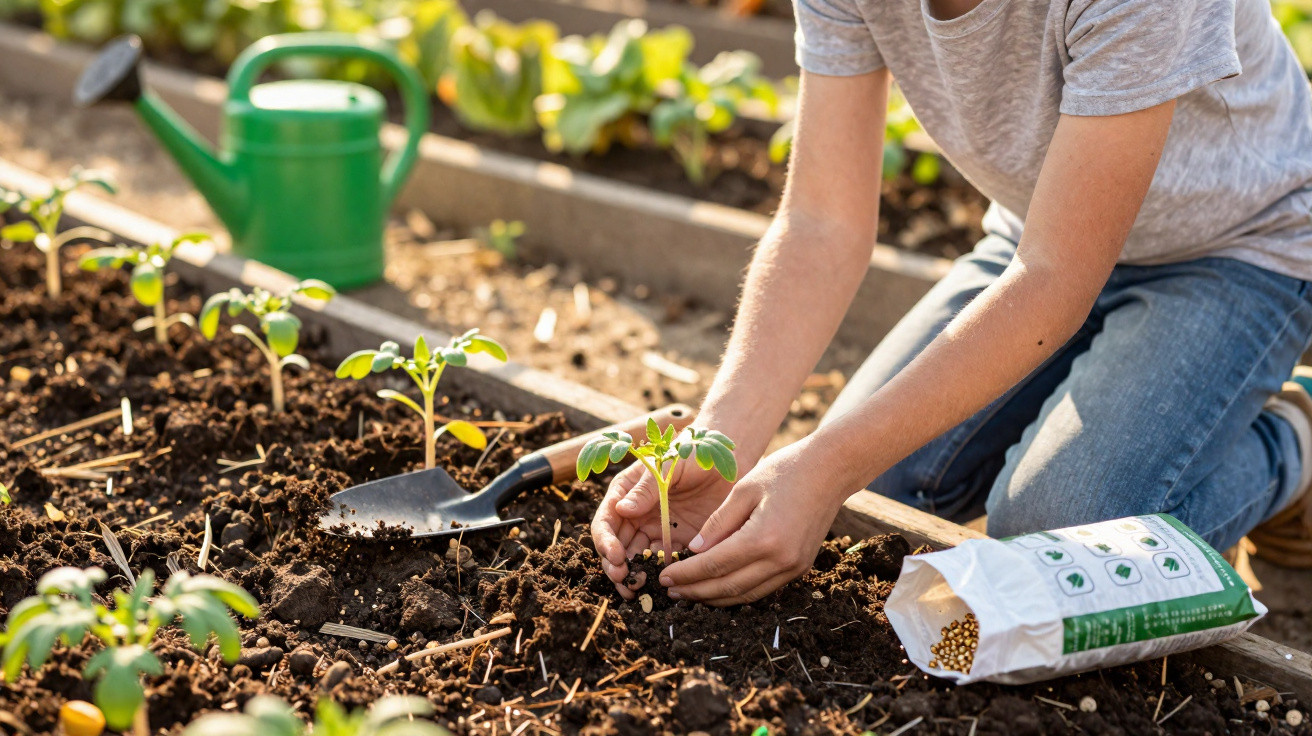
The small tomato plant looked pitiful. It had just been pulled from its pot and placed in fresh soil, its leaves slightly droopy after the move. Beside it lay the open bag of fertiliser, its label promising “vigorous growth”. The hand hesitates for a moment, then generously tips the granules straight onto the root ball. The following morning, the soil is wet and the bed looks tidy. Yet the leaves develop brown edges and curl inwards, as if trying to hide. A familiar pang hits: have I just done more harm than good?
What really happens in the soil when we fertilise immediately
We all know that moment: you want to do something helpful and secretly hope to watch growth happen in fast-forward. Newly planted, newly fertilised - what could possibly go wrong? It seems logical in the garden bed: a new home, then a new store cupboard. For the plant, though, this means stress on several levels. First comes the move, followed by a chemical cocktail right at the roots. Much of this happens out of sight, in the dark soil where delicate root hairs are trying to establish themselves. That is precisely where fertiliser applied too soon can cause trouble. Often, you only notice it days later.
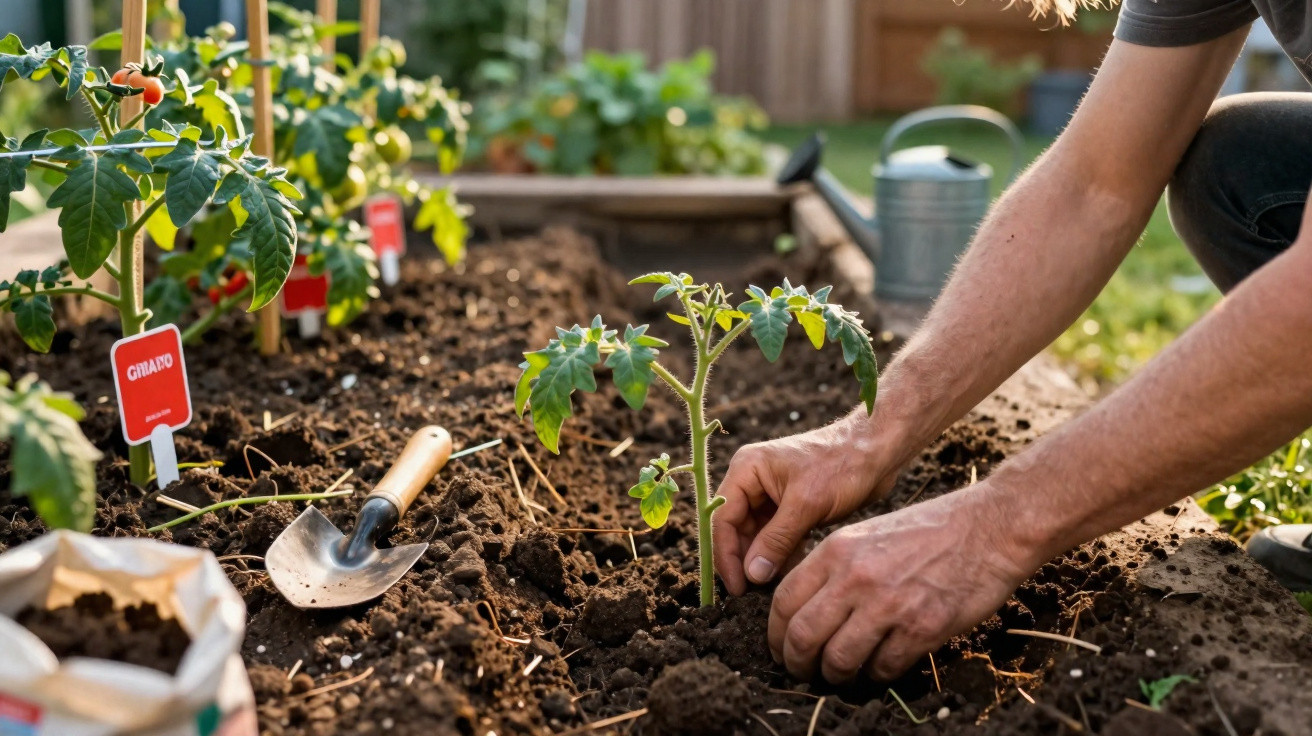
A hobby gardener I know still talks about his “tomato summer from hell”. He planted 20 young plants, each carefully spaced 40 centimetres apart, with every detail meticulously planned. Wanting to avoid mistakes, he read the instructions on the fertiliser packet three times. He then scattered a complete fertiliser directly into every planting hole, “for a strong start”, as he put it. Two weeks later, he was standing between two rows of half-dead plants. The leaves looked scorched, as though someone had singed them with a lighter, while the shoots were soft and glassy. He lost nine plants - not through too little care, but because everything came at once. You could almost read the guilt on his face.
The sober truth is that newly planted specimens have priorities other than growth. Their first aim is survival. Once planted, they must readjust their fine root systems, respond to different soil moisture levels and temperatures, and adapt to new microorganisms. If they receive a strong dose of nutrients at this stage, especially in mineral form, the salt concentration rises directly around the roots. Water is effectively drawn out of them, so the plant becomes dehydrated internally even when the soil appears damp. This is known as root burn, and it is often invisible until the leaves begin to droop. Rather than getting a “boost”, plants receive a full stop.
How to give plants a gentle start in new soil
The calmest approach starts before the actual planting. If you enrich the bed two or three weeks in advance with mature compost or a mild organic fertiliser, you create a kind of background level of nutrients. It is not a shock, but a quiet underlying hum. When planting time comes, loose, well-moistened soil is enough. The plant goes into a bed that smells more like woodland soil than a chemistry set. Only once it has visibly established itself - putting out new leaves and no longer looking limp - should it receive its first light feed. Use a liquid organic fertiliser in the watering can, diluted and not ice-cold. The soil remains the stage, the plant is the leading actor, and fertiliser is simply the background music.
The most common trap is created by impatience and guilt. Seedlings look small, while the vegetables shown on seed packets look enormous. You think: “If I fertilise heavily now, everything will grow faster.” Then, when the plants do not suddenly burst into growth, you add more. Another handful, another splash from the bottle. Let’s be honest: in everyday gardening, nobody measures every dose perfectly each time. This is exactly where things can go wrong. What feels like care becomes stress. Those who give plants space to settle in will ultimately lose fewer of them. Sometimes it is better to watch rather than constantly intervene. Plants move more slowly than our expectations, and they are more resilient when we let them be.
“Fertiliser is not a first-aid kit; it is more like a balanced diet. Straight after moving house, you need a glass of water rather than a five-course meal.”
- Organic before mineral: When planting, mild organic fertilisers or compost are much easier for plants to tolerate than harsh mineral fertilisers.
- Allow a waiting period: Many gardeners find it works well to wait 10–14 days after planting before adding liquid fertiliser.
- Fertilise only on moist soil: dry soil combined with concentrated fertiliser is almost a guarantee of root damage.
- Watch young plants first: New leaves and a stable upright position are more reliable signs than any packet instruction.
- Less is usually more: it is better to feed lightly more often than rarely in an “all or nothing” approach.
When fertilising makes sense - and when doing nothing is the better choice
Sometimes it helps to view your garden as you would a living room. There are heavy feeders that seem constantly hungry, such as tomatoes, cabbage and squash. Then there are plants that cope better with lean conditions, including herbs such as thyme and lavender. If you fertilise every plant immediately after planting according to the same routine, you treat them like a class expected to complete the same task even though some cannot yet write. A quick finger test in the soil, a look at its structure and consideration of the plant type will tell you more than any universal fertiliser chart. You can trust yourself to observe rather than blindly follow rules. And sometimes, leaving something out is the garden’s secret superpower.
| Key point | Detail | Benefit for the reader |
|---|---|---|
| Newly planted roots are extremely sensitive | A high salt concentration caused by fertiliser placed directly at the roots can lead to root burn and halted growth | Understands why “more” after planting often causes damage and plant losses |
| Fertilised soil before planting is gentler | Work compost or mild organic fertiliser into the soil a few weeks before planting | Can prepare the bed in advance and reduce stress for young plants |
| Timing and dosage beat impulsive action | Apply the first fertiliser no earlier than 10–14 days after planting, at a low concentration and on moist soil | Has a clear, practical plan for healthy, vigorous plant growth |
FAQ:
Question 1: What exactly happens if I fertilise directly in the planting hole?
The nutrient concentration is then very high directly around the root ball, causing the salt level to rise and drawing water out of the roots. This can damage fine root hairs, causing them to die off and making it difficult for the plant to establish growth.Question 2: Can I use liquid fertiliser immediately after planting?
Only with great care and at a very high dilution, preferably around the planting area rather than directly at the stem. It is better to wait one or two weeks, until the plant shows its first signs of establishing itself.Question 3: Does this also apply to organic fertiliser or compost?
Organic fertilisers act more slowly and are generally easier for plants to tolerate. Even so, avoid placing large concentrated amounts in the planting hole, as temporarily high nutrient levels can develop there too.Question 4: How can I tell whether I have “burnt” my plants?
Typical signs include brown leaf edges, curled leaves, stalled growth despite sufficient moisture, and sometimes a glassy-looking, soft stem. If in doubt, water thoroughly to flush out the salts.Question 5: What is a good plan for new plants in the garden bed?
Prepare the soil, enrich it lightly with compost, plant, water well, then leave the plants alone for a while. After 10–14 days, begin with a mild liquid fertiliser, feeding lightly and regularly rather than rarely and too heavily.
Comments
No comments yet. Be the first to comment!
Leave a Comment