
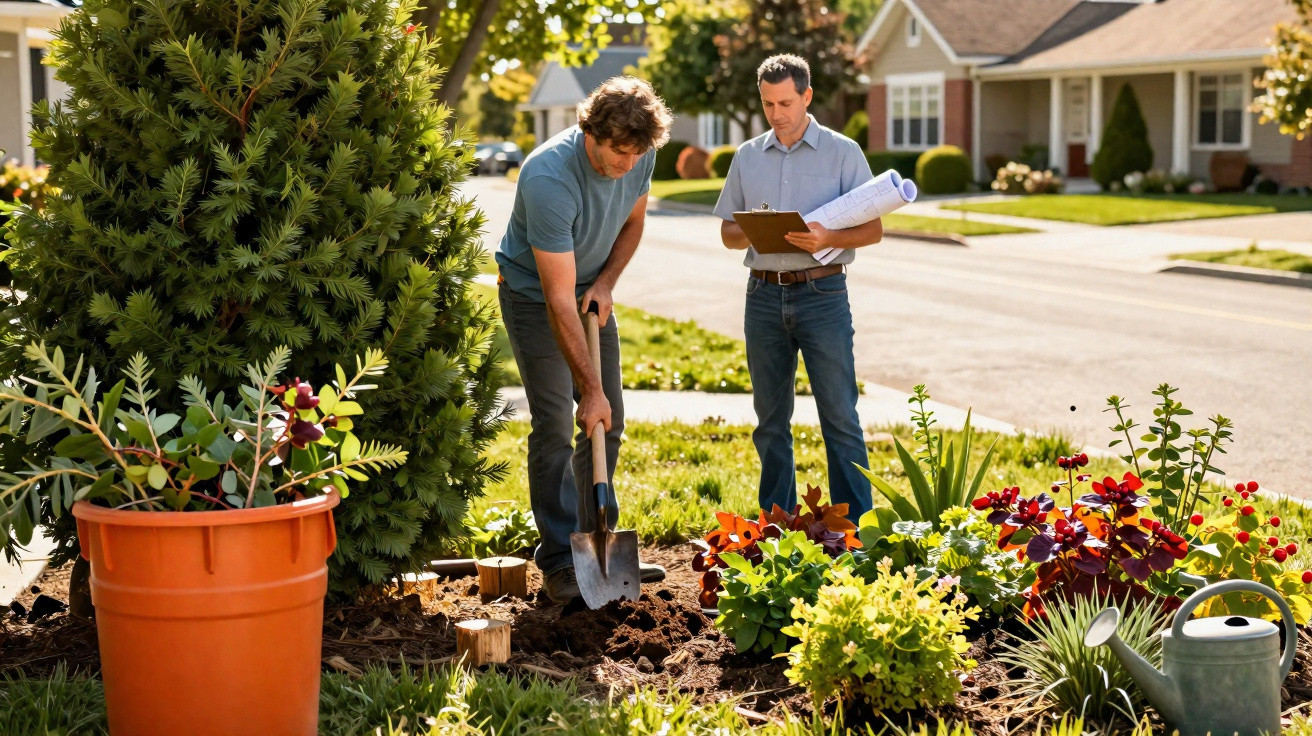
For years, Thuja was seen as the straightforward standard choice for privacy screening: dense, evergreen and quick to grow tall. Now, an increasing number of towns and villages are removing this very hedge from their rules. The reasons go beyond personal taste: species loss, fire risk and even the condition of the soil in your own garden are all involved.
Thuja under scrutiny: from favourite privacy hedge to problem plant
Anyone walking through new housing developments will recognise the sight: long, immaculate green walls running along property boundaries. In many cases, these are Thuja hedges, an evergreen conifer planted on a mass scale since the 1970s. It grew quickly, created an uninterrupted screen and was inexpensive – a garden-centre classic.
That same plant is now attracting the attention of many local authorities. In development plans and local design codes, it is increasingly appearing on lists of undesirable woody plants. The official justification usually centres on three issues: limited biodiversity, substantial maintenance and disease pressure, and a fire hazard that should not be underestimated during dry summers.
More and more local authorities regard continuous Thuja hedges not as privacy screening, but as a safety and environmental concern.
For many amateur gardeners, this comes as a surprise. For decades, garden centres and neighbours alike recommended the same familiar “trees of life”, as Thuja is often called. Many people are now asking: can I still plant whatever I like?
How local authorities ban hedges – and what this means for owners
Local authorities can use their local building and landscape regulations to set fairly precise rules on what may grow along a property boundary. In certain areas – beside roads, within new developments or in locations with a distinctive landscape character – they may require particular species or expressly rule out others.
A typical provision might read: “Monoculture hedges made up of coniferous plants are not permitted.” Behind this rather formal wording is often one main objective: rows of Thuja should disappear.
- Anyone building a new home will generally need to submit their proposed planting as part of the planning application.
- Existing hedges are often tolerated as long as they do not pose a risk.
- Stricter requirements apply immediately to new planting and major alterations.
If someone plants a prohibited hedge despite a clear requirement, the local authority can take action. In the most serious cases, the owner may be required to remove the entire hedge, potentially alongside a fine. However, many authorities first seek an agreed solution through advice and set timescales.
Ecological dead space: why Thuja is called “green concrete”
From a conservation perspective, Thuja represents the opposite of a thriving garden. Its wood and needles contain substances that build up in the soil as they decompose and noticeably lower its pH level. The ground becomes acidic, earthworms and many soil organisms retreat, and wild herbs and flowering plants struggle to establish themselves.
The result is that beneath an old Thuja hedge, there is often nothing growing at all: no grass, no undergrowth, just a brown layer of fallen needles. It offers little food for insects and scarcely any nourishment for birds. Some species may use the hedge occasionally for shelter, but compared with mixed hedgerows, its diversity is low.
A dense row of Thuja may look green and vigorous from the outside, but inside it is often a state of ecological stagnation.
Garden ecologists instead point to species-rich hedge structures. Mixed hedges of native shrubs provide blossom in spring, berries in autumn and cover throughout the year. They can attract dozens of insect species, numerous bird species and smaller mammals too – a completely different habitat from a sterile wall of identical conifers.
Fire risk in the front garden: why Thuja becomes a fuse in summer
As summers become hotter and drier, another concern is receiving greater attention: fire. Thuja contains highly flammable essential oils. Once the foliage dries out, a long hedge can catch fire within seconds.
Fires do not start only in woodland; they often begin directly in residential areas. A smouldering cigarette, a spark from a barbecue, a New Year firework or an overheating electricity box can all be enough. If a dried-out Thuja hedge is nearby, it can act like a wick between homes.
Fire services repeatedly report scenarios in which flames effectively race along property boundaries, jumping from one garden to the next. Long, densely planted hedges beside driveways or house walls increase the danger. Local authorities in areas with a high wildfire risk level are becoming especially alert to this issue.
Many Thuja hedges are dying anyway as disease takes hold
There is another reason for the change in direction: many Thuja hedges planted in the 1970s and 1980s are simply reaching the end of their lifespan. They become bare in the middle, over-mature and weakened. Fungal diseases and pests then have an easy time, with brown patches spreading through entire rows.
Uniform planting is particularly troublesome where clones from the same nursery have been used for decades. Once disease is present, it can affect almost every plant. Many owners are therefore already facing the same decision: renovate or rethink?
What to do if the local authority no longer accepts your Thuja hedge
Anyone who receives a letter from the planning department, or encounters restrictions while building a new home, need not despair. In many cases, the obligation to redesign can become an opportunity to create a livelier and safer garden area.
Remove the old hedge and restore the soil
For older hedges, complete removal is generally worthwhile. Taking out individual plants usually achieves little, because roots and old needle deposits continue to affect the soil. Specialists often recommend mechanically extracting the stumps, meaning the root crowns are removed in full.
Once exposed, the ground is often heavily compacted and acidic. Generous amounts of mature compost, and if necessary some garden lime, can improve the soil structure. This restores conditions in which other plants can take root.
Replacing a Thuja hedge is not only an investment in appearance, but in the health of the entire garden.
Thuja hedge alternatives local authorities often welcome
Local authorities generally recommend what are known as “hedges of native woody plants”. Combining different shrubs brings colour, flowers and fruit while still meeting the need for privacy screening.
- Hornbeam: tolerates pruning, grows densely and provides a good framework
- Hawthorn or blackthorn: thorny, ideal for birds and produces berries
- Hazel: its nuts attract squirrels and birds
- Field maple or Cornelian cherry: robust and also copes with an urban climate
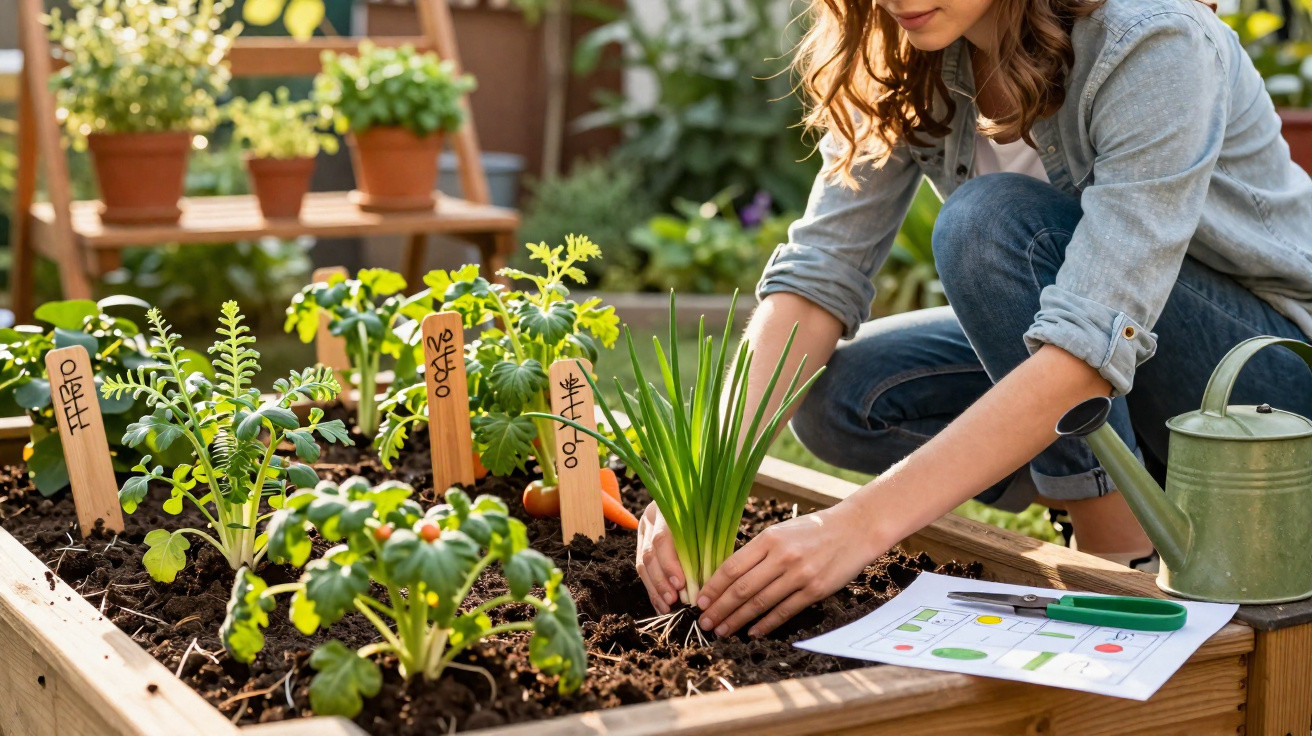
The mix is important: at least three to four different species in each hedge create varied character and prevent one disease from wiping out the entire planting. With careful planning, something will be flowering or fruiting from early spring well into autumn.
Care guidance: keeping the new hedge wildlife-friendly and neighbourly
A mixed hedge does not necessarily require more maintenance, but its upkeep changes. Severe shaping several times a year is usually unnecessary. Gentle corrections tailored to the growth habits of each species are often sufficient.
Consideration for wildlife also becomes more important. Birds mainly nest in spring and early summer, so substantial cutting work is better postponed until late autumn or winter. This helps avoid conflicts with animal welfare requirements – and ensures the hedge remains a genuine habitat rather than merely a privacy screen.
Advice for homeowners: how to check whether your garden is affected
Anyone currently planning a new hedge or making changes to their garden should consult the local rules. The key points of contact are:
- the local authority planning department or urban planning office
- design codes for particular residential areas
- any requirements in the development plan for the property
A brief phone call is often enough to clarify which woody plants are preferred, permitted or expressly prohibited. Many local authorities now even provide planting lists and sample plans that can be implemented directly in a home garden.
Why saying goodbye to Thuja can be worthwhile
At first glance, banning a familiar hedge plant may seem like unnecessary interference. A closer look, however, reveals several overlapping trends: more heat, more drought, growing concern over biodiversity and a tree stock that has simply aged.
A carefully designed, colourful shrub hedge provides shade, food for wildlife and structure in the garden, and can even improve the microclimate around the home. Particularly in densely built-up residential areas, it brings more life back to spaces that were long seen only as a “green wall”.
Those who make the change now benefit twice over: less risk during heat and in the event of fire, and a garden that feels far more alive than even the most perfect row of Thuja could ever be.
Comments
No comments yet. Be the first to comment!
Leave a Comment