
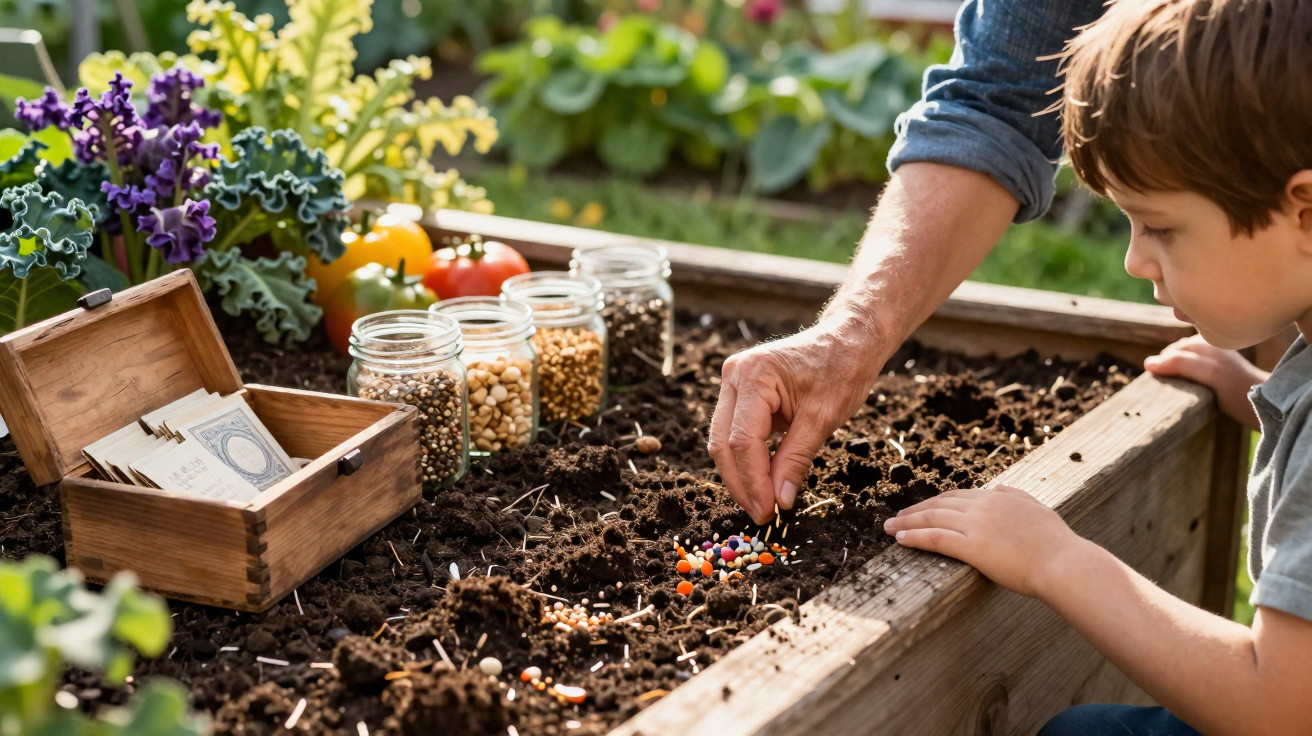
Growing old vegetable varieties today is not merely following a trend. Many packets of seed carry a family story, a memory of Grandma’s cooking – and often a quiet rejection of bland supermarket produce.
Why old vegetable varieties are suddenly in demand again
Interest in so-called old or traditional varieties has been increasing for several years. Many home gardeners are tired of flawless, uniform vegetables that look appealing yet offer little flavour. Disappointing watery tomatoes and insipid lettuces have left their mark.
By contrast, old varieties can seem like real characters in the veg patch. Their fruit is not always perfectly round; it may be scarred, ribbed or irregularly shaped. That is precisely what makes it interesting. Above all, though, the flavour is often stronger, richer and more nuanced.
Old varieties restore what many vegetables lack: genuine flavour and character.
An old beefsteak tomato may be sweet as well as savoury, with a scent that instantly recalls summer holidays at Grandad’s. A classic runner bean snaps when bitten and evokes Sunday meals in the family kitchen. Industrially produced vegetables can scarcely create experiences like these.
What earlier generations instinctively understood about seed
In the past, few village homes had shelves packed with colourful seed packets. Instead, many families saved their own seed: whatever grew well in the garden, survived hard frosts and filled plates was planted again. Anyone wanting hardy vegetables simply had to observe, select and discard.
Grandparents chose seed using practical measures: which potato stored well? Which bean cropped reliably even in cool summers? Which lettuce did not bolt straight away? They exchanged seed with neighbours, praised especially tasty tomatoes and in this way spread regional treasures that were often never officially registered anywhere.
That very approach is now enjoying a revival. Old and farm-bred varieties are considered more resilient, adaptable and better suited to nature-friendly gardens using few chemicals. They may call for a little more observation at first, but reward growers with steadier plants and fuller flavour.
Which old vegetable varieties are good to sow in spring
Spring provides the ideal setting for the return of forgotten favourites. Once the soil starts to warm from mid-April, many traditional vegetable varieties can get under way. Those who do not want to overhaul the entire veg patch can begin with a few carefully chosen classics.
Popular old varieties for the home garden
- Old tomato varieties, including Oxheart types, dark purple cultivars and striped varieties with sweet, aromatic flesh
- Runner beans from traditional lines, often vigorous growers that yield heavily in little space
- Old radish forms, sometimes elongated or two-coloured, with a robust yet not burning flavour
- Traditional squashes, often more aromatic, with firmer orange flesh
- Historic butterhead lettuces, very tender with a delicate bite and often good cold tolerance
- Old pea and broad bean varieties, which enjoy cool spring weeks and produce crops early in the year
There is room on a balcony or patio too. A deep container is sufficient for an old tomato variety or a compact squash. Supports fixed to a railing can turn runner beans into a living screen. With thoughtful combinations, it is possible to harvest a surprising amount from just a few square metres.
How to sow and raise plants without stress
Many home gardeners fail not because of the variety, but because of minor details. The good news is that old varieties need neither high-tech equipment nor complicated tricks. Loose soil, a little compost and patience will usually achieve more than any shelf full of specialist fertilisers.
The soil should be crumbly and slightly moist, rather than bone-dry or soaking wet. A spade is often unnecessary; a garden fork or hand cultivator will do. The important thing is to loosen compacted areas without turning the whole soil over.
For sowing depth, a simple rule works well: plant seed at two to three times its own thickness. Cover small seeds with only a light layer of soil, while larger seeds such as squash and beans should be sown a little deeper. Afterwards, water gently with a rose so that nothing is washed away.
| Vegetable type | Recommended sowing depth |
|---|---|
| Radishes | approx. 1 cm |
| Lettuce | 0.5 to 1 cm |
| Beans | 2 to 3 cm |
| Squash | 2 to 4 cm |
| Tomatoes in pots | about 0.5 cm |
Protecting young plants from spring's moods
Spring sunshine can be deceptive. It may be 18°C during the day, then temperatures can suddenly fall below freezing overnight. Such spells can kill sensitive varieties. Anyone caring for old varieties should therefore take the weather forecast almost as seriously as their watering routine.
Simple measures are enough: horticultural fleece, a cut plastic bottle used as a mini greenhouse, or an old window frame serving as a cold frame. Open these during the day so fresh air can circulate, then close them in the evening as temperatures drop. Tomato and squash seedlings will then establish far more safely.
The best fertiliser for young plants remains a watchful eye on the weather, soil and moisture.
Damp, stagnant air beneath plastic or glass encourages fungal diseases. It is better to ventilate regularly and water sparingly at soil level. Wet leaves on cool nights are the most common invitation for fungi.
Why old varieties often have a more intense flavour
Many traditional vegetables were passed on over decades according to one clear criterion: they had to taste good. Ease of transport, perfect appearance and uniform size barely mattered. Today's seed industry has different priorities – and that is where flavour loss begins.
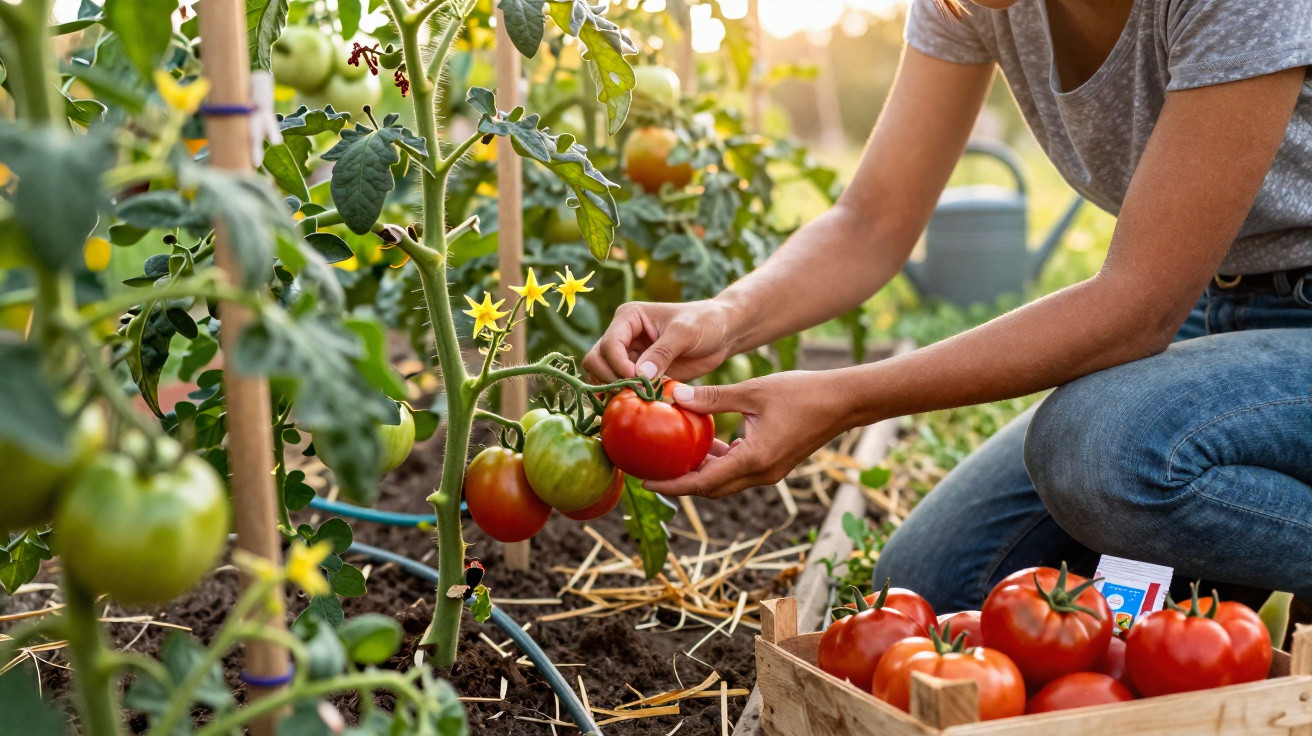
Old varieties generally ripen fully on the plant. They are not harvested half-ripe so they can be transported across Europe. This allows more sugar, flavour and aromatic compounds to develop. The difference is immediate: a sun-ripened tomato from an old line has little in common with a pale red supermarket tomato.
The same applies to beans, peas, lettuces and squashes. When growing your own, you choose when to harvest. A radish variety with a gentle heat can stay in the soil until it is just right – rather than being pulled when it needs to fit into a crate.
Saving your own seed and continuing the tradition
Anyone who falls in love with a variety can easily keep it going. Many old vegetable varieties are ideal for saving seed at home. The process is straightforward and becomes second nature after the second year.
First, leave a few particularly attractive, strong plants in place. They will provide seed for the following season. Fruit should be allowed to ripen completely, often even becoming overripe. Only then should the seed be removed, cleaned carefully and dried.
- Selection: use only healthy, vigorous plants and fruit
- Removal: gently release seed from pods, fruit or heads
- Cleaning: remove plant debris and flesh
- Drying: keep airy and shaded for several days to weeks
- Storage: store dry, cool and dark, ideally in paper envelopes
A hand-labelled envelope marked with the variety name and year turns a simple seed into a small family archive. Those who wish can add notes such as “especially sweet” or “cropped well despite late frost” – valuable information for years to come.
What old varieties offer the climate, garden and neighbourhood
Every old variety that survives adds to diversity in the garden. Different shapes, colours and ripening times help ensure that a single pest outbreak or weather fluctuation does not destroy the entire harvest. Diversity in the veg patch acts like insurance.
Many of these varieties are adapted to particular regions. They can cope with poorer soils, exposed sites or late frosts. Growing them again strengthens exactly this ability to adapt. In an era of unsettled summers, that is an advantage not to be underestimated.
There is also a social side: exchanging seed brings people together. A neighbour passing on an old tomato offers not only seeds, but also a piece of experience. Children holding beans of different colours begin to understand that vegetables can be more than standardised goods from the chilled aisle.
Practical tips for getting started with old varieties
Anyone who is curious does not need to convert the whole garden at once. It makes sense to begin with a small number of manageable crops and observe carefully how they perform.
- Start with two to three varieties each year and build experience
- Make notes directly in the veg patch: position, sowing date and response to cold spells
- Choose varieties that fit everyday life (for example, easy-care beans rather than demanding specialities)
- Ask neighbours, gardening clubs or seed swaps about regional classics
- Select at least one variety from which you would like to save seed
Taking this step-by-step approach means growing not only vegetables, but also a small, living archive. Each spring connects with the one before it. This is exactly how many grandfathers and grandmothers did it – often without much theory, simply with a keen eye and a little patience.



Comments
No comments yet. Be the first to comment!
Leave a Comment