
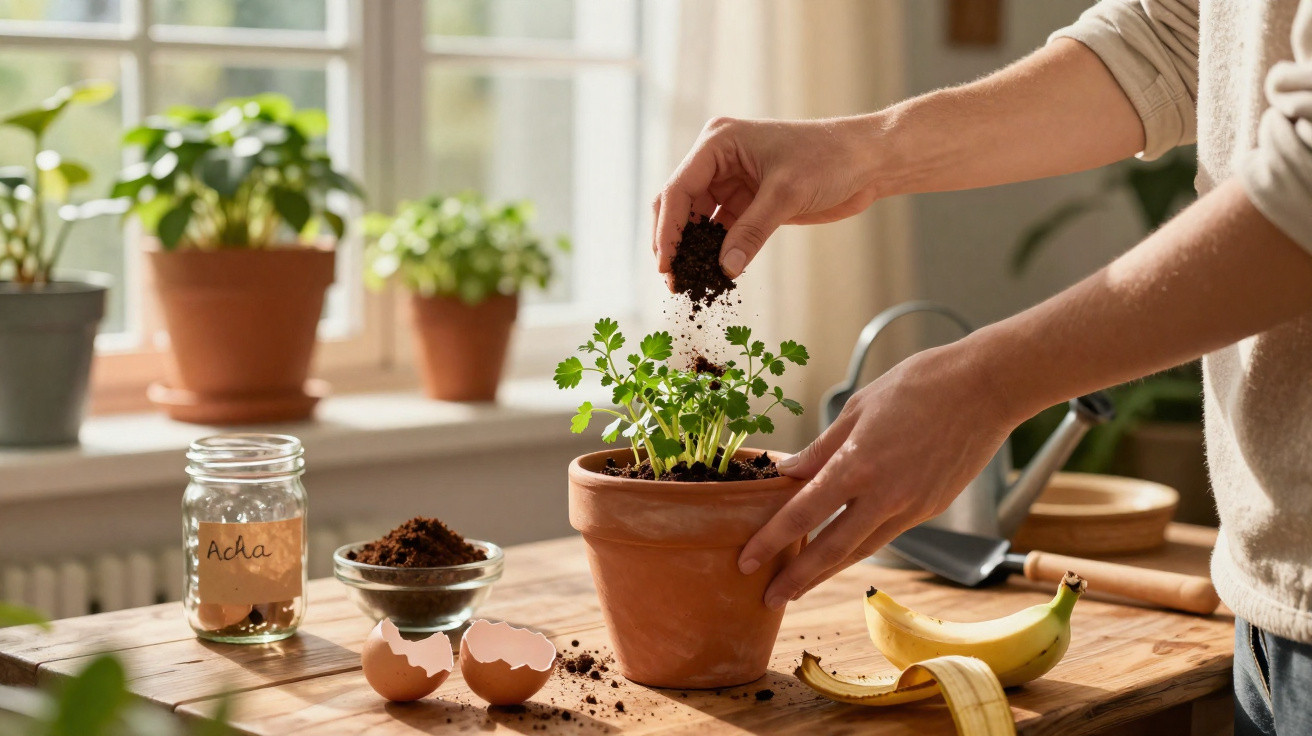
Keeping plants attractive and healthy requires more than regular watering. Replacing nutrients is also an essential part of plant care, and the good news is that several everyday ingredients can be reused to make homemade fertilisers. Eggshells, organic compost, rice water, coffee grounds and worm castings are among the most commonly used options for naturally enriching soil when used correctly.
Which ingredients can become an effective homemade fertiliser?
Many kitchen leftovers still contain nutrients that are valuable for plant growth. Rather than throwing them away, they can be reused to support fertilising, provided they are applied sparingly and according to the needs of each species.
The most recommended choices include well-rotted organic compost, worm castings, thoroughly dried and crushed eggshells, unsalted rice-rinsing water, and used coffee grounds in small amounts. These materials improve the soil while making use of waste that would otherwise go into the bin.
How to make homemade fertiliser for your plants
Natural ingredients can be used in several ways. One of the easiest methods is to use completely dry, crushed eggshells, scattering a small amount over the growing medium to release calcium gradually.
Another option is compost tea, also called liquid compost or compost tea. Leave mature compost in water for a few hours, strain it, then use the liquid to water the soil. Unsalted rice water and previously used coffee grounds can also be reused, as long as excessive amounts are avoided.
- Well-rotted organic compost
- Worm castings
- Dried, crushed eggshells
- Unsalted rice-rinsing water
- Used coffee grounds in small quantities
- Compost tea
How to apply fertiliser without harming plants
Despite being natural, these fertilisers must be applied in moderation. Too much organic matter can encourage fungal growth, change the soil pH, or create a build-up of nutrients that hinders root development.
It is best to monitor the plant’s response after every application and leave intervals between fertilising. Each species also has different nutritional requirements, so it is worthwhile understanding what the plant needs before selecting a type of fertiliser.
- Use small quantities at a time
- Apply preferably to moist soil
- Avoid ingredients containing salt or seasonings
- Do not put decomposing food directly into the pot
- Watch how the plant reacts after application
- Follow the fertilising frequency recommended for each species
Is homemade fertiliser a worthwhile replacement for commercial fertiliser?
Homemade fertilisers can support the care of many plants and provide a sustainable way to reuse household waste. However, they do not always supply every nutrient in the proportions required by certain species, especially plants with high nutritional demands.
For this reason, many gardeners use natural fertilisers to complement a well-planned growing routine, alongside suitable light, appropriate watering and a quality growing medium to keep plants healthy throughout the year.





Comments
No comments yet. Be the first to comment!
Leave a Comment