
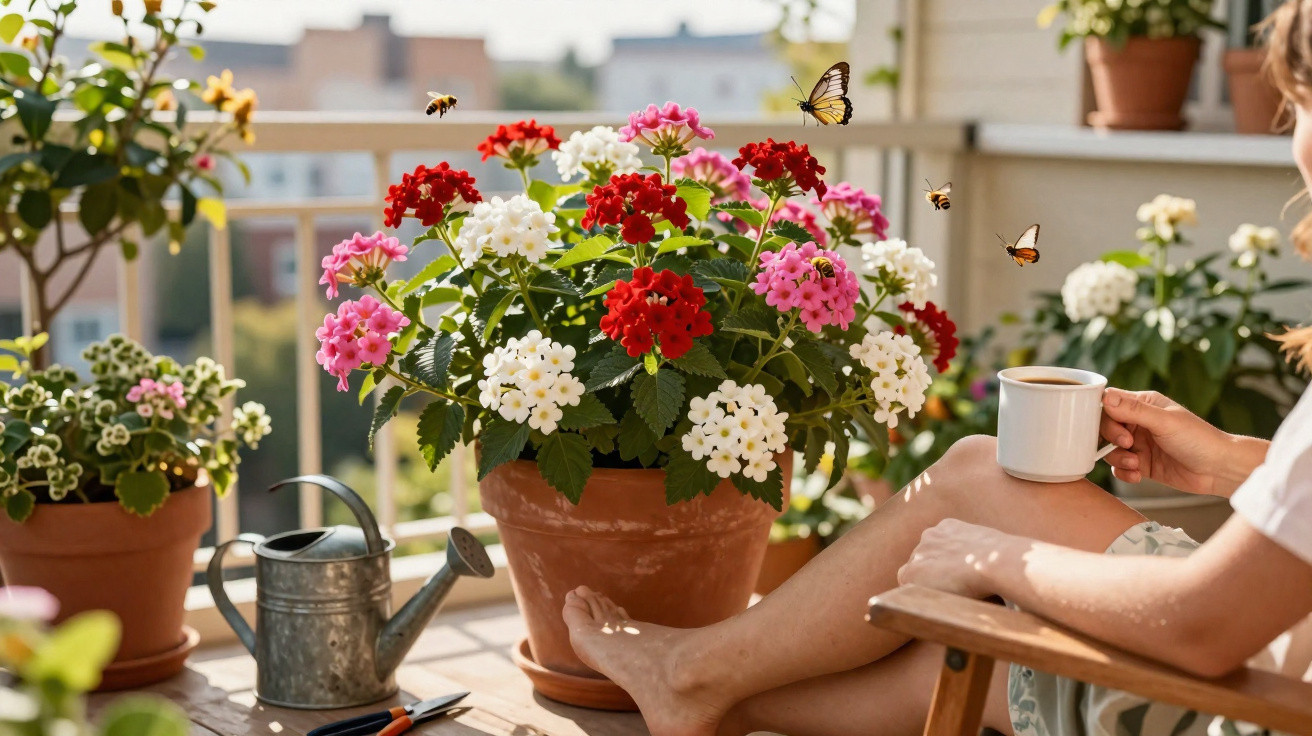
Many people welcome spring with the same ambition: more flowers, more butterflies, more bees – and less effort on the balcony or in the garden. Rather than hauling watering cans around every weekend and rescuing plants that constantly struggle, they want something tough that largely looks after itself. That is exactly where Pentas, also known as the Egyptian starcluster, come in.
Why the Egyptian starcluster appeals to low-maintenance gardeners
At first glance, Pentas (botanically Pentas lanceolata) can seem almost unremarkable. However, anyone who has seen them in full summer flower will understand the enthusiasm: dense, 60 to 90 centimetre-high bushes covered in small, star-shaped flower clusters in vivid red, pink, white, lilac or violet. Certain cultivated varieties even produce delicate yellow blooms.
Their standout quality lies within the flowers themselves. The tubular blooms are packed with nectar, making them exceptionally appealing to pollinators. Butterflies, solitary bees, honey bees and, in warmer regions, even hummingbirds actively seek out this plant. Anyone hoping to bring more life into their garden can create a kind of insect “service station” with just one sizeable group of plants.
“A handful of Pentas replaces several other flowers for bees and butterflies – and keeps going for considerably longer.”
In warm areas, Pentas flower for almost the entire year. In central European climates, they begin in late spring and usually continue until the first frost. When many early-flowering plants have long since faded, this flower is still providing fresh nectar.
The best location for Pentas in the garden and on the balcony
In our climate, Pentas are generally grown as annual summer bedding plants. They can remain for several years in particularly mild regions, but severe frost will normally kill them. Even so, they are ideally suited to borders, containers and window boxes.
Conditions in which Pentas thrive
- Light: Full sun to light partial shade; the more sun they receive, the more profusely they flower.
- Soil: Loose, humus-rich and well-drained, with no waterlogging.
- Spacing: Leave 30 to 40 centimetres between plants.
- Water: Keep evenly moist, without leaving the soil permanently saturated.
In a border, a properly prepared spot enriched with compost or planting compost is sufficient. On balconies and terraces, Pentas perform particularly well in larger pots or window boxes. Choosing a container that is too small will cause frustration later on: these plants grow vigorously and soon look cramped in a restricted space.
A little care when planting pays off. Water deeply once, then cover the surface with a thin mulch layer, such as composted bark or grass clippings. This helps the soil retain moisture and reduces the need for watering.
Easy-care Pentas: how little attention the Egyptian starcluster needs
Once Pentas have established themselves, they reveal just how undemanding they are. Many amateur gardeners say that, after a few weeks, watering is almost their only task. Diseases and pests are relatively uncommon, especially where plants have plenty of air circulation.
These few jobs deliver flowers for months
- Add a liquid fertiliser for flowering plants to the watering water every three to four weeks.
- Regularly cut off faded flower heads to encourage fresh buds.
- During hot spells, water thoroughly early in the morning or late in the evening.
- In containers, avoid waterlogging at all costs; empty any water from saucers.
Removing spent flower heads is particularly worthwhile. Rather than putting energy into producing seed, the plant develops new flower clusters and remains compact. Those who do this consistently will enjoy a genuine ball of flowers for weeks.
“Cutting away faded heads effectively switches on ‘continuous flowering mode’.”
Frost is Pentas’ only real weakness. In regions where winter temperatures fall below 0°C, they have no chance of surviving in the ground. Pots, however, can easily be moved into a bright, cool space, such as a hallway or unheated veranda. They often come through mild winters there quite well and make an earlier start the following year.
How Pentas genuinely support bees, butterflies and more
Many people want to “do something for nature” but are unsure which plants make a real difference. Pentas are among the varieties where results become visible quickly. The first visitors often arrive just a few days after planting.
The star-shaped flowers are easily accessible, including for smaller solitary bees. A carefully chosen selection of varieties can extend the nectar supply over many months. Pale shades such as white and pink often attract the greatest number of insects, while strong reds are especially appealing to butterflies.
| Colour | Typical visitors | Effect in the border |
|---|---|---|
| White | Bees, solitary bees, moths | Very bright, ideal for the evening |
| Pink | Bees, butterflies | Soft, romantic and easy to combine |
| Red | Butterflies, hummingbirds in warm regions | A very bold accent, ideal as a focal point |
| Lilac/violet | Bees, bumblebees | Contemporary, pairs well with ornamental grasses |
Anyone with very little space on a balcony or terrace can still make a noticeable contribution with just one or two larger pots. Combined with herbs such as thyme, oregano or lavender, Pentas create a small insect buffet within only a few square metres.
How to combine Pentas for maximum impact
Visually, Pentas work well with many classic summer-flowering plants. For a vibrant yet low-maintenance planting scheme, try combinations such as:
- Pentas with deep purple verbena for an intense burst of colour.
- White Pentas alongside blue sage for a cool, elegant appearance.
- Red Pentas among ornamental grasses for a Mediterranean feel.
- Pink Pentas with white lobelia for romantic window boxes.
These plantings are engaging for children, too. Positioned in a container at eye level, they make it possible to watch butterflies from close up. A balcony can quickly become a small open-air classroom.
Risks, limitations and a few honest warnings
The Egyptian starcluster does have some drawbacks. Anyone who regularly forgets to water will not enjoy growing it. It responds to drought with limp leaves and fewer flowers. Conversely, a very wet summer can lead to root rot in poorly drained soil.
There is another consideration: in our climate, Pentas are usually not a long-term solution lasting for years. You need to plan either to plant them again the following spring or to overwinter them somewhere frost-free in good time. For many amateur gardeners, though, this is acceptable – much like growing geraniums or petunias.
Nevertheless, this plant is well worth choosing, especially for people with limited time. You do not need to be an expert to create a striking, colourful and insect-friendly area with Pentas. Anyone who has watched their own balcony suddenly start buzzing and fluttering is unlikely to want to be without this flower again.



Comments
No comments yet. Be the first to comment!
Leave a Comment