
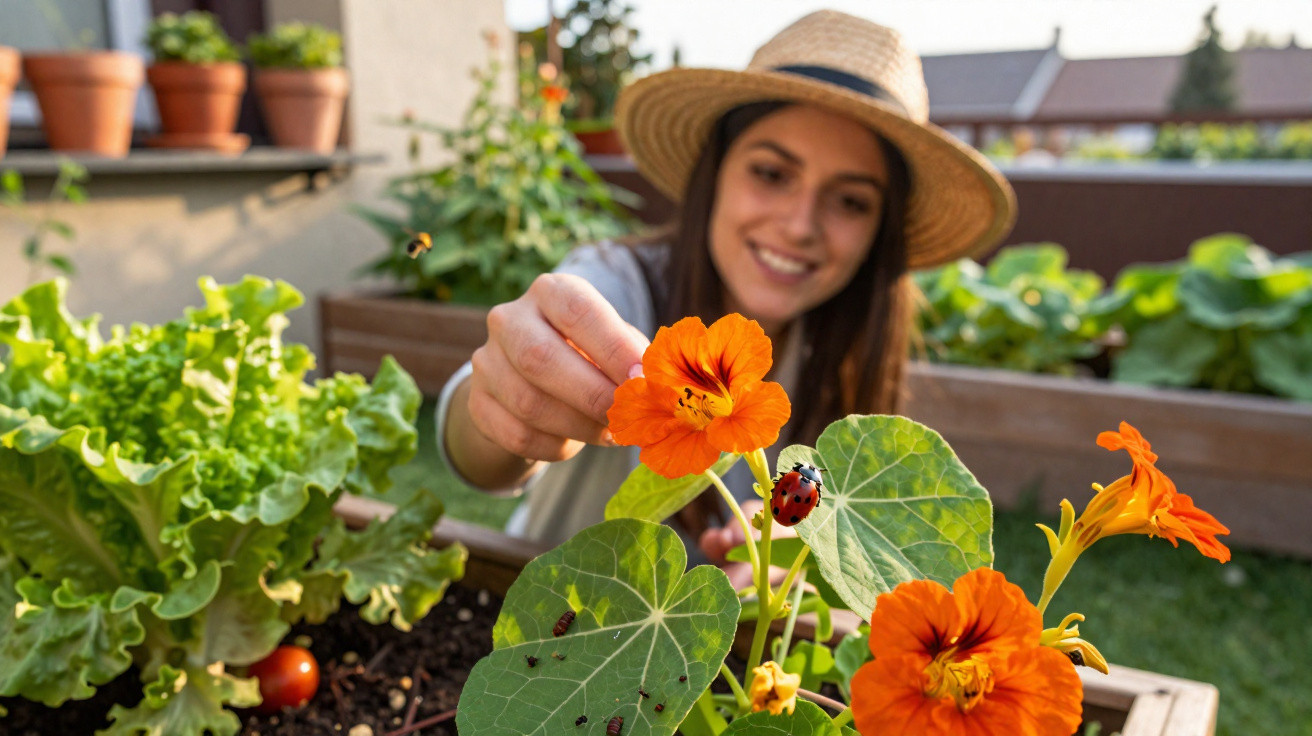
Many keen gardeners are now busy sowing tomatoes, courgettes and beans, yet overlook an ace that earlier generations used as a matter of course. One particular flower was always planted among the vegetable rows. It deterred pests, attracted pollinators and helped keep beds full of healthy plants from spring through to autumn.
Why nasturtiums deserve attention now
For decades, sprays and fertilisers dominated garden beds. The cost was depleted soil, fewer insects and plants that seemed to require constant attention. Now, common sense is returning to many gardens. Nasturtium is one of the stars of this renewed approach.
It once grew in virtually every cottage garden as a natural feature. Today, it is appearing everywhere again: in permaculture schemes, urban growing beds and balcony planters. That is not simply because it looks attractive.
“Nasturtium is a flower, shield, insect magnet and soil carer all in one – and a packet of seeds costs only a few pence.”
Its warm yellow, orange and red shades make it eye-catching. However, its real strengths work behind the scenes: in the battle against aphids, in attracting pollinators and as a protective companion around vulnerable vegetables.
Why March is the ideal time to start
As soon as the harshest frosts have passed, the busiest period of garden planning begins. Nasturtiums should be included in those plans now.
Start indoors or sow straight into the bed?
From March, there are two options:
- Start seeds indoors or in a greenhouse: Place seeds in pots or seed trays, then keep them somewhere warm and bright. The young plants can later be planted out with tomatoes, cucumbers and other crops.
- Sow directly outdoors: In mild areas, seeds may be sown straight into prepared beds. The soil should be loose and no longer icy cold.
Starting early gives nasturtiums a head start. They can then develop strong roots and dense foliage in good time. When young vegetable plants are put into the beds, their floral protection service is already in place.
Nasturtiums’ secret superpower: a trap crop
The most important benefit of this flower is largely invisible. It acts as an attractant plant for aphids, particularly the feared black aphid infestation.
Redirect aphids instead of battling them desperately
In a conventional vegetable garden, aphids settle on beans, peas, French beans, young brassicas, roses and dahlias. Nasturtiums move the battleground elsewhere:
- Aphids find nasturtium leaves and stems more appealing than many vegetable plants.
- They preferentially colonise them, leaving beans, peas and other sensitive crops largely undisturbed.
- Infestations are easy to spot because the nasturtium foliage becomes covered in aphids, allowing targeted action.
The technical term for this method is “trap cropping”. Instead of spraying everything, you offer pests a kind of buffet that does not harm your main crop. Your productive plants are spared.
How natural predators help automatically
Ladybirds, lacewing larvae and hoverflies soon appear among the aphids on nasturtiums. They consume large numbers of aphids and keep their population under control.
“Sowing nasturtiums invites ladybirds and other beneficial insects to an ongoing buffet – entirely without poison, cost or effort.”
The flower therefore becomes a hub for beneficial insects. Pesticides would kill these helpers, whereas nasturtiums provide them with food and shelter. The whole system becomes more resilient, and the garden needs fewer interventions with sprays or soapy solutions.
Higher yields: nasturtiums as a pollinator magnet
The advantages do not stop with aphids. Nasturtiums draw plenty of pollinators into the garden, which has a measurable effect on harvests.
A colourful runway for bees and bumblebees
Their large, vivid flowers act like signposts for many insects. Colour and scent signal that nectar is available here.
Planting nasturtiums among vegetables brings:
- more bee visits to the bed,
- more frequent pollination of tomatoes, pumpkins, courgettes and strawberries,
- better-shaped fruit and often a larger harvest.
Whether you have small raised beds on a balcony or a large vegetable garden on the edge of town, flowers remain unproductive without insect pollination. Nasturtiums make a site more appealing to insects, even where little is flowering nearby.
Urban garden, allotment or orchard: useful everywhere
The plant suits almost every setting:
| Location | Benefit of nasturtiums |
|---|---|
| Balcony planter | Draws insects upwards and protects herbs such as basil from aphids. |
| Small terraced-house garden | Planted among vegetables and berries, it increases yields and diversity. |
| Large orchard | Sown around the edges, it encourages more bee activity around fruit trees. |
How to use nasturtiums strategically in the bed
For the full benefits, both timing and position matter.
Where seeds have the greatest effect
A proven approach has two parts:
- Sow the bed edges: This creates a colourful protective belt along the borders. It intercepts pests and gives the bed a clear visual outline.
- Scatter seeds between rows: Sow individually or in small groups wherever susceptible crops are growing, such as beans, peas, kohlrabi, roses or cucumbers.
Allow around 30 to 40 centimetres between plants. This forms an open network that supplies the whole area with scent, colour and nectar.
Water with ease: tough, but not to be ignored
Nasturtiums are considered easy to grow. They still need a little support for a strong start:
- Keep the soil lightly moist, but never waterlogged.
- In dry periods, water less frequently but thoroughly.
- Apply water directly around the roots where possible, rather than repeatedly wetting the foliage.
This watering method also protects neighbouring crops from fungal diseases, because their leaves do not remain wet for as long. Under suitable conditions, the seeds germinate quickly and plants establish rapidly.
One small seed, a double effect on the ecosystem
Every nasturtium you sow shifts the balance in the bed in two directions at once: away from pests and towards more pollinators.
Protection and productivity in one package
The plant functions as a living building block in a healthy garden, combining decoration with practical value:
- Aphids concentrate on a robust trap crop.
- Beneficial insects find food and multiply in the garden.
- Pollinators visit more flowers, improving fruit and vegetable production.
“Anyone who sows nasturtiums saves on sprays, supports diversity and makes the bed more attractive at the same time.”
This flower is especially suitable for beginners: no complicated care routines and no expensive specialist products, but visible results in the first year.
Extra tips: eating, combining and understanding risks
Edible flowers and leaves for the kitchen
One benefit many people overlook is that nasturtiums are edible. The leaves have a mildly peppery flavour similar to cress, while the flowers add colour to salads. Unripe seeds can be pickled like capers. Using them in the vegetable garden therefore gives you both pest protection and a flavoursome kitchen ingredient.
Plants that pair particularly well with nasturtiums
Practical combinations in the bed include:
- nasturtiums beneath and alongside tomato plants,
- as border planting for rows of beans or peas,
- between pumpkins and courgettes,
- at the base of fruit trees or berry bushes.
In these positions, they make use of bare soil, provide light shade over the ground and make it harder for weeds to establish, without crowding the main crops.
Where caution is needed
Nasturtiums can spread vigorously in very confined beds. If space is limited, trim back trailing shoots regularly so young vegetable plants receive sufficient light. During wet summers, dense foliage can stay damp for longer. Wider spacing and targeted watering at the roots will help.
Anyone who deliberately leaves a few gaps for this flower when sowing in March will often notice the difference in the first year: less trouble from aphids, more insects in the garden and a bed that remains colourful and lively from the first spring greenery into autumn.

Comments
No comments yet. Be the first to comment!
Leave a Comment