
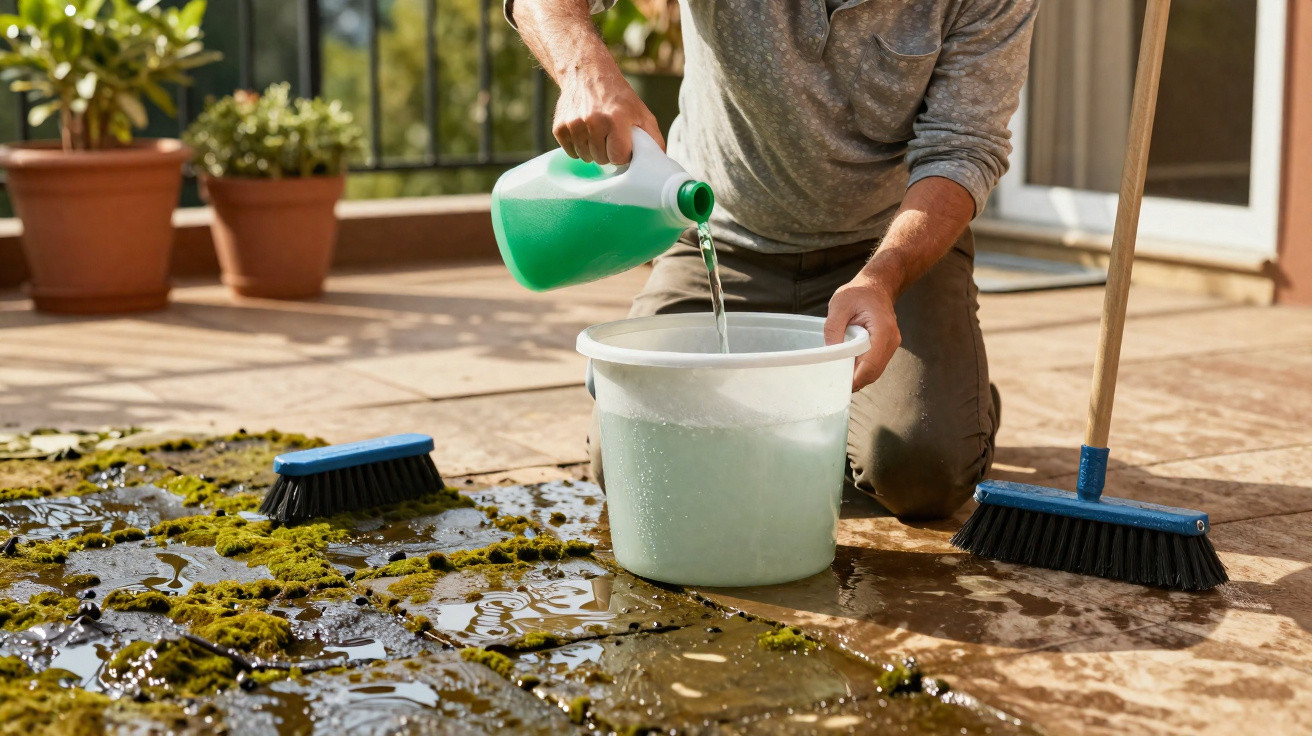
Many people instinctively reach for a pressure washer, but garden professionals say that is often the worst option. A simple everyday kitchen product is not only gentler, but can also help stop the green growth from returning soon afterwards.
Why moss on patios is more than a cosmetic issue
Moss may look romantic in a cottage garden, but on steps and patio slabs it can be seriously hazardous. The soft layer absorbs water like a sponge and stays damp for a long time. Especially in spring, when everything is slippery after a wet winter, the risk of falls rises sharply.
It can also damage the surface itself: moisture penetrates joints and pores, paving stones may eventually crack, and timber decking can swell and rot more quickly. Leaving moss untreated can lead to costly repairs.
“Moss traps moisture on the surface, makes it as slippery as soap – and over time damages stone and wood.”
It is therefore no surprise that many homeowners take the pressure washer out of the shed. The result initially looks impressive after cleaning, yet the problem often returns remarkably quickly.
Why a pressure washer barely solves the moss problem
A pressure washer uses extremely high water pressure. Although it appears to blast away moss cushions effortlessly, it comes with several drawbacks.
- Joints are washed out: The powerful jet removes sand or jointing material, which can cause paving stones to loosen later.
- The surface becomes rougher: Particularly on natural stone or concrete, the pressure can make the surface more porous – creating ideal conditions for fresh green growth.
- Spores remain in crevices: Enough moss residue survives in deep joints and fine hairline cracks to grow back soon afterwards.
- Dirt sprays everywhere: The familiar “yuck factor”: muddy water, algae residue and grime end up everywhere, including on clothing and walls.
The outcome is that the area only looks clean for a short while. A greenish film often reappears after a few weeks. Many people repeat the process, damaging the surface a little more each time.
The kitchen trick: tackling moss effectively with washing-up liquid
Rather than spending lots of money on specialist cleaners or electricity for a pressure washer, gardening experts recommend a surprisingly straightforward solution: ordinary washing-up liquid. The chemistry behind the method is simple, yet highly effective.
How washing-up liquid works on moss
Moss has a protective, slightly waxy coating. Washing-up liquid contains surfactants, which are substances that dissolve fats and waxes. These are precisely the substances that attack the moss’s protective film.
“The soapy solution breaks down the wax layer, dries out the moss and destroys the spores – so they cannot sprout again.”
The washing-up liquid solution penetrates deep into the moss cushions and also reaches residue and spores in joints and cracks. This means it does not merely clean the visible surface, but stops growth at its source.
The right mixture for patios and balconies
For an effective but gentle clean, a simple mixture is enough:
| Ingredient | Amount | Note |
|---|---|---|
| Biodegradable washing-up liquid | approx. 3 tablespoons | without chlorine bleach or strong fragrances |
| Warm water | around 4 litres (one bucket) | not boiling, only lukewarm |
Stir thoroughly until the washing-up liquid has dissolved completely. If you need to clean a larger area, simply scale up the quantities accordingly.
Step by step: how to remove moss with washing-up liquid
1. Prepare the area
First sweep away loose leaves, soil and coarse dirt. This allows the solution to act on the moss more effectively.
2. Apply the washing-up liquid solution
Pour the mixture directly onto mossy areas or distribute it using a watering can or pressure sprayer. The surface should be thoroughly damp, but not swimming in soap.
3. Leave it to work
Allow the solution to work for several hours; four to six hours in dry weather is ideal. During this time, the moss starts to dry out and turns brownish or grey.
4. Brush away and rinse
Then scrub away the dead moss thoroughly with a stiff broom or brush with plastic or natural bristles, rather than metal. Wire brushes can scratch stone or damage protective coatings.
Finally, rinse the area with clean water, for example using a garden hose or watering can. This removes soap residue and protects nearby beds and lawns.
How long will the patio remain moss-free?
Because the soapy solution also reaches deeply embedded residue and spores, the surface often stays clean considerably longer than it would after pressure washing alone. New moss cannot be prevented entirely, as spores return to the area via wind, rain and shoes.
A few simple habits can extend the moss-free period significantly:
- Remove leaves regularly in autumn so the surface dries faster.
- Do not leave plant pots standing directly on the slabs permanently, as this creates damp, shaded patches.
- Prevent standing water, for instance by clearing blocked drains.
- Carry out a gentle washing-up liquid treatment once a year in spring as part of routine care.
Chemical moss killers: why many gardeners advise against them
DIY shops offer powerful moss killers, often based on iron compounds or other active ingredients. They may work quickly, but they also have several disadvantages:
- A potential risk to animals and children if residues remain on the surface.
- Pollution of soil and groundwater if the product runs into joints and flowerbeds.
- Possible discolouration on stone or paving, such as brownish marks.
Used in moderate amounts, preferably in an environmentally friendly formulation, washing-up liquid is considered far more compatible with gardens and soil life by comparison – provided the surface is rinsed thoroughly with plenty of water after treatment.
Which patio surfaces benefit most from the washing-up liquid method?
This gentle cleaning approach is suitable for many common surfaces:
- Concrete and exposed-aggregate slabs: These are porous and can be easily damaged by high pressure, so washing-up liquid is much gentler.
- Natural stone (granite, sandstone, slate): Clean with a mild soapy solution, as aggressive cleaners can attack the surface.
- Timber decking and WPC boards: Moisture and strong pressure can be problematic, while a gentle soapy solution and light brushing are ideal.
For highly sensitive stone such as marble, it is worth testing the solution on an inconspicuous spot first. Although the soapy mixture is mild, every type of stone reacts slightly differently.
Greater safety and less work with a household product
Dealing with moss early protects not only your patio, but also you and your guests. Slippery surfaces after rain or morning dew are a common cause of falls, particularly among children and older people.
Choosing washing-up liquid saves time, is kinder to the budget and reduces the need for harsh chemicals. Instead of tackling the job with deafening pressure-washer noise, garden owners can approach spring more calmly with a bucket, a broom and a little patience.
Anyone who has seen the effect for themselves – a dull green, slippery surface turning after a few hours into a dry patio that is safe to walk on – will probably reach for the bottle of washing-up liquid beneath the sink next time, rather than the pressure washer.

Comments
No comments yet. Be the first to comment!
Leave a Comment