
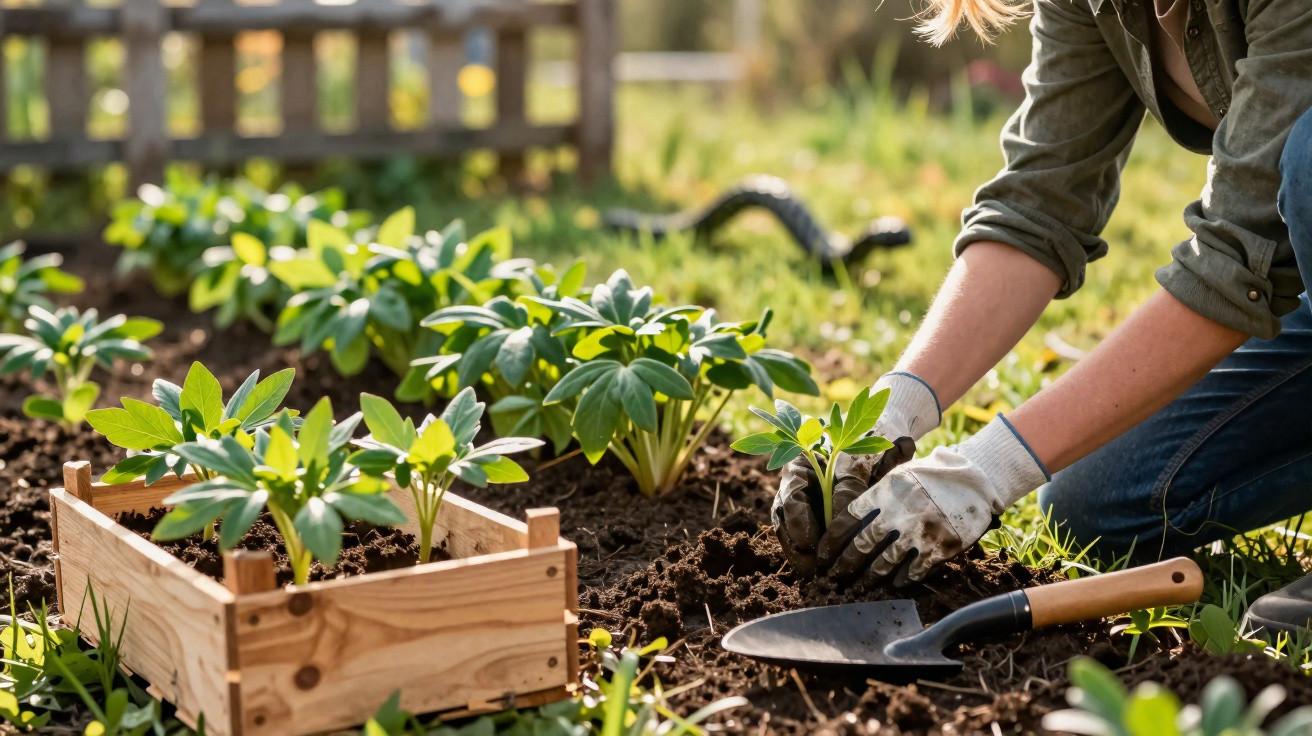
With the first warm days, not only bees and butterflies become more active: snakes do too. Adders and other reptiles are increasingly appearing in gardens bordering meadows, woodland edges or embankments. This often makes people with children or pets anxious, yet the animals must not simply be removed. A thoughtfully planted flower border can act as a natural protective belt.
Why snakes enter our gardens
Snakes favour corners with plenty of structure, including long grass, stone piles, dry-stone walls and heaps of leaves. Such spots provide hiding places for prey such as mice and lizards, while also offering warmth and cover.
- Stone walls and log piles: excellent hiding places and basking spots
- Long grass and unmown edges: hunting grounds for mice and insects
- Compost heaps: magnets for mice – and therefore for snakes as well
In many European countries, including Germany, native snake species such as the grass snake, smooth snake and adder are protected. Killing or deliberately catching them is prohibited. Anyone wishing to make their garden safer must therefore act before an encounter occurs, using preventative measures.
“The most effective strategy around the home is to stop snakes coming close in the first place, rather than trying to fight them.”
How snakes navigate – and why scents deter them
Snakes have relatively limited vision during the day. Their strongest sense is smell. They collect scent particles from the air with their tongues and carry them to a specialised sensory organ in the roof of the mouth, known as Jacobson’s organ. There, odours are analysed with exceptional precision.
This is where a scent barrier comes in. Some plants release essential oils and bitter compounds at concentrations that make the scent environment feel unpleasantly “overloaded” to snakes. The animals do not regard these areas as dangerous, but they find them disruptive and prefer to slither elsewhere.
The key anti-snake plant: rue as a living barrier
One particularly effective choice is an old medicinal and cottage-garden plant: rue, botanically Ruta graveolens. It forms a compact, blue-green subshrub with strongly aromatic foliage.
Its leaves contain bitter substances, alkaloids and intensely scented oils. People may perceive its smell as pungent and spicy, and some find it unpleasant. For snakes, this cloud of scent is a clear signal to avoid the area.
“Rue works like a natural curtain of scent: invisible to people, but almost unbearable for snakes.”
Why combining rue with stinking hellebore is so effective
The protection becomes even more reliable when rue is paired with stinking hellebore (Helleborus foetidus). This perennial has greenish bell-shaped flowers and dark, finely divided foliage. It too is poisonous and gives off its own slightly pungent scent.
The effect of this pairing:
- different scent compounds overlap
- the scented layer lasts longer and covers a wider area
- it also creates an attractive, almost Mediterranean garden appearance
Both plants are considered potentially toxic, so they should only be used in places not regularly accessed by children and pets.
Best planting time: why April is ideal
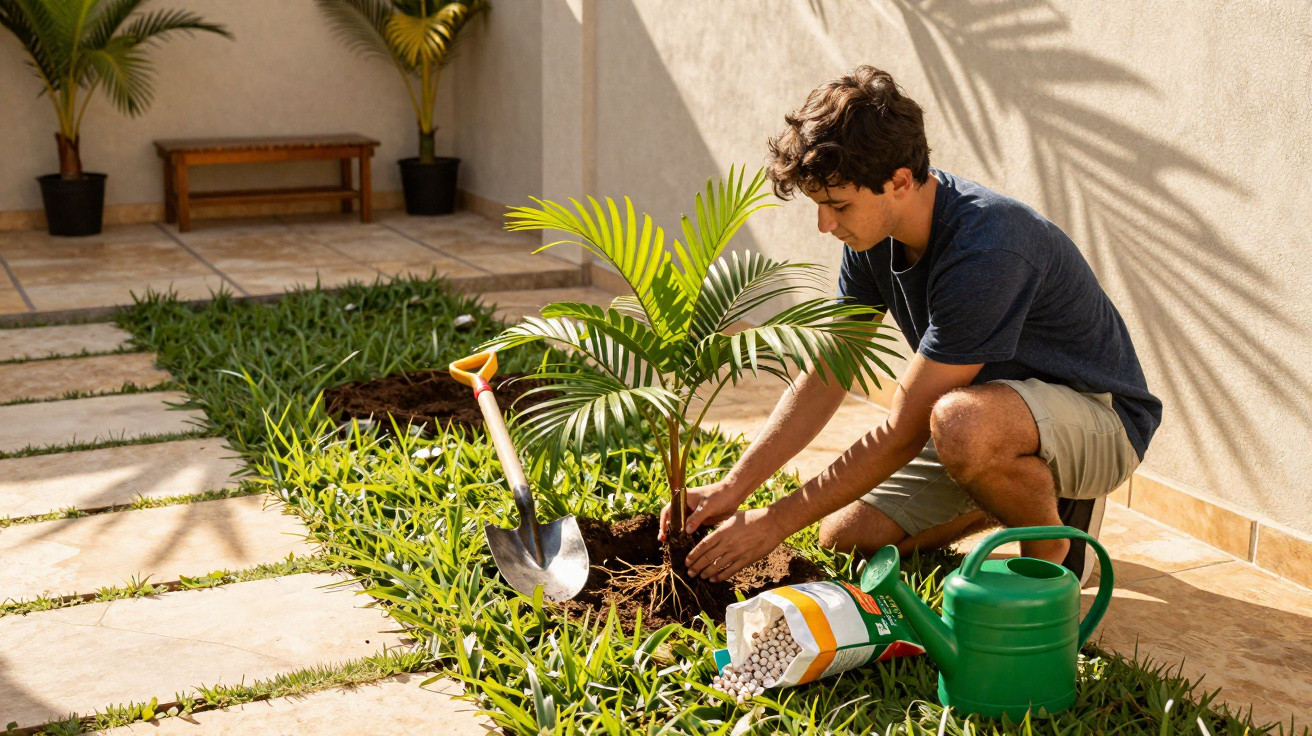
Gardeners can plant rue and stinking hellebore from March to May, ideally after the last more severe frosts. April is especially suitable: the soil has already warmed up, while the plants still have enough time to establish before hot summer weather begins – and with it, the period of greatest snake activity.
| Aspect | Recommendation |
|---|---|
| Planting time | March to May, ideally April |
| Height of rue | around 70–80 cm |
| Plant spacing | 40–50 cm, staggered in two rows |
| Soil | free-draining, loosened with around 1/3 sand or gravel |
Neither species tolerates waterlogging. In heavy clay soils, mix in plenty of sand, grit or fine gravel. This keeps the roots dry and helps the plants grow more densely and live longer, making the scent barrier more stable.
Where the green protective belt is most useful
The position in the garden matters just as much as the plants themselves. The most useful locations are transition zones leading to the “open countryside” and areas that are difficult to see into:
- boundaries next to woodland, meadows or uncultivated land
- along fences at the rear of the property
- areas around compost heaps or log piles
- below dry-stone walls or embankments
A typical example is a garden that backs on to a wild meadow. A low hedge of rue can be planted directly along the fence line in two staggered rows, spaced 40–50 centimetres apart. On the garden side, create a two-metre-wide strip of closely cut lawn. This corridor offers hardly any cover, and together with the scent barrier it makes the section unattractive to snakes.
Stinking hellebore fits particularly well into partially shaded gaps, such as on the north side of walls or shrubs, where rue grows less vigorously. This creates an unbroken belt of scent.
Safety when handling toxic ornamental plants
Rue and stinking hellebore are not harmless. Their sap can irritate skin and mucous membranes, while rue can make some people more sensitive when exposed to sunlight.
- always wear thick gardening gloves
- wear long sleeves and long trousers
- do not plant within reach of young children
- avoid placing them directly beside a patio, sandpit or dog run
Anyone with pets should check whether their animals tend to chew plants. For inquisitive dogs or free-roaming rabbits, other measures are more suitable, such as reducing sheltered garden structures instead of using toxic plants.
Combining scent and vibrations: making the garden a “no-go zone”
A second, frequently overlooked factor is vibration. Snakes are sensitive to vibrations in the ground. Footsteps, rustling and crunching travel through the soil to their bodies and warn them of danger.
For this reason, a mineral surface beneath rue and stinking hellebore is useful, for example coarse gravel or pieces of slate. This surface:
- keeps the ground dry and warm
- makes every footstep audibly louder
- transmits subtle vibrations into the soil
“A wall of scent combined with crunching ground sends snakes a message from afar: this is an uncomfortable place.”
What to do if a snake appears in the garden despite planting
No method offers 100% protection. Even with a scent belt and closely maintained edges, an adder or grass snake may occasionally wander into the garden. If this happens:
- stay calm and keep your distance
- do not crowd the animal or trap it
- move away slowly and keep children and dogs clear
- contact the local nature conservation authority or reptile specialists if sightings become frequent
In most cases, the animals retreat quickly if their escape route is not blocked. Bites are extremely rare and almost always occur when somebody tries to handle or kill the snake.
How to make the garden less attractive to snakes overall
Scent-producing plants work best when the rest of the garden is less appealing to reptiles. Useful additional measures include:
- mow long grass regularly along paths and seating areas
- create open stone and timber stores as far from the house as possible
- contain compost neatly and reduce mouse infestations
- use dense ground cover sparingly close to the house
Following these steps creates a clear, open central garden area. Snakes almost always prefer more structured zones at the edges.
What garden owners should know about adders and other snakes
Many garden owners mistake harmless species for the feared adder. Grass snakes usually have yellowish crescent-shaped markings behind their heads and are non-venomous. Adders are stockier and often show a dark zigzag stripe along their backs, but they are shy and ready to flee.
An adder bite can be problematic for children, older people or allergy sufferers, but it is very rarely fatal in Europe. Those living in a known adder area should wear sturdy footwear in the countryside and explain to children that they must not touch unfamiliar animals.
With a well-planned mixture of scented plants such as rue and stinking hellebore, clear garden structures and some background knowledge, it is possible to make a garden considerably safer – without conflicting with species protection laws or using aggressive chemical products from the DIY shop.


Comments
No comments yet. Be the first to comment!
Leave a Comment