
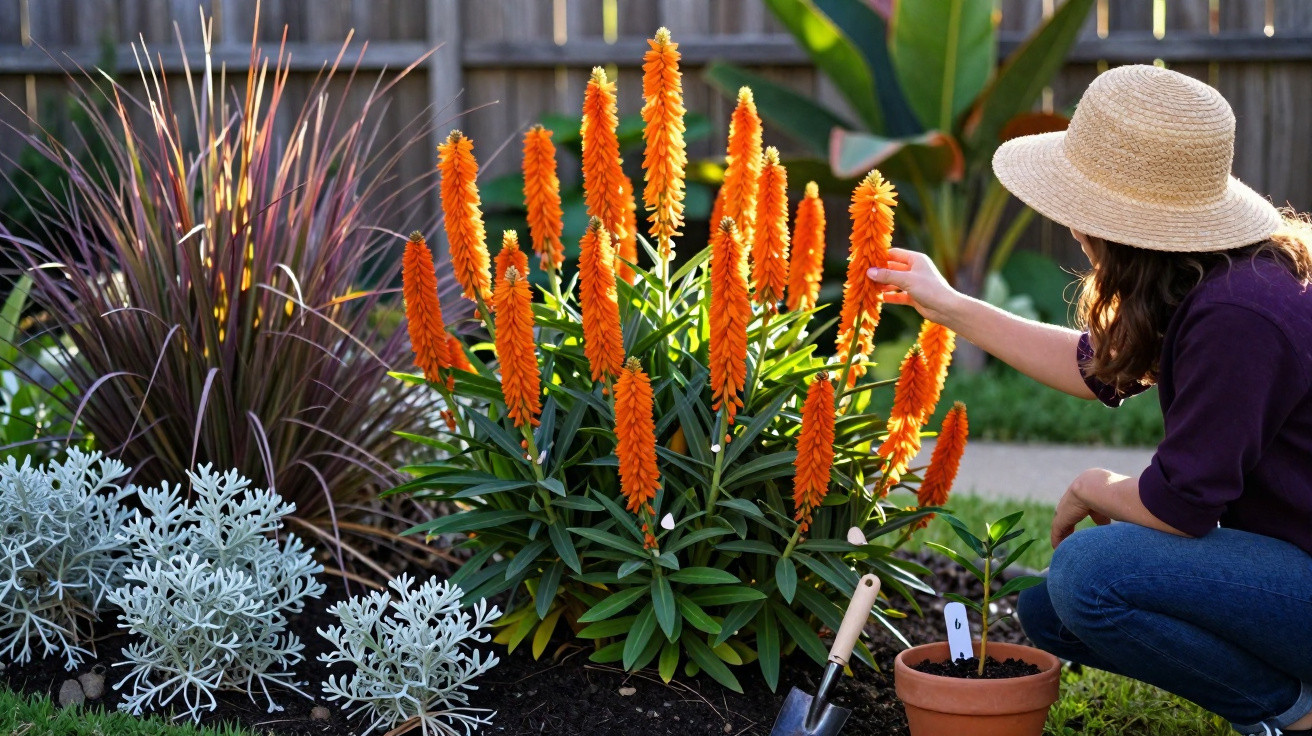
Does your flowerbed look well behaved and uninspiring, despite all the different flowers you have tried?
A little-known perennial can now take its visual impact to the next level.
Many gardens look pleasant in summer – but only pleasant. Anyone quietly hoping for a bed that resembles a living sculpture will sooner or later come across Leonotis leonurus, often called lion's ear. With its blazing orange whorls of flowers, this South African perennial introduces an architectural quality that feels like a work of art, without demanding complicated care.
An exotic-looking focal point
Leonotis leonurus is one of those plants that can be recognised from 10 metres away. It has an upright habit with a crisp, almost austere outline, reaching around 1.80 metres tall depending on its position. Its stems are rigidly vertical, while the narrow leaves look almost graphically drawn.
The real spectacle, however, lies in the flowers. Rounded tiers of tubular, velvety blooms in vivid, almost glowing orange are arranged along the stems. Each level appears like a separate wreath placed around the stalk.
Visually, Leonotis leonurus resembles a natural chandelier – a vertical firework display in the middle of the border.
By high summer, several of these tiers are stacked above one another. The result is a plant sculpture that instantly turns a calm perennial border into a focal point. Its colour is intense without being harsh, more like molten copper or glowing embers, and is especially striking when backlit by the evening sun.
At the same time, the plant has a powerful appeal for insects. Bees and butterflies visit its flowers almost continuously. In warmer parts of the world, hummingbirds also feed from this species; in the UK, butterflies and solitary bees take on that role.
Where lion's ear makes the greatest impact in the garden
For Leonotis leonurus to show its full potential, one thing matters above all: light. This perennial is a true sun lover. It needs at least six hours of direct sunshine each day, and more is better. Partial or full shade greatly reduces the number of flowers and leaves the stems soft and unstable.
A loose, humus-rich, free-draining soil is ideal. The plant does not tolerate waterlogging well, particularly in winter. Anyone gardening on heavy clay soil should therefore improve drainage with sand, horticultural grit or fine gravel.
Its drought tolerance is a major advantage. Once properly established, it copes remarkably calmly with extended dry spells. During hot summers, that is a real benefit for both the border and the water bill.
Leonotis leonurus loves sun and light soil – and rewards this with flowers for months without needing constant watering.
It is more cold-tolerant than its exotic appearance suggests, coping briefly with temperatures down to around minus eight degrees Celsius. In colder areas, though, it needs reliable winter protection in the form of a thick mulch of leaves, bark mulch or straw. In places prone to severe frost, it is worth growing it in a large container that can be kept sheltered over winter.
Five straightforward rules for successful planting
Anyone starting with Leonotis leonurus should follow a few basic principles. They may sound simple, but they make the difference between a struggling stem and an impressive fiery sculpture.
- Choose a very sunny position: Provide at least six hours of direct sunlight; a fully sunny spot in front of a wall or fence is ideal.
- Ensure the soil drains well: Work sand, horticultural grit or fine gravel into heavy soils so water can escape more quickly in winter.
- Add organic matter: Mature compost or well-rotted planting compost noticeably improves growth and flowering.
- Water in moderation: Water regularly for a few weeks after planting, then only give additional water during prolonged dry periods.
- Protect outdoor plants in winter: In exposed areas, apply a thick mulch around the roots in late autumn, especially where the ground freezes deeply.
For container planting, use a high-quality, open compost with some sand mixed in. The pot must have a drainage hole and a drainage layer. In winter, move the container against a sheltered house wall, into an unheated greenhouse area or a bright, frost-free garage.
Stylish ways to combine Leonotis leonurus
The distinctive appeal of this perennial is that it does more than add colour: above all, it provides architectural structure. That is exactly what makes it so compelling in contemporary planting schemes.
Strong partners for a modern fiery border
It works exceptionally well with delicate, mobile grasses that soften its formal upright growth. Perennials in cool tones are equally effective, creating colour contrast.
Popular companion plants include:
- airy grasses such as fountain grass or feather grass
- blue or purple varieties of sage
- bronze-leaved or near-black foliage plants such as dark cannas
- dark-flowered dahlias, which visually ground the orange
In a naturalistic garden, Leonotis leonurus looks particularly effective among wildflower perennials, steppe plants and gravelly areas. In urban front gardens, it creates a crisp contrast against simple grey façades or screening panels, turning a narrow border into a small statement planting.
This perennial is not simply “another flower”; it is a structure-forming leading character in the border.
Design ideas for maximum impact
Where space permits, plant Leonotis leonurus in small groups of three rather than as individual specimens. This heightens its sculptural effect. Positioned at the back of a border, it adds height; in the middle, it creates a vertical line that guides the eye.
The plant is especially impressive when its orange flowers are framed by grasses in late summer, moving in the wind. This creates an exciting contrast between strict form and flowing movement.
Practical care advice and common questions
Care through the year remains manageable. The plant produces new growth in spring and flowers for a long period in summer; in late autumn, many gardeners cut it back close to ground level. In milder locations, the stems can be left until spring – they protect the root area and look highly decorative when covered in frost.
A small amount of fertiliser in spring, in the form of compost, is usually enough. Too many nutrients may produce lush green growth, but often reduce sturdiness and can weaken flowering. It is better to feed modestly but regularly than to overdo it generously.
Pests are rarely a major issue on Leonotis leonurus. During exceptionally dry, hot summers, aphids or spider mites may occasionally appear. Usually, it is enough to rinse the plant thoroughly with water or rely on beneficial insects such as ladybirds.
Why this perennial is worth planting now
Many gardeners are currently looking for plants that can handle heat, support insects and still offer more visual interest than the usual uniform green. This is precisely where Leonotis leonurus excels. It brings structure, colour and an almost graphic presence, while requiring moderate amounts of water and relatively little effort.
Anyone wishing to gradually convert their borders to drought-tolerant species can begin with this perennial. Combined with grasses, sage, echinacea or gaura, it creates planting schemes that can get through summer without daily watering while still looking lively, light and modern.
Another advantage is that Leonotis leonurus demonstrates, particularly in naturalistic mixed planting, how dramatically one well-chosen accent plant can transform the overall picture. Rather than ten “pleasant” perennials, a single distinctive structural plant often brings more tension and character to the garden. Anyone who feels their border is attractive but dull will find this fiery perennial a highly effective alternative.

Comments
No comments yet. Be the first to comment!
Leave a Comment