
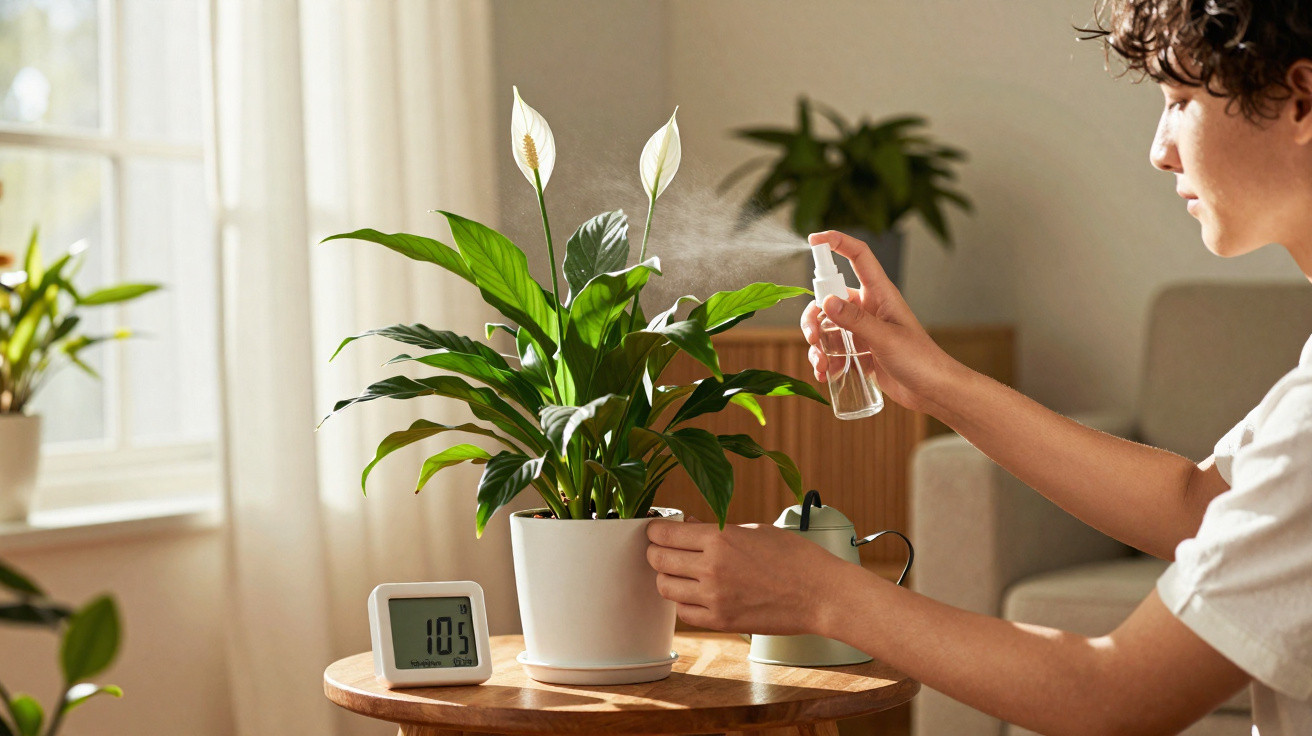
The peace lily is among the most popular houseplants for homes and offices because it tolerates lower-light settings better than many varieties. However, regular flowering depends on balancing light, temperature and humidity. Minor changes to the pot’s position, the room it is kept in, and its watering and feeding routine can directly affect flower production throughout the year.
What is the best light for a peace lily to flower indoors?
Suitable lighting is essential if a peace lily is to retain healthy foliage and produce blooms. It thrives in bright indirect light: plenty of daylight, without prolonged exposure to harsh direct sun, which may scorch the leaf edges and cause yellowing. In excessively dim places, the plant expends its energy simply maintaining its leaves, so flowering is reduced or stops altogether.
In practical terms, peace lilies tend to bloom better near well-lit windows, in a spot where you can read during the day without artificial lighting. A position 1 to 2 metres from the window is usually ideal, with a sheer curtain to diffuse the light. When placed in windowless corridors or particularly dark corners, the stems stretch towards available light and flowers become uncommon.
Watch a video on the YouTube channel Minhas Plantas explaining how to assess the right lighting and fertilising frequency to encourage your peace lily to produce striking white flowers:
What temperature and humidity help peace lilies flower more?
As a tropical plant, the peace lily performs well in mild, consistent temperatures between 18 °C and 28 °C. Extended periods below 15 °C slow its growth and can cause the plant to “pause” flowering. Temperatures above 32 °C, combined with dry air, can lead to rapid wilting and water stress.
Moderate to high humidity is preferable, particularly in homes with air conditioning, which often dries the air. Dry leaf tips, even where the compost is moist, may signal that indoor air is too dry. A few straightforward measures can create a more comfortable environment for the plant:
- Place the pot on a tray containing pebbles and water, ensuring the base of the pot does not sit in the water.
- Group the peace lily with other plants to create a more humid “microclimate”.
- Mist the leaves on exceptionally dry days, always at cooler times of day.
Which rooms are best for keeping a peace lily healthy?
A living room close to large windows is often the most suitable location, as it provides good diffused light, steady temperatures and moderate air circulation. Bright bedrooms can work equally well, provided the pot is protected from strong afternoon sun. In single-storey homes, enclosed porches and passageways near glass doors often offer a good balance of abundant light and protection from intense sunshine.
Bathrooms with ventilation and a window can be excellent choices because they combine humid air with indirect light, a setting that supports green leaves and consistent flowering. In contrast, windowless bathrooms, overly hot kitchens and spaces behind large furniture tend to restrict light levels. This limits the plant’s ability to form flower buds, even when it is watered correctly.
What simple changes encourage more peace lily flowers throughout the year?
Moving the pot to a brighter position, while still avoiding strong direct sun, is usually the first step towards improving flowering. Often, shifting the plant just a few metres closer to a window provides enough indirect light. It is also worth keeping the peace lily away from cold draughts, frequently used doorways and air-conditioning vents, all of which can dry the leaves and hinder flower development.
Keeping the compost lightly moist without waterlogging it, removing dead leaves and spent flowers, and applying a light, regular feed during active growth all help direct energy towards new flowering stems. With this combination of care, the peace lily is likely to bloom more frequently, turning a simple foliage pot into a vibrant, ever-renewing focal point indoors.


Comments
No comments yet. Be the first to comment!
Leave a Comment