
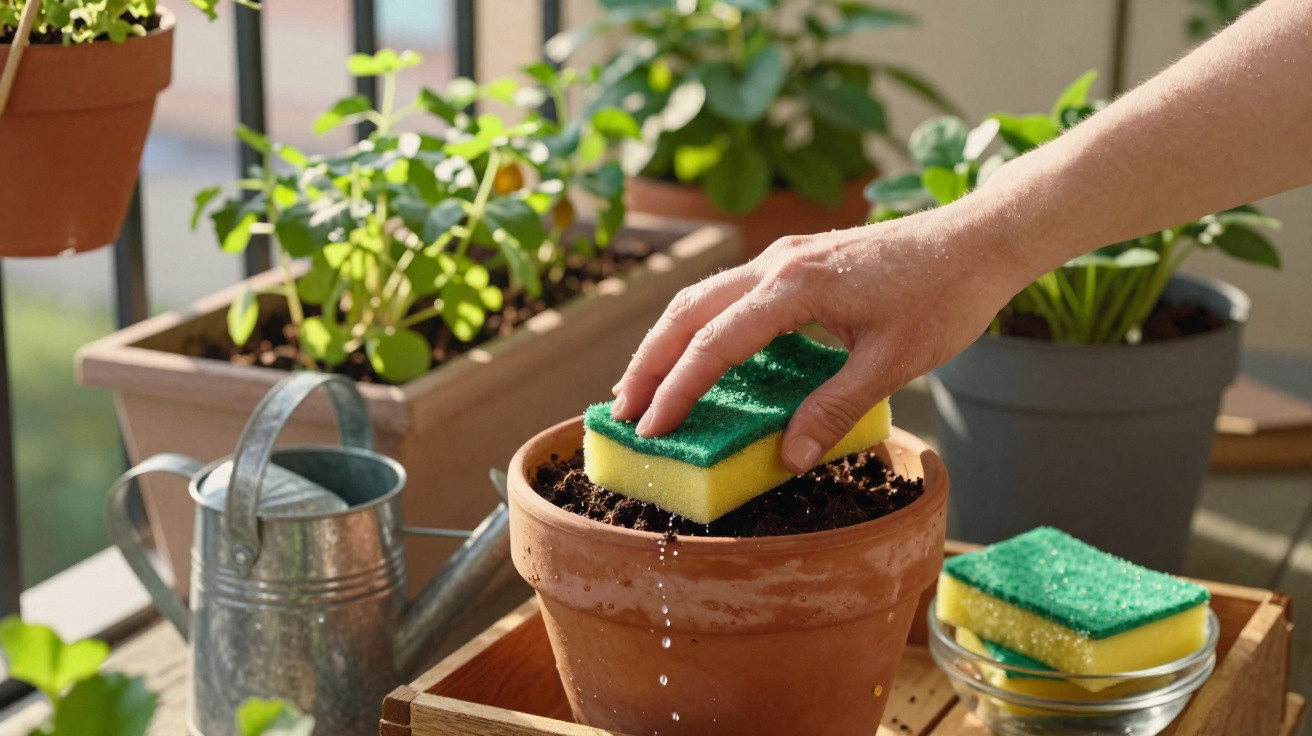
Many amateur gardeners spend money on costly irrigation systems, water-retaining granules or smart sensors. Yet a modest helper is often already sitting by the sink: the discarded washing-up sponge. Prepared and used correctly, it can reduce reliance on the watering can, cut waste, keep compost active, help soil stay moist for longer and support young plants.
Why a washing-up sponge can transform plant care in beds and pots
During spring, plants commonly face two challenges: delicate new roots and an inconsistent supply of water. Soil in pots and window boxes can dry out rapidly during the day, particularly on sunny or windy balconies. This is where a washing-up sponge can prove useful.
“In a pot, a sponge acts like a small rechargeable water reservoir right beside the roots.”
Its porous material absorbs water, retains it, then releases it gradually. Place a clean sponge at the base of a pot, above the drainage holes and beneath the soil, and it can have the following effects:
- Excess watering is absorbed instead of immediately draining away.
- The soil stays damp for a longer period.
- “Dry spells” between watering sessions are less severe.
- Drying shocks become noticeably less common, especially in wind-exposed window boxes.
For plants in containers or window boxes, this can mean less stress, fewer drooping leaves and a lower chance of young roots drying out. It also provides a small safety buffer for anyone regularly away for the weekend.
Reusing old sponges – but with care
Before a kitchen sponge is moved into a bed or pot, it needs to begin its second life as a garden tool, not as a source of bacteria. In the kitchen, sponges collect a mixture of grease, cleaning products and, above all, germs.
Experts describe a sponge that remains damp all the time as a breeding ground for microbes. It should therefore not stay at the sink indefinitely; once it has been thoroughly cleaned, the garden is a more suitable next destination.
Preparing a washing-up sponge for the garden
- Squeeze it thoroughly under running water until no foam remains.
- Put it into boiling water and boil it for several minutes.
- Alternatively, soak it in clear vinegar and leave it to work properly.
- If desired, heat it while damp in a microwave for one to two minutes, provided it has no metal parts.
Afterwards, the sponge should be used only in the garden. It must not return to the sink, as soil, spores and microorganisms could otherwise end up back in the washing-up water.
Which sponges work in the garden – and which do not?
The material of the sponge is the key consideration for garden use. Not every product bought in a supermarket is automatically suitable.
| Type of sponge | Use in pots | Use in compost |
|---|---|---|
| Natural cellulose | Suitable and can be incorporated | Suitable; breaks down over time |
| Loofah | Very suitable | Very suitable and fully compostable |
| Synthetic kitchen sponge containing plastic | Only as a loose water-retaining layer in pots; not for edible plants | Unsuitable because of the risk of microplastics and residues |
Natural options made from cellulose or the familiar loofah break down gradually, making them well suited to compost heaps and beds. Standard yellow washing-up sponges with green scouring pads, by contrast, contain plastics and often chemical additives. They are problematic for vegetable gardens, and particularly unsuitable for compost.
“The basic rule is: only natural sponges should remain in soil and compost long term. Plastic is better kept in ornamental areas – and ideally left out altogether.”
Four clever uses for washing-up sponges in the spring garden
Once a sponge has been “moved” from the kitchen to the garden, it quickly becomes clear that it has more than one use. This small accessory can be used flexibly, particularly at the beginning of the growing season.
1. A water reservoir in pots and window boxes
Put a cleaned sponge in the bottom of a pot, directly above drainage material such as expanded clay or gravel. Add the soil afterwards. When watered, the sponge fills up and keeps moisture close to the roots.
This is especially worthwhile for:
- thirsty summer flowers in window boxes
- tomatoes, peppers and herbs grown in containers
- plants placed against very sunny house walls or on south-facing balconies
2. A moisture booster for the compost heap
Natural sponges can be cut into small pieces and added straight to compost. There, they function as tiny water stores and aerating “cushions”. This helps compost retain moisture more evenly, supporting the work of microorganisms.
This is particularly useful in spring, when temperatures rise and the heap begins to become active, as biological activity benefits from stable moisture levels. It is important to add only sponges without plastic and without heavy washing-up liquid residues.
3. A mini greenhouse for seedlings
Anyone who enjoys sowing seeds can also use a sponge as a germination base. Cut the sponge into small cubes, moisten them with water and press one seed into each cube.
Once the seedlings are around a hand’s breadth tall and have formed roots, transplant the cube and plant together into a pot or bed. With natural sponges, the material breaks down slowly and does not interfere with the plant.
4. Light protection from cold and pests
A sponge laid flat on the soil, with its soft side facing down and held in place by a stone, can give sensitive plants a degree of protection against late frosts. It acts as a thin insulating layer.
Soaked with a few drops of essential oil, such as lavender or tea tree, a sponge may discourage certain insects and slugs slightly in some locations. It is not a miracle solution, but it is a small additional tactic in a gardener’s toolkit.
What to watch out for when using a washing-up sponge
Helpful as a sponge may be, it should not simply be left in a bed without attention. Like any organic material, it can eventually turn sour or develop mould.
- Inspect it regularly: remove the sponge if it smells musty or rotten.
- Take it out immediately if mould is visible.
- Dispose of badly disintegrated plastic sponges rather than incorporating them into the soil.
- Natural sponges free from washing-up liquid residues can go into the compost.
It is especially worth checking during repotting. If the sponge is still intact, it can remain in place; if it is falling apart, it is better replaced.
How this trick affects water use and waste
Households that wash dishes regularly throw away several sponges each year. Some of these can be diverted for use in the garden. That not only reduces a little general waste, but may also lower water consumption because plants need watering less often.
Naturally, a sponge cannot replace a well-planned watering approach in high summer. Combined with mulch, suitable plant spacing and appropriate varieties, however, it creates a small, simple system that retains moisture more effectively. This is ideal for anyone who does not want to be constantly carrying a watering can.
Practical everyday examples in the garden
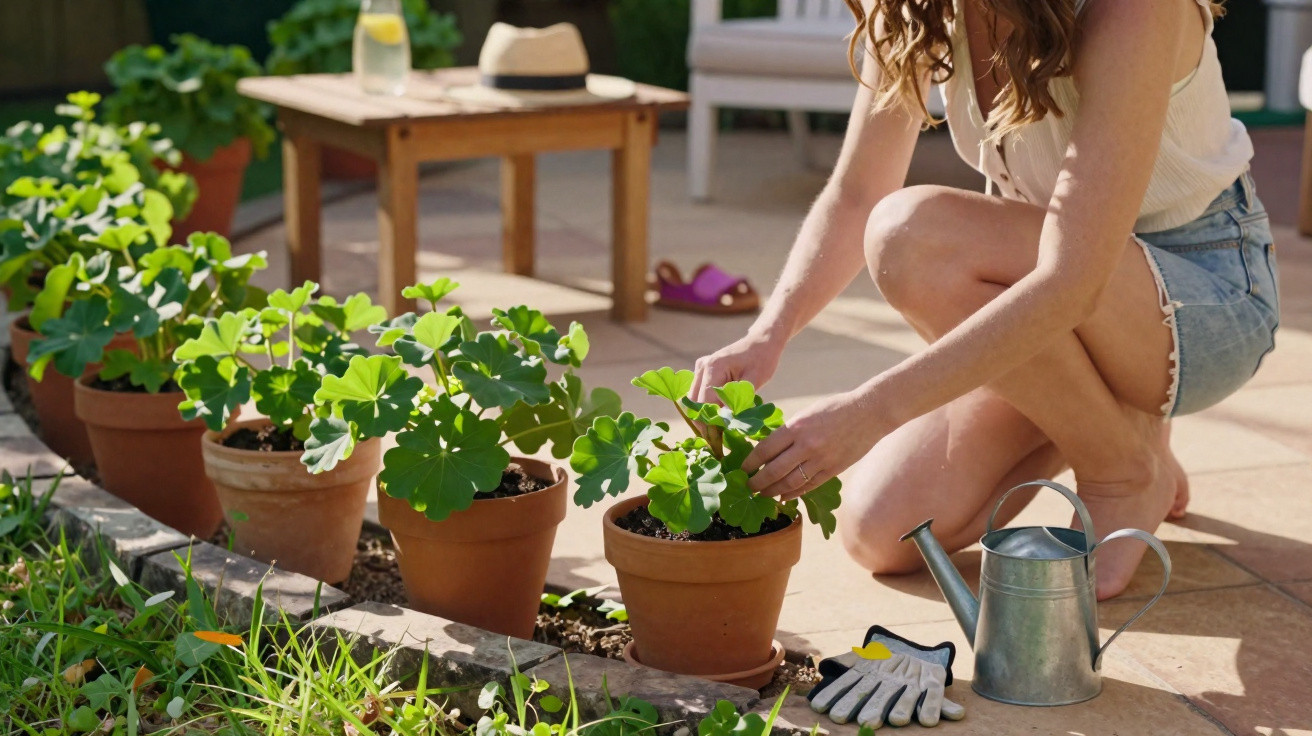
In practice, this approach is most useful wherever water runs away or evaporates quickly. Typical examples include long window boxes planted with petunias or geraniums, patio containers holding Mediterranean herbs, and tomatoes grown in pots.
Many amateur gardeners report that, with the same amount of water, their plants are slower to wilt. The sponge is particularly useful during holiday periods as a small form of insurance: the soil remains damp for an extra day or two. Adding mulch across the surface increases this effect.
One further point needs consideration: pots containing edible plants should, wherever possible, contain only a natural sponge with no aggressive cleaning-product residues. If in doubt, use the method in ornamental planting instead, and choose fresh, untreated sponges made from natural materials for tomatoes and herbs from the outset.
Comments
No comments yet. Be the first to comment!
Leave a Comment