
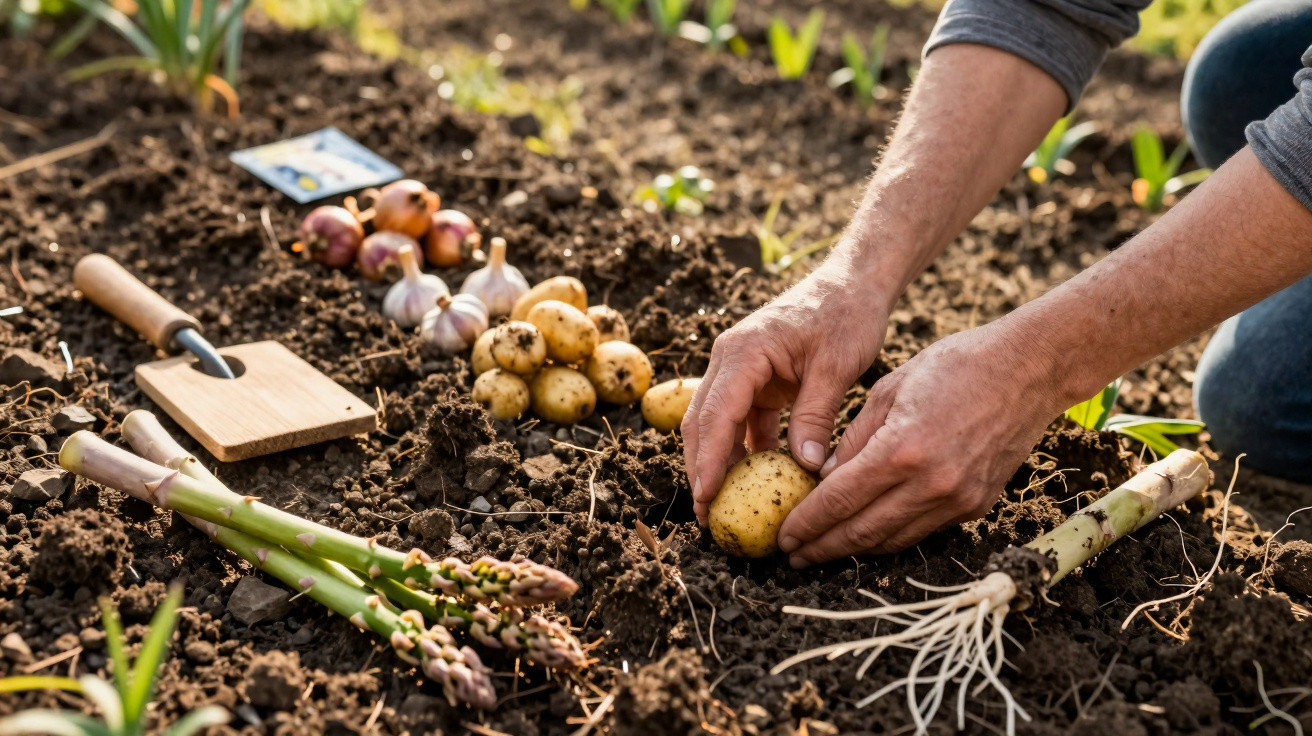
Anyone eagerly awaiting warmer days in March will often feel impatient to get started: at last, sowing and planting can begin. Yet this is precisely when a different approach can pay off. Certain vegetables produce bigger crops, grow more reliably and get underway weeks earlier when planted as planting material, tubers or young plants rather than laboriously raised from seed.
Why planting is often wiser than sowing
Up to four weeks ahead in the vegetable bed
Every sowing job shares the same vulnerable point: the delicate germination stage. Seeds need the right temperature, enough moisture without becoming waterlogged, and protection from pests – and even then, success is not guaranteed. Pre-sprouted tubers, sets and young plants allow you to bypass this risky stage altogether.
"Using planting material rather than seed saves two to four weeks and greatly increases the likelihood of a plentiful harvest."
Raised plants and tubers already contain stored energy and have formed their first roots. As soon as the soil provides a little warmth, they begin growing instead of having to germinate first. This has an immediate effect on the timetable: earlier flowering, earlier harvesting and more resilient crops.
The most important trigger: the right soil conditions
However eager you may be, the ground must no longer be a muddy mess. Planting into wet soil can lead to rot, fungal diseases and poorly rooted plants.
- Put your hand into the soil: if it forms a sticky lump, it is still too early.
- If it crumbles apart easily, you can begin.
- Try a tool: if heavy clay sticks all over the spade, wait a while longer.
Once the soil has dried sufficiently but still holds some moisture, conditions are almost ideal. At that point, every trip to the garden is worthwhile – especially for the crops below.
These tubers and bulbs should go into the ground early
Potatoes: tubers rather than seed – a fast track for the early bed
Growing potatoes from seed is a task for breeders, not everyday gardeners. Pre-sprouted seed potatoes, on the other hand, are straightforward and dependable. Putting them into rows now gives them a substantial head start.
Key planting points:
- Use pre-sprouted tubers; small shoots measuring 1–2 cm are ideal.
- Make furrows around 10–15 cm deep.
- Leave roughly 60–70 cm between rows and around 30–35 cm between tubers in each row.
- Cover only lightly with soil at first, then gradually earth them up later.
The seed tuber gives the young plant a powerful initial boost. Growth is rapid and robust, often with fewer fungal issues because the plants are already well established when the weather turns.
Garlic, onions and shallots: small sets, a major difference
For alliums, choosing onion sets and garlic cloves instead of sowing is worthwhile. They develop a strong root system more quickly and make the best use of spring moisture before summer heat arrives.
"Planting garlic cloves and onion sets directly gives you strong plants – and means far less pricking out and thinning."
How to plant them correctly:
- Always position the pointed end of the bulb or clove upwards.
- Plant only deeply enough for a light covering of soil.
- Soil must be loose and well aerated – waterlogging quickly causes rot.
The plants then root gradually but steadily into the warming ground. The result is large onions, flavoursome bulbs and less stress during high summer.
Perennial crops: planting makes the difference with these vegetables
Asparagus: save years by planting crowns
Raising asparagus from seed may sound romantic, but it is painfully slow. Several years pass before the first worthwhile harvest. Planting asparagus crowns instead of seed saves a huge amount of time.
How to make a successful start:
- Create a deep, loose planting trench and improve it with sand or compost.
- Set the crowns slightly raised on a small ridge, spreading the roots out like a fan.
- Cover them with only a thin layer of soil, then top this up over the coming months.
Asparagus hates waterlogged ground. A well-drained site determines whether it succeeds or fails. Once established, it rewards you with harvests for more than a decade.
Artichokes: young plants instead of unreliable seed germination
Artichokes thrive on warmth and stable conditions. Germination from seed can be unpredictable and rarely suits our spring weather. By planting ready-grown young plants or so-called "offsets" (divided plants taken from the parent crown), you avoid a great deal of hassle.
"With sturdy young artichoke plants in the vegetable bed, you skip the most delicate stage – and secure decorative, edible buds much sooner."
Artichokes need:
- a sunny, sheltered position;
- plenty of organic matter in the soil, in the form of mature compost;
- sufficient space – around 80 to 100 cm per plant.
Giving these heavy feeders plenty of compost when planting provides a solid foundation. They will then cope better with changing temperatures and grow strongly.
Preparing the soil gently for planting
Loosen rather than dig: kinder to soil life and roots
Deep digging damages earthworm tunnels, fungal networks and the soil's delicate structure. For most spring tasks, gently loosening the top layer is entirely sufficient.
Suitable methods include:
- Use a cultivator or single-tine ripper, working only a few centimetres deep.
- Clear planting areas of large clods and stones.
- Work mature compost into the surface rather than burying it deeply.
This helps the ground warm up more quickly, lets water drain more effectively and gives new roots airy channels to follow. It encourages lively, crumbly soil – the best basis for robust plants.
Protection from late frost: little effort, significant benefit
March can feel spring-like during the day, only to bring a light frost overnight. Newly planted potatoes and emerging alliums are particularly sensitive to this.
| Measure | Suitable for | Benefit |
|---|---|---|
| Horticultural fleece or frost-protection mesh | Potatoes, onions, young plants | Protects against cold shock while allowing light and rain through |
| Low polytunnel | Asparagus row, early potatoes | Raises soil temperature and speeds up growth |
| Straw or leaf mulch | Alliums, perennial crops | Reduces temperature fluctuations and retains moisture |
These simple protective measures cost little, yet prevent frost damage that can set entire beds back by weeks.
A relaxed approach to gardening season pressure with smart planning
Strategic planting that pays off all year
Planting tubers and planting material now eases the usual April rush in the garden. While tomatoes, peppers and squash take centre stage later on, potatoes, onions, asparagus and artichokes will already be growing steadily.
"Early plantings form the backbone of the vegetable garden – they work reliably in the background while you focus on more sensitive crops later."
Early potatoes provide the first harvesting pleasure before the summer holidays. Onions and garlic stock the larder and kitchen while other crops are still developing. Perennial vegetables such as asparagus and artichokes offer regular yields over many years with comparatively little follow-up work.
Common mistakes that undo the planting advantage
To ensure the plan works, it is worth watching out for these frequent pitfalls:
- Soil that is too wet: this causes rot, especially in garlic and onion sets.
- Planting too deeply: this weakens new growth, particularly in alliums.
- No crop rotation: never grow potatoes and onions in the same place for several consecutive years.
- Spacing plants too closely: this encourages fungal diseases and weak plants.
Keeping these points in mind lets you make full use of the real advantage of planting: fewer losses and greater yields with manageable effort.
This approach is particularly worthwhile in small urban gardens or on balconies: start with robust seed potatoes in a bag, onion sets in planters, or one artichoke plant in a large container. It creates the sense of an "active" garden early in the year, while the main sowing and pricking-out work is only just beginning.
This planting strategy is especially suitable for beginners. It is more forgiving of mistakes than sowing, requires less specialist knowledge and still delivers noticeable success. Once you have seen how much more reliably certain vegetables begin from tubers, small bulbs or young plants, you will no longer automatically reach for a packet of seeds first in spring.
Comments
No comments yet. Be the first to comment!
Leave a Comment