
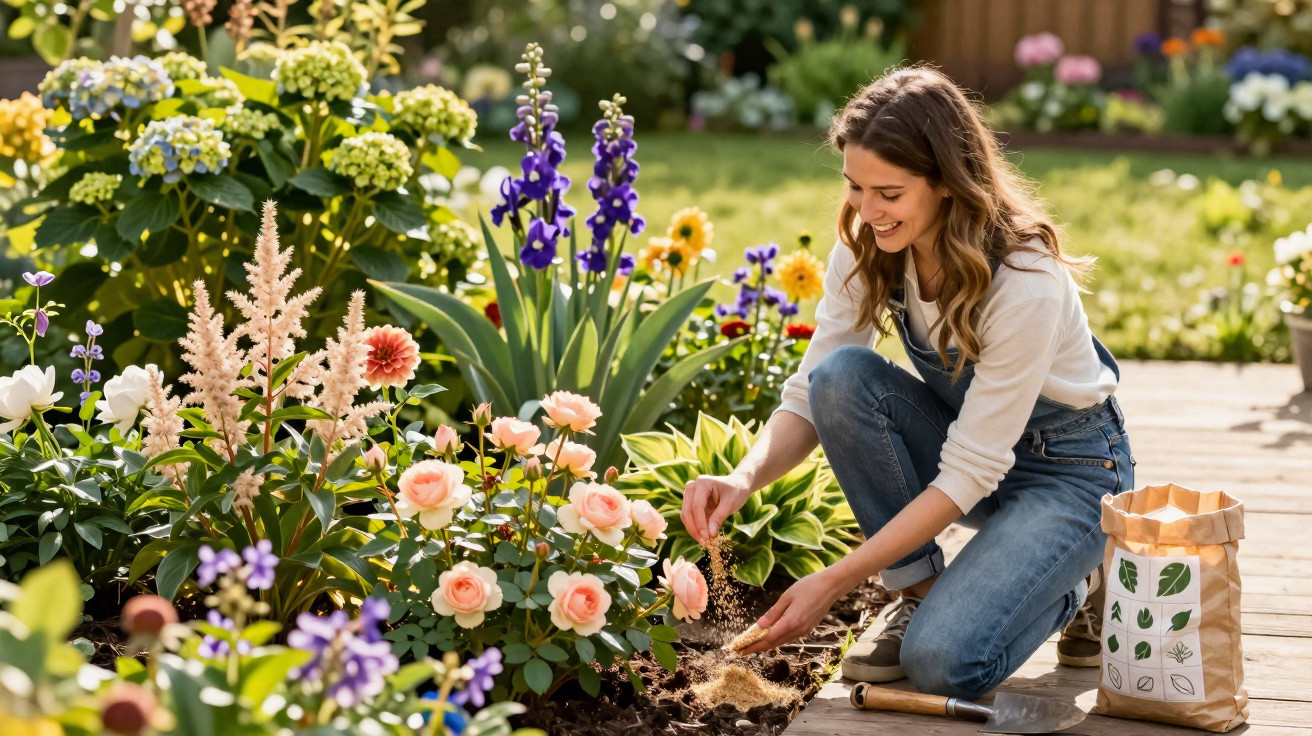
Many keen gardeners wait until flowers have already appeared before applying fertiliser. For perennials, that is usually too late. March is when you set the course for beds packed with colour and blooms: roots become fully active again and absorb nutrients like a sponge. Acting purposefully now will get considerably more from your garden, with very little extra effort.
Why March determines your perennial flowering
After winter, it is not just the soil that thaws out; your perennials’ roots also return to growth. They develop fresh fine roots that are particularly efficient at taking up nutrients. Fertiliser is far more effective at this point than during high summer, when the ground is often dry and compacted.
“Fertiliser applied in March is like a starting signal: plants have energy before they form buds and flowers – and that is the difference between ‘quite nice’ and ‘wow’.”
Organic fertilisers and slow-release products provide plants with a steady supply of nutrients for three to six months. This prevents nutrient peaks that push excessive leaf growth while leaving flowers behind. Depending on your region, the ideal time is from late February to early April, when the soil is lightly moist but not frozen.
These 11 perennials particularly appreciate fertiliser in March
Some perennials respond much more noticeably to an early feed than others. If time or budget is limited, focus on these plants first.
1. Roses – start the flowering engine at the right time
Roses need plenty of energy for numerous new shoots, buds and a long flowering period. March, immediately after pruning, is the ideal time for their first feed.
- Use a balanced rose fertiliser (for example, NPK 10-10-10 or 12-12-12).
- Work it lightly into the top layer of soil, then water it in.
- Use a slightly lower dose for container-grown roses to avoid root damage.
This gives the plants a strong start and helps them produce sturdy, well-ripened shoots – the foundation for healthy flowers.
2. Peonies – give them a proper annual boost
Good spring nutrition rewards peonies with abundant, heavy blooms. As deep-rooted plants, they draw a great deal from the soil, so those reserves need replenishing.
A balanced general fertiliser, or mature compost combined with a little organic fertiliser in March, is often enough for the whole season. Importantly, do not place fertiliser directly on the emerging shoots; work it into the soil around them instead.
3. Dahlias – energy for a long display of flowers
Anyone who loves dahlias should feed them to encourage blooms rather than leaves. Too much nitrogen produces rampant greenery and few flowers.
- Choose a fertiliser with a greater proportion of phosphorus and potassium (e.g. 5-10-10).
- Apply the first dose in March/April when the tubers are being prepared or planted.
- Give heavily flowering varieties a second, lighter application in early summer.
This directs the plants’ energy into buds and plentiful flowers rather than endless foliage.
4. Delphiniums – growing tall requires nutrients
Delphiniums rapidly grow into imposing flower spikes. Without sufficient nutrients, their stems remain thin and their flower spikes disappointing.
A balanced garden fertiliser in March, together with a little compost, produces strong shoots that stand firmly. If they flower again in late summer, apply a light additional feed after cutting them back.
5. Garden phlox – fragrant clouds backed by feeding
Phlox paniculata is a genuinely hungry plant. If you want dense, sweetly scented clouds of bloom in high summer, action is needed in spring.
As with roses, a fertiliser with an even nutrient balance is ideal. Adding a compost mulch helps maintain soil life and moisture, both of which greatly benefit phlox.
6. Coreopsis – long-flowering sunshine
Coreopsis flowers for many weeks, which takes energy. A moderate spring feed gives it the stamina to keep going.
In March/April, apply a thin layer of organic fertiliser or a light general fertiliser. Too many nutrients can make plants unstable and may even shorten their flowering period.
7. Bearded irises – flowers rather than masses of leaves
Bearded irises prefer lean, well-drained sites. Even so, their rhizomes benefit from targeted feeding, provided nitrogen is kept low.
- Apply a fertiliser formulated for flowers (around 5-10-10).
- Never scatter it directly over the rhizomes; lightly work it into the soil beside them.
- Do not mulch heavily after feeding, as the rhizomes need air and light.
8. Hostas – hungry stars of the shade
Hostas grow slowly but create impressive layers of foliage. They are not exceptionally hungry plants, but they respond well to a gentle initial boost.
A blend of compost and slow-release fertiliser is generally more than sufficient. In partial shade and shade, organic matter helps retain moisture and protects the leaves from stress.
9. Daylilies – every flower lasts one day, but the show lasts all summer
Daylilies produce fresh flowers daily over many weeks. To do this, they particularly need phosphorus and potassium, which support bud development.
Give them an initial fertiliser application in March with slightly increased phosphorus and potassium. A second, restrained dose in summer maintains their flowering power without overloading the plants.
10. Hydrangeas – influencing colour and abundance
Mophead hydrangeas in particular react directly to their nutrient supply – and blue varieties also respond to the soil’s pH level.
- For blue flowers in acidic soil, choose a fertiliser low in phosphorus (e.g. 12-4-8).
- In neutral to slightly alkaline soil, flowers will tend to remain pink; fertiliser alone does little to alter this.
- Feed in March, then give container-grown hydrangeas another lighter application in early summer.
11. Astilbes – long-flowering plants with a big appetite
Astilbes enjoy moist, humus-rich soil and are among the hungrier perennials. Feed them well and they will reward you with long, dense plumes of flowers.
Balanced fertiliser in spring, supplemented by a second application in autumn, strengthens the plants for new growth and the formation of future flower buds. Paired with a thick compost layer, this keeps both soil moisture and nutrient availability consistent.
How to apply fertiliser correctly
Even the best fertiliser offers little benefit if it is applied incorrectly. Common mistakes can quickly result in scorched foliage or weak, soft growth.
“Never fertilise directly at the crown, and never feed frozen or bone-dry soil – it prevents a great many disappointments.”
Follow these practical steps for perennial beds in March:
- Lightly rake the surface and remove old plant debris.
- Spread the recommended amount of fertiliser evenly around the plants.
- Lightly work it into the topsoil.
- Water thoroughly afterwards so the nutrients reach the root zone.
This avoids concentrated patches of fertiliser and ensures the fine roots can access the nutrients.
Weeds in March: annoying competition or free liquid fertiliser?
The first wild plants appearing in the bed may seem irritating, but they offer an opportunity. In March, their roots are often still shallow, so they can easily be pulled out by hand. Removing them takes away competitors for your perennials’ water and nutrients.
There is also a useful option for practical gardeners: freshly pulled weeds can be made into a simple plant brew that works as a liquid fertiliser.
- Loosely fill a bucket with weeds, excluding any seed heads.
- Top up with water and leave it to ferment for several weeks.
- Dilute the resulting liquid manure at roughly 1:10 with water.
- Apply it around the root area of perennials every 14 days.
This returns the nutrients stored in weeds to the bed instead of sending them to green waste. It is an inexpensive extra feed, especially for exhausted beds.
Why slow-release and organic fertilisers suit perennials so well
Perennials remain part of the garden for years. A consistent, moderate flow of nutrients is better suited to their rhythm than rapid, short-lived bursts of nitrogen. Organic fertilisers and slow-release products release nutrients gradually, often in close partnership with soil organisms.
Every application generally improves more than the nutrient level: it also benefits soil structure. The soil holds water more effectively, is less likely to become waterlogged and compacted, and allows air to reach the roots. This makes plants more resilient during dry spells and spring temperature changes.
Common questions: quantities, risks and useful combinations
Many amateur gardeners are unsure how much fertiliser their perennials can tolerate. The rule of thumb is to apply small amounts regularly rather than infrequent “fertiliser shocks”.
| Perennial type | Fertiliser type in March | Note |
|---|---|---|
| Heavy feeders (e.g. roses, astilbes) | General fertiliser + compost | Apply one stronger dose, then lightly feed again in summer if needed |
| Moderate feeders (daylilies, phlox) | Moderate general fertiliser application | During dry periods, do not add extra fertiliser without watering |
| Light feeders / shade-loving perennials (hostas) | Compost + a small amount of slow-release fertiliser | Apply sparingly, otherwise you risk overly lush growth |
The main risks come from overfeeding and choosing the wrong moment. Plants given too much encouragement in cold soil produce soft growth and are more vulnerable to late frosts. Only fertilise once the soil is genuinely frost-free and can be worked easily.
A sensible combination consists of:
- organic base fertiliser or compost in March,
- a light additional feed with liquid fertiliser if required in early summer,
- a mulch layer of composted bark or leaves to protect the soil and its living organisms.
Gardeners who care for their 11 key perennials in this way will often be surprised in late spring and summer by how much the garden “gives back”: denser-planted beds, stronger stems and longer flowering periods – all from a few targeted tasks in March.



Comments
No comments yet. Be the first to comment!
Leave a Comment