
to save.
Anyone growing vegetables in the garden knows the problem: as soon as the first leaves get bigger, slugs start devouring them. Many people instinctively reach for the blue pellets from the garden centre. Yet an increasing number of home gardeners are finding that there is a much simpler, cheaper solution that, above all, poses no risk to hedgehogs, birds or pets: an everyday item that almost everyone already has at home.
Why slug pellets are a dead end
Slugs have a terrible reputation, although they also play a part in the garden’s natural cycle. They eat dead plant matter and provide food for many animals, including ground beetles, toads, hedgehogs, blackbirds and ducks. Mass killing slugs with poison therefore affects more than just the slimy creatures themselves; it disrupts an entire network.
Many common slug pellets contain an active ingredient from the pesticide group that can be dangerous to wildlife and pets. In the worst case, dogs and cats may eat the pellets while playing or out of curiosity. Even products marketed as “organic” are approved plant-protection products: they act specifically on organisms in the soil and are not entirely without consequences.
More and more gardeners are looking for ways to protect young plants without poisoning the wildlife in their gardens.
The approach used by many environmentally minded gardens is therefore not to eradicate slugs completely, but to shield vulnerable young plants so they are not nibbled in the first place. The less poison ends up in the garden, the more easily natural predators can keep the slug population in balance.
Protection rather than poison: turning a simple bottle into a slug barrier
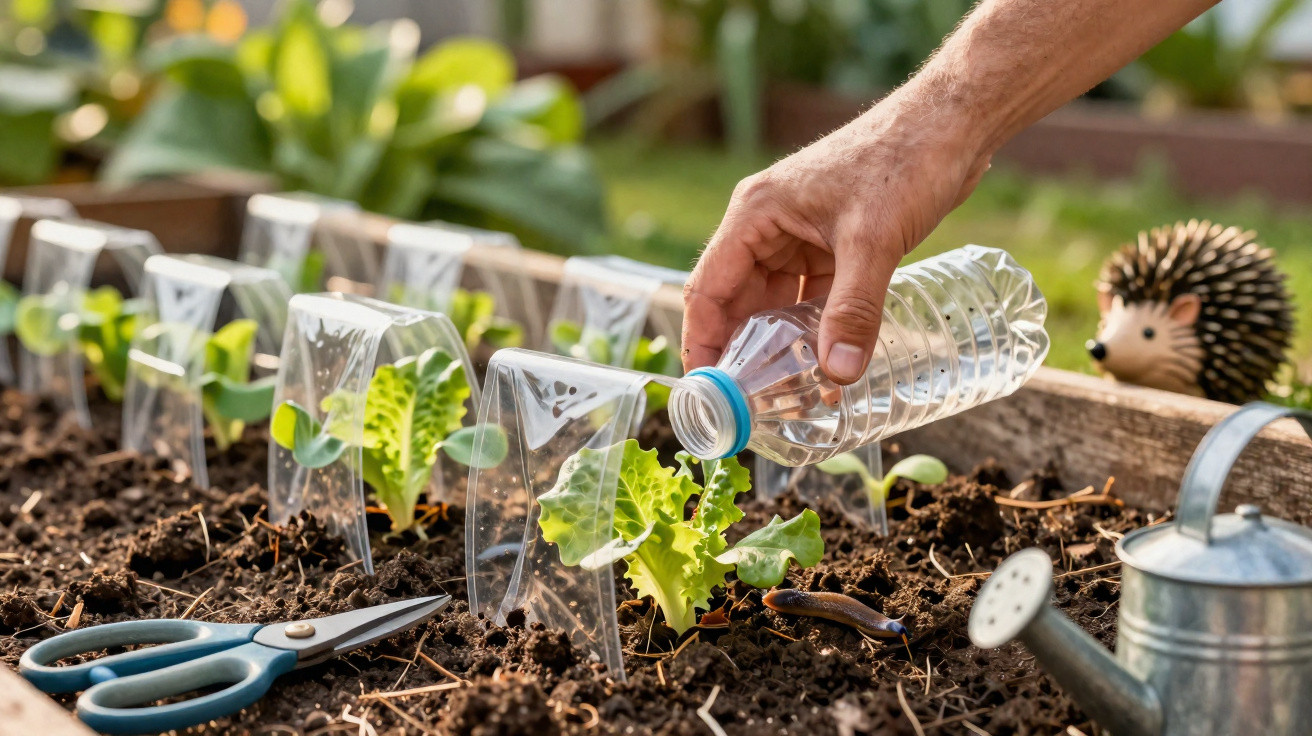
The trick is surprisingly straightforward: within minutes, a clear plastic drinks bottle from the supermarket can be turned into a protective cover for an individual plant. This “bottle cloche” creates a physical obstacle that slugs cannot easily cross.
At the same time, the cover works like a small greenhouse. It keeps the air around the young plant slightly warmer and more humid, encouraging growth. In spring, lettuces, squashes and courgettes can even gain a modest head start.
How to make a bottle cloche in five minutes
- Choose a clean 1.5- or 2-litre plastic bottle.
- Cut off roughly 3 to 5 centimetres from the bottom of the bottle.
- Pierce several small holes in the sides or top to provide airflow.
- Place the bottle over the plant.
- Push the lower edge of the bottle 2 to 3 centimetres into the soil.
This creates a kind of mini tunnel around a lettuce, strawberry plant or young squash plant, which slugs cannot simply tunnel underneath. If desired, make a narrow ring of coarse sand, wood ash or crushed eggshells around the outside of the bottle; this makes the route even more unpleasant for slugs.
How long plants should remain under the bottle
This protective technique is intended for the plants’ most vulnerable period. Bottle cloches typically stay in place:
- for around 2 to 3 weeks on lettuces
- for approximately 2 to 3 weeks on courgettes and other squash plants as well
- slightly longer on particularly vulnerable varieties, until the root ball is well established
Once plants have produced several strong leaves, they can generally cope well with occasional slug damage. The bottle can then be removed or moved to another young plant if needed.
Carefully placed bottle cloches massively reduce the number of damaged young plants – without a single pellet of poison.
Many home gardeners report that slug pressure in the bed falls by many times when every second or third vulnerable plant is protected in this way. Regular checks of the bottles are crucial: if too much condensation forms, make extra ventilation holes. If the bottles are not pushed firmly enough into place, slugs may still crawl in underneath.
Simple adjustments make the bottle trick even more effective
Anyone seeking a long-term reduction in slugs in their vegetable garden can combine the bottle method with other gentle measures. The focus is on two aims: improving habitats for natural predators and making conditions somewhat less appealing to slugs.
More allies in the bed: encourage hedgehogs, beetles and toads
Slugs have many natural enemies; they simply need somewhere to live. For a garden with fewer slugs, it is worth considering:
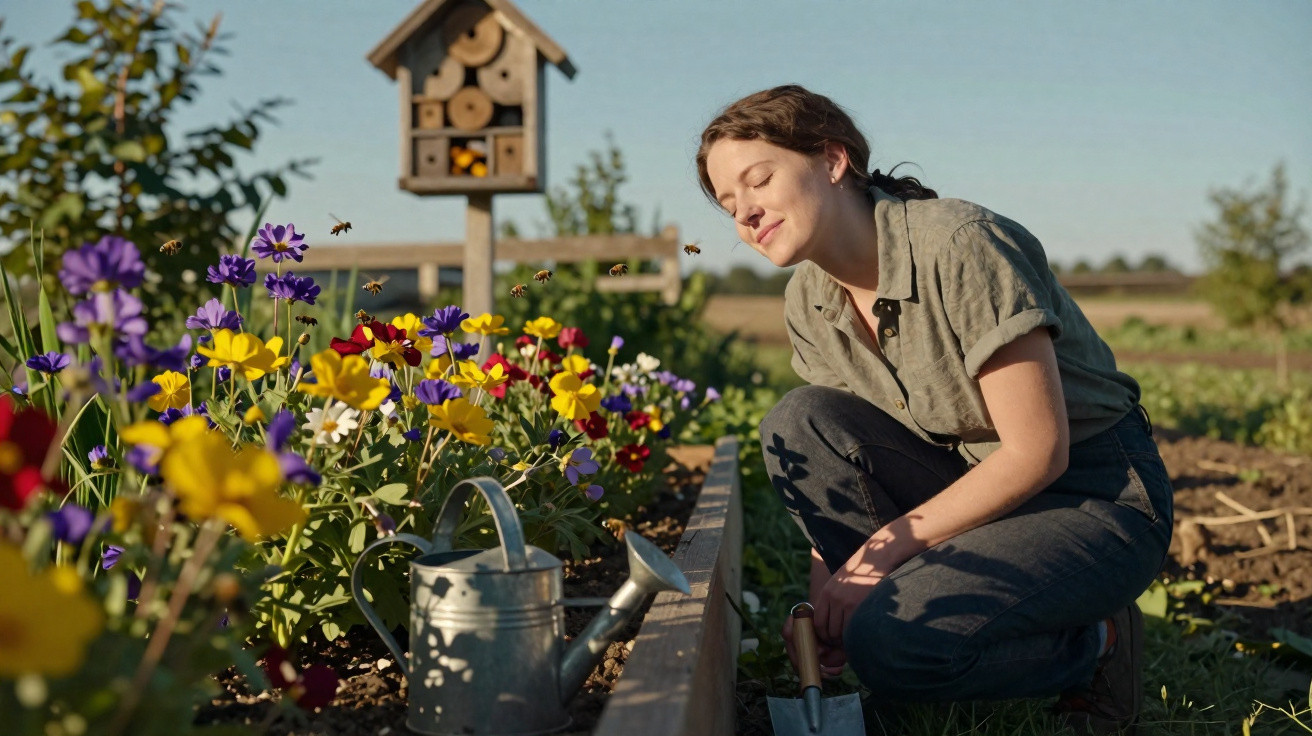
- a small, untidy area containing dead wood or leaf piles as shelter for hedgehogs and beetles
- shallow bowls of water or a mini pond to attract toads and frogs
- dense hedges or shrubs where birds can find cover and nesting opportunities
Where these animals can thrive permanently, the slug population decreases naturally. In the meantime, bottle cloches prevent major damage until the ecological balance has settled.
Adjust watering and planting wisely
Slugs love damp conditions. Watering the garden heavily in the evening effectively lays out a wet invitation for them. Watering in the morning is a better option. Plants can then take up moisture during the day while the soil dries out again by evening.
There are also plants that slugs find less appealing or even avoid. Many gardeners plant species such as these around vulnerable beds:
- garlic and Chinese chives
- wormwood
- fennel
- lavender
Through their scent or constituents, these plants form a kind of backdrop that slugs find less attractive. Combined with bottle cloches, this creates a patchwork of defensive zones without the need for chemical products.
How the bottle method changes everyday gardening
There is a practical benefit, too: plastic bottles are already generated in most households. Turning them into protective cloches saves not only a trip to the garden centre but also the ongoing cost of slug pellets. The bottles can also be reused for several years, provided the material remains sturdy.
Naturally, this technique is not a miracle cure. Anyone with a heavily overgrown, permanently damp plot will still need to collect slugs regularly. In an average home garden, however, it is often enough to protect particularly desirable plants such as lettuce, dahlias or young squash plants. Everything else can tolerate moderate slug damage, because a completely slug-free garden remains an illusion, even with poison pellets.
One further benefit is often underestimated: bottle cloches make observation easier. They allow you to see precisely how quickly a plant is growing, whether mould is forming or whether pests are appearing. With some experience, a single glance reveals when it is time to remove the cover or move it elsewhere.
For many home gardeners, the whole process becomes a small area for experimentation: which varieties need protection for longer, and which manage well without it? Over time, a personal plan develops in which poison pellets simply have no place, while the garden becomes a lively, diverse space where lettuces and slugs coexist without the beds being reduced to holes every morning.
Comments
No comments yet. Be the first to comment!
Leave a Comment