
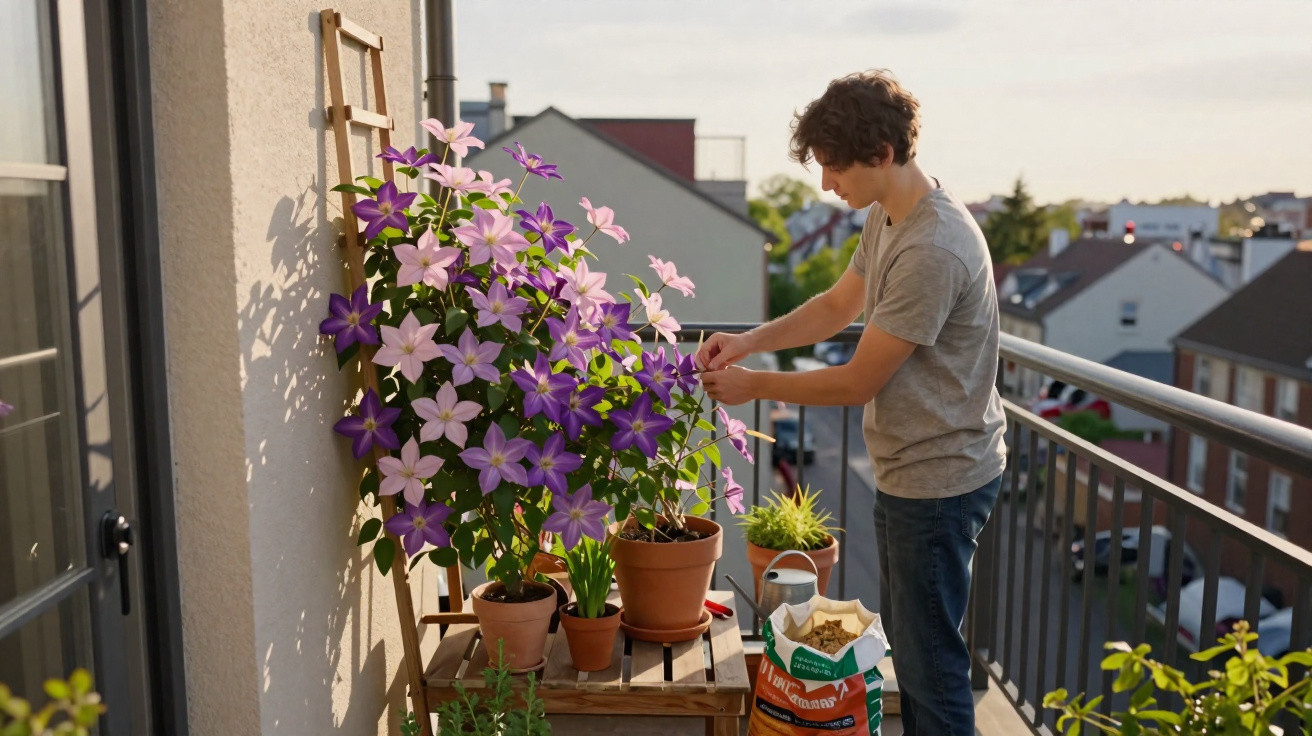
Rather than relying on bulky planters and sprawling shrubs, cities are increasingly embracing another option: ultra-compact climbing plants that grow almost entirely upwards. Dwarf clematis are among the leading choices. These petite relatives of familiar garden clematis can turn bare walls, railings and pillars into dense displays of flowers, without taking up valuable ground space.
Why dwarf clematis are a secret weapon for narrow balconies
Anyone with only a slim strip beside the house, a tiny courtyard or a standard city balcony needs to make every centimetre count. This is exactly where dwarf clematis show their greatest advantage: their growth is almost entirely vertical.
“Dwarf clematis take up hardly any room at ground level, yet can transform entire walls, trellises or railings into bright floral displays.”
Many newer varieties grow to only around one to two metres tall. That is enough to cover a trellis, balcony railing or narrow privacy screen completely, without the plant pushing forwards or intruding into the seating area.
Another benefit is that these compact clematis flower from the base right up to their tips. Traditional climbers often bloom only at the top of their support, leaving bare stems below. In a confined urban setting, that can quickly look rather bleak. Dwarf forms, by contrast, produce flowers from the base onwards, making both the whole pot and the entire support look attractive.
The most exciting varieties for small gardens and city balconies
Among growers, dwarf clematis are now regarded as a category in their own right. Several varieties that have attracted attention at garden shows are particularly suited to limited spaces:
- ‘Ithemba’: White flowers with a striking pink central stripe, ideal for brightening dark corners.
- ‘Eliza’: A colour transition from soft blue to almost pure white, giving a refined look to modern, pared-back balcony schemes.
- ‘Queens Nurse’: A strong pink that shines intensely in sunny positions, making it perfect against grey house walls.
- ‘Little Lemons’ (Clematis tangutica): Reaches only about 45 centimetres in height and forms more of a small bush, covered in countless yellow bells followed by decorative seed heads.
- ‘Bijou’ (Evipo030): Especially suitable for hanging baskets and long window boxes, as its shoots trail down elegantly.
Whether the desired effect is romantic and playful in pink, crisp and cool in white and blue, or sunny yellow, there is a suitable variety for almost every balcony design style.
Pots, window boxes or hanging baskets: where mini clematis thrive
For the plants to perform at their best, the right container is particularly important. Dwarf clematis may fit into small spaces, but they need surprisingly generous room for their roots.
The right container size and compost
As a guide, a pot should be at least around 30–35 centimetres in diameter and deep enough for the roots to spread. Smaller containers dry out too quickly and restrict growth.
“More important than the shape of the pot is generous volume and a base with several drainage holes for excess water.”
A loose, free-draining growing medium is ideal, for example:
- high-quality container compost;
- mixed with a little sand or expanded clay;
- with a portion of well-rotted compost or slow-release fertiliser added at planting time.
A common professional trick is to plant low-growing or gently trailing companion plants around the edge of the pot. They conceal the container, keep the root area shaded and act as natural sun protection for the compost.
Balcony, windowsill or hanging basket – which option is best?
Dwarf clematis are remarkably adaptable:
- Large planter on a patio: Ideal for turning an empty house wall into a focal point.
- Long balcony planter: Fixed to a narrow trellis, it creates a slim green wall that provides privacy.
- Hanging basket: Varieties such as ‘Little Lemons’ and ‘Bijou’ are particularly effective as cascades of yellow or purple flowers.
- Windowsill: With a sturdy trellis, even a small window can become a flowering frame.
Supports, watering and feeding: caring for compact climbers
Dwarf clematis are considerably easier to care for than their elegant appearance might suggest. A few basic rules are enough to keep them flowering for months.
Choosing the right climbing support
These plants climb by wrapping their leaf stalks around slender canes and wires. They do not attach themselves to smooth surfaces.
Suitable options include:
- slim bamboo canes;
- metal trellises;
- wooden frames strung with twine;
- balcony railings or wire fencing.
At the beginning, a few loose ties made with plant ties or raffia are sufficient to help young shoots find their direction. Later, the plants usually take over by themselves.
Water properly – without “drowning” them
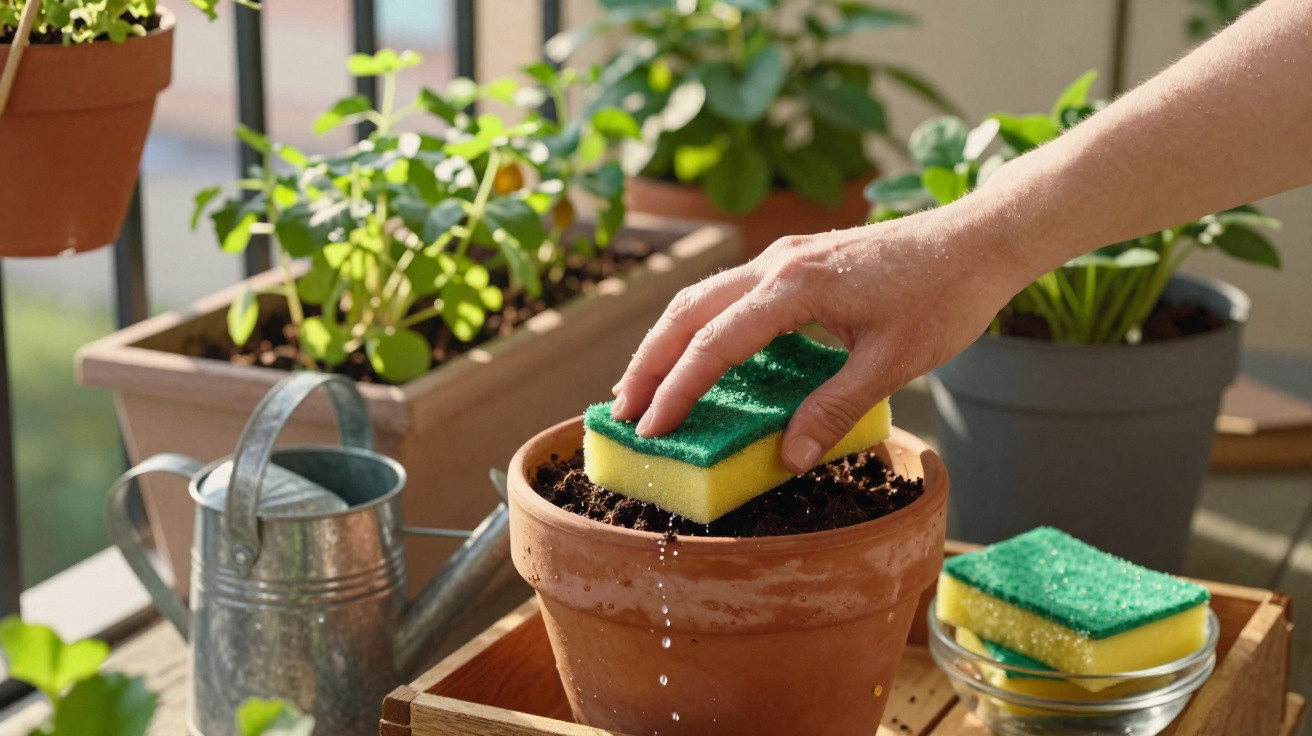
Clematis prefer consistently moist roots, but not waterlogged ones. In a container, this means:
- water once the top layer of compost has dried slightly;
- pour away water from the saucer after a few minutes;
- on hot days, give small amounts in the morning and evening rather than infrequent heavy soakings.
If temperatures remain above around 27 degrees for a prolonged period, the foliage may turn yellow temporarily. The plant then enters a resting phase. At this point, avoid automatically increasing watering; instead, remain restrained until growth returns to normal.
Feeding for maximum flowers
For abundant flowering, dwarf clematis respond very well to a targeted nutrient boost:
- As soon as the first buds appear, apply a potassium-rich fertiliser, such as tomato feed.
- Feed regularly in the weeks leading up to flowering, following the instructions on the packet.
- Stop fertilising once the first flowers are close to opening.
This slight nutrient stress encourages the plant to form even more buds – an effect that many professionals use deliberately.
How dwarf clematis fit into design schemes
In practice, these compact climbers prove to be versatile plants for almost every urban setting. Here are a few examples:
- Narrow terraced-house patio: A tall, slim container planted with clematis behind a seating area adds flowers and privacy without obstructing the walkway.
- Rented balcony with a railing: A trellis behind a balcony planter, planted with a dwarf clematis, creates privacy and improves the appearance of the façade.
- Courtyard with lots of concrete: Two or three large pots of clematis placed against the wall soften the harsh surroundings and provide colourful accents.
- North-facing balcony: Some varieties also cope with partially shaded conditions, provided the root area remains cool.
The combination with other container plants is especially appealing: lavender, thyme or ornamental grasses bring structure at ground level, while the clematis hangs above like a colourful curtain.
What beginners should know about pruning, position and risks
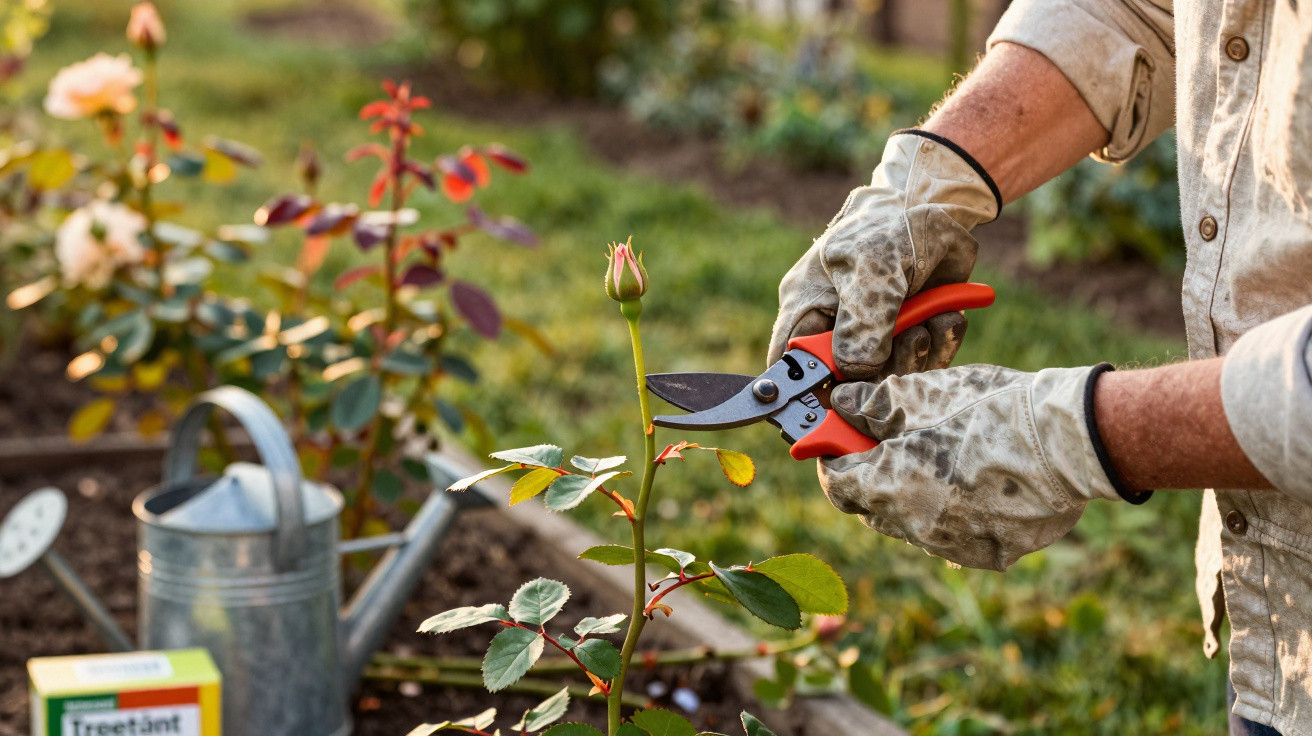
Those who have never grown clematis often find the subject of pruning daunting. With many dwarf varieties, however, it is much more straightforward. A light shaping prune in late winter or early spring is often enough: remove dead or overly long shoots, then shorten the remainder only gently.
When choosing a position, it is worth remembering the classic clematis rule: “head in the sun, feet in the shade”. In practical terms, this means:
- keep the upper part of the plant as sunny or partially shaded as possible;
- shade the pot and root area, for example with ground-covering plants or other containers placed in front of it.
As with all clematis, there is still some risk of the notorious wilt, a fungal disease. Dwarf forms grown in containers often respond less severely because their position is easier to control. Choosing free-draining compost, clean containers and moderate moisture levels substantially reduces the risk.
For many city dwellers, dwarf clematis are therefore a kind of “amplifier” for limited outdoor spaces: a plain railing becomes a focal point, a stark wall becomes a living backdrop, and an anonymous balcony becomes a personal green retreat – with remarkably little effort and without sacrificing the last available chair.


Comments
No comments yet. Be the first to comment!
Leave a Comment