
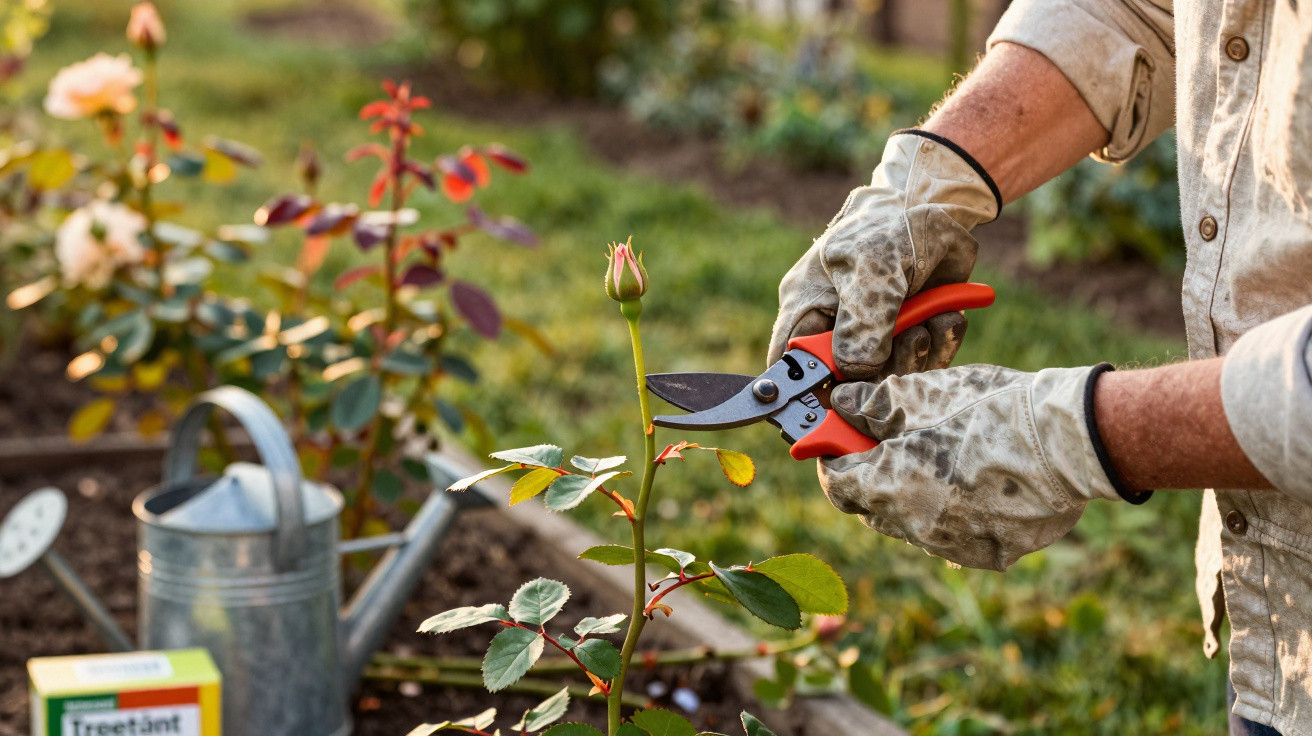
An experienced nursery grower has established a remarkably simple approach, beginning with a change of perspective: rather than reaching for the secateurs straight away, learn to read the rose bush. Once gardeners understand this technique, they often find their rose garden produces far more flowers the following spring.
Why the usual way of pruning roses so often disappoints
In many gardens, spring rose maintenance follows the same routine: cut everything back roughly, create a little order, and call it done. The intention is to “rejuvenate” the plants and “encourage” flowering. Yet, in reality, something quite different often happens.
Cutting back too hard forces the shrub to produce entirely new growth from just a few buds low down on the plant. That demands a huge amount of energy. If a late frost then arrives, the rose is under pressure twice over. The result can be weak shoots, few buds and sometimes even drought damage.
Being overly cautious with pruning is no better. If numerous thin, ageing or inward-growing shoots are left in place, the rose bush soon looks untidy and straggly. Disease can take hold more easily because air and light cannot properly reach the centre. Flowering becomes uneven and is often confined to the outside of the shrub.
Most problems after pruning roses are caused not by a lack of effort, but by a lack of strategy.
The professional method: observe first, prune afterwards
Nursery growers and professional rose breeders take a completely different approach. Their first step is not to pick up sharp tools, but to assess the entire plant. Every cut is then determined by what they see.
Structure, not impulsive cutting
The central principle is to give the rose bush a firm, airy framework. Old shoots are not automatically a problem; what matters is whether they are vigorous. This is why the method always starts with a brief assessment:
- Where are the strong, healthy main shoots?
- Which parts are dead, blackened or brittle?
- Are any branches crossing and rubbing against one another?
- Can light reach the middle of the shrub?
Only then do professionals begin pruning. Their aim is an open, well-ventilated shrub that channels its energy into a small number of sturdy, reliable shoots.
Anyone who prunes roses like a hedge deprives them of their natural shape – and often their willingness to flower as well.
The right time to prune in spring
Many guides give fixed dates, but experienced gardeners prefer to take their cue from the plant itself. The rose indicates when it is ready.
The ideal time is usually from late winter into early spring, when:
- the buds are visibly swelling or showing a slight green tint
- no prolonged hard frosts are forecast
- the ground is no longer frozen solid
Pruning very early carries the risk that a cold snap will damage fresh new growth. Leave it too late, however, and the shrub will already have spent energy on shoots that are subsequently removed. That depletes its reserves.
If small shoots have already appeared, there is no need to panic. A gentler prune that leaves slightly more length will help. Roses cope with corrections better than many people expect.
Step by step: how professionals prune their roses
A clear routine makes pruning roses far less daunting. The nursery grower’s approach relies on a small number of deliberate actions rather than many random cuts.
Preparation: tools and assessing the rose bush
Before making any cut, pause briefly. Walk around the rose and examine it from several angles. Only then should you make a clean cut with sharp equipment.
- Remove dead, blackened or broken shoots completely.
- Cut out very thin, weak twigs, as they produce hardly any buds.
- Thin out branches that cross or chafe against each other.
- For shrub roses, focus on 3 to 5 strong main shoots that are evenly spaced.
- Shorten each of these shoots back to an outward-facing bud.
Make the cut at a slight angle, around five to ten millimetres above the bud. A steep cutting angle is unnecessary. Far more important is that the cut surface is clean and smooth.
The appropriate height for each level of vigour
One common mistake is cutting every rose back to the same length. To the plant, that is like being given a badly fitting haircut.
Useful practical guidelines:
| Rose type | Growth habit | Recommended shoot length after pruning |
|---|---|---|
| Vigorous bedding roses | very vigorous, many shoots | around 20–30 cm |
| Less vigorous shrub roses | fewer shoots, slow to establish | 30–50 cm |
| Old, established specimens | strong basal branches, thick wood | only thin out; remove individual old shoots close to ground level |
This preserves the distinctive character of each variety. Some roses naturally grow upright and compact, while others have a looser, arching habit. Pruning should reinforce that tendency rather than fight against it.
Common spring mistakes – and how to avoid them
The same problems repeatedly occur in gardens. Knowing them saves the rose a great deal of stress.
- Pruning without a plan: Random shortening across every shoot removes the rose’s structure.
- Reluctance to remove old branches: Ageing, thick shoots hold a rose back if they are never renewed.
- Cutting too close to the bud: If the cut dries back, the bud beneath it can suffer.
- Blunt or dirty tools: Crushed tissue and germs can enter the wood more easily.
A clean cut with a little spare length above the bud protects against drought damage and fungal infection.
Care after pruning: giving the rose a head start
Pruning alone is not enough. The shrub is now entering a period of intensive growth. Supporting it at this stage is rewarded with more flowers in summer.
Nutrients, water and soil protection
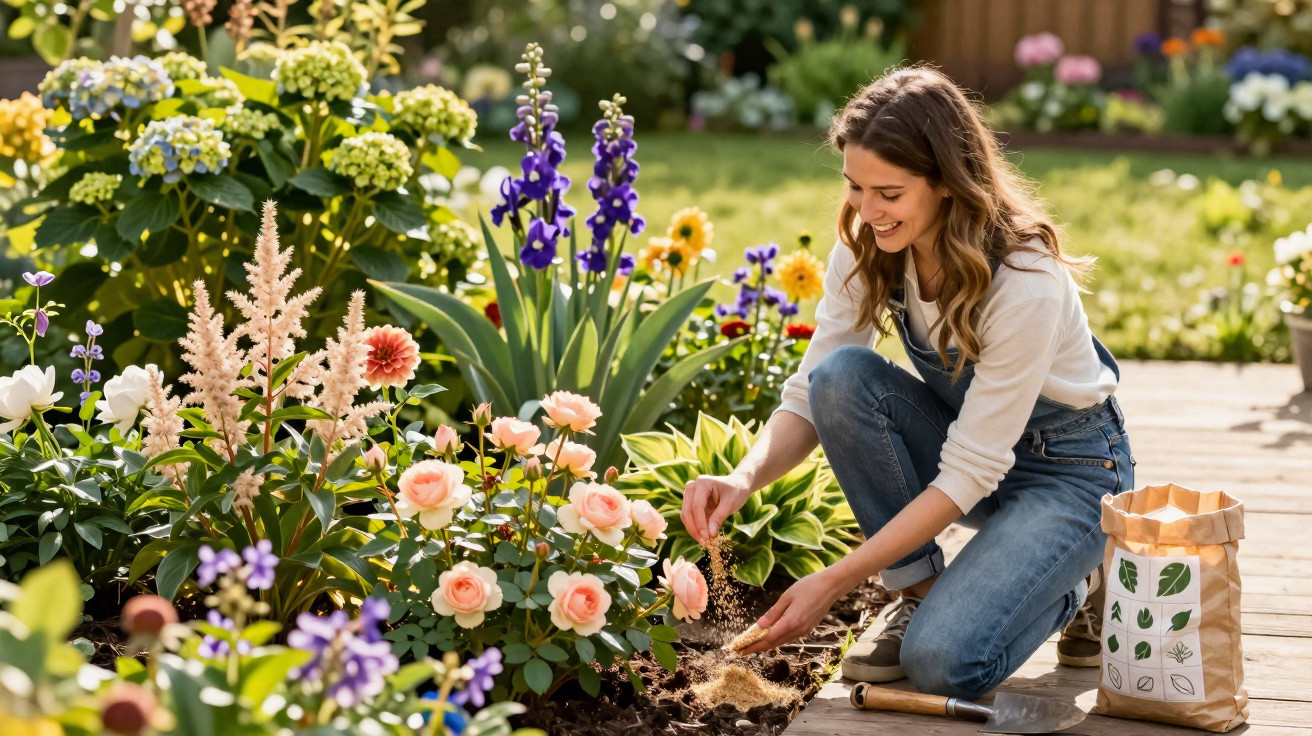
Straight after pruning, it is worth checking the soil. If it is compacted and depleted, add a thin layer of mature compost or a specialist rose fertiliser. Do not heap it directly against the stem; instead, work it lightly into the soil or spread it over the surface.
In dry areas or where soil is sandy, water deeply after applying fertiliser. This helps nutrients reach the root zone instead of draining away at the surface.
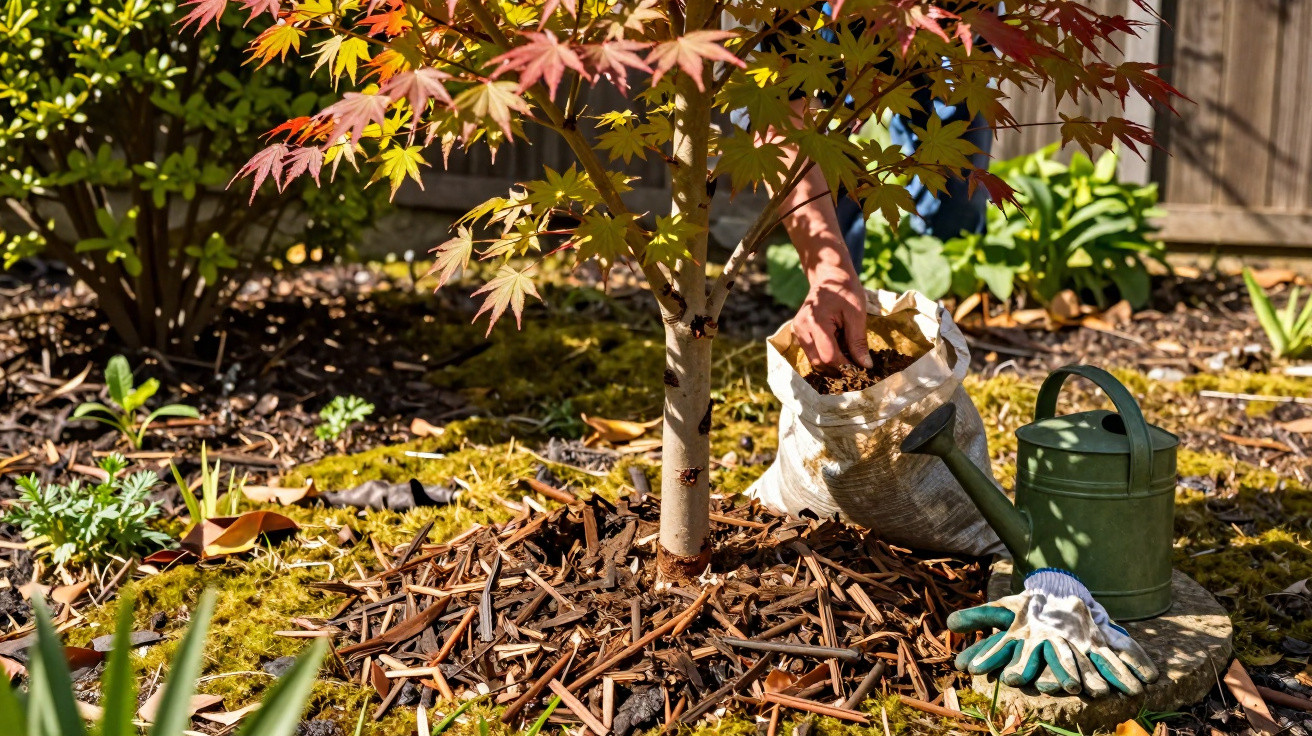
A layer of organic mulch – such as shredded bark, lawn clippings that have dried slightly, or leaves – keeps the soil evenly moist and reduces weed pressure. It also keeps the root area cooler, which roses noticeably appreciate.
How the new pruning method affects flowering and health
Anyone who genuinely tries the nursery technique for one season will often see clear changes in the first year. The rose produces fewer shoots, but they are stronger. Flower clusters are better supported and are less likely to flop over in rain.
Improved air circulation also allows foliage to dry more quickly. Fungal diseases such as powdery mildew and black spot find it harder to establish themselves. This does not mean every rose will remain entirely problem-free, but the basic conditions are improved.
The appearance changes too: instead of an undefined ball with harsh cut edges, the result is a naturally shaped shrub with a visible centre and clearly defined leading shoots.
Why pruning above an outward-facing bud matters so much
The instruction to cut above an outward-facing bud appears in almost every rose-pruning tip, and for a very practical reason: new shoots generally grow in the direction that the bud is facing.
Cut above an inward-facing bud and the new shoot will grow into the middle of the shrub. A tangle of branches quickly develops there. Light is lacking, air remains still and leaves take longer to dry – ideal conditions for fungal spores.
An outward-facing bud directs growth away from the centre. The crown opens up like a small cup. The shrub immediately looks more balanced, and each subsequent prune becomes easier because the basic framework is right.
Further practical advice for different rose types
The method described can be adapted for different groups of roses:
- Climbing roses: Training main branches horizontally encourages plenty of flowering side shoots. Gradually remove only old, weak wood.
- Ground-cover roses: Pay less attention to individual shoots; instead, thin them out and shorten shoots that rise too far above the rest.
- Historic roses: These generally flower on older wood. Prune very cautiously and concentrate mainly on removing dead wood.
Gardeners who know their variety can adapt the basic rules of professional pruning precisely. Before using the secateurs, it is worth checking the label or doing a little research into the rose group.
Ultimately, it is not the number of cuts that matters, but their quality. A calm, observant approach almost always delivers better results than hurried cutting back. After only a few years, many amateur gardeners say their initial uncertainty has disappeared, because the roses themselves reveal through their growth whether the pruning suited them.

Comments
No comments yet. Be the first to comment!
Leave a Comment