
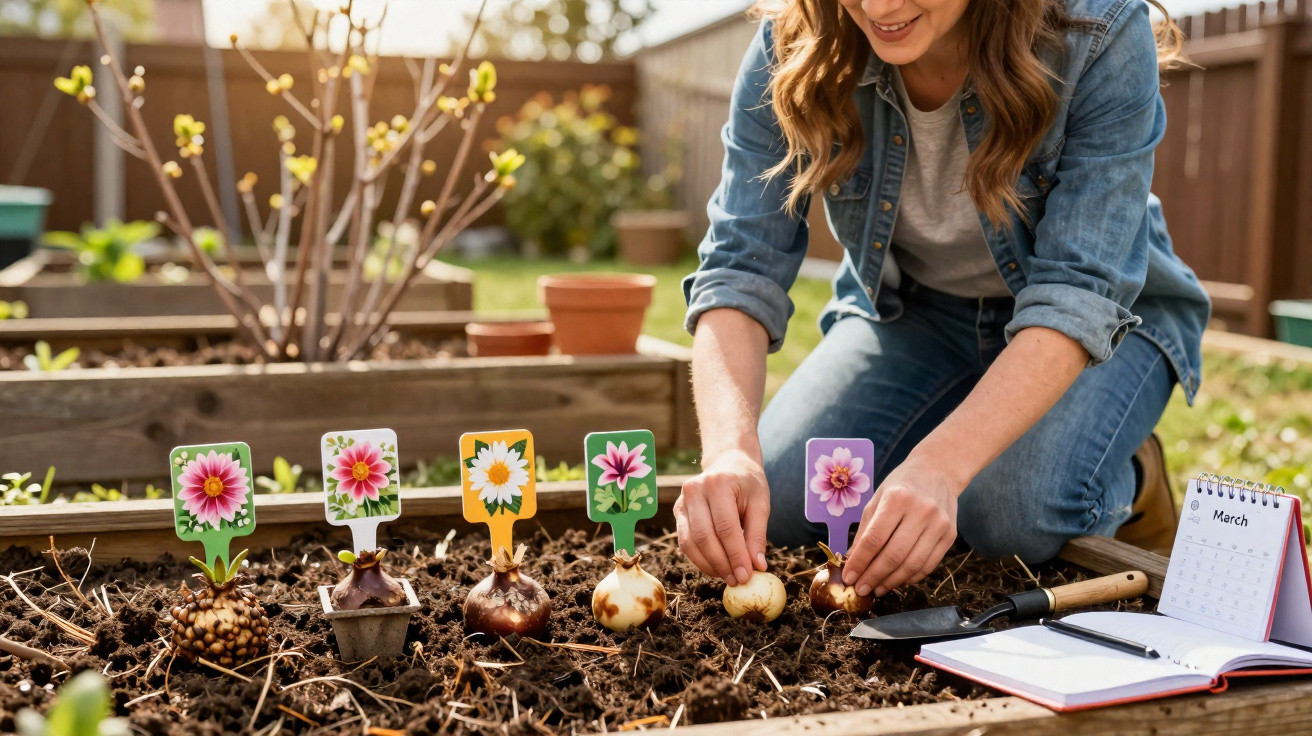
Many keen gardeners enjoy tulips and daffodils in spring, only to be faced with a rather bleak border by May. Roses, perennials and summer flowers are still waiting to get going, leaving the garden without colour for weeks. Planting four carefully chosen bulb and tuber plants in March makes it surprisingly easy to bridge this gap.
Why one month determines the whole summer
The usual mistake is planting too late. Putting summer bulbs in the ground only in late April or May often pushes flowering back until July. The weeks after the spring flowers then look empty, even though temperatures are already inviting you to enjoy the garden.
The period from early to late March determines whether the garden is flowering in June – or only in the middle of summer.
At this point, the soil is warming up, hard frosts have generally passed and plant growth begins in earnest. Summer-flowering plants planted now use every milder week to establish roots and produce shoots much earlier.
Four plants are especially important:
- Dahlias – long-flowering plants for borders and containers
- Begonias – the answer for shady balconies and north-facing areas
- Lilies – adding height, structure and fragrance to summer borders
- Peonies – an investment in lavish spring flowers for years to come
Starting dahlias in March: how to bring the burst of colour forward
Dahlias are among the most dependable stars of summer, provided they are given a head start. Rather than planting the tubers straight into the border, many experienced gardeners start them in pots in March with a little protection.
Pre-sprouting dahlias – step by step
- Take the tubers out of winter storage and remove any damaged sections.
- Fill a large pot with loose, free-draining compost.
- Place the tuber shallowly, with the growing point just below the surface.
- Position it somewhere bright and frost-free, keeping the compost evenly but only lightly moist.
This encourages roots and the first shoots to form early. From May, once night frosts are no longer expected, the plants can be moved into the border or large containers.
Gardeners who pre-sprout dahlias in March can usually expect flowers from June – rather than waiting until high summer.
The choice of dahlias is enormous: pompon types, cactus flowers and single varieties for insects, with almost every colour available. They suit traditional cottage gardens just as well as modern, minimalist schemes. A sunny to partially shaded position and regular watering are important.
Begonias: a solution for shady corners and dark balconies
Not every garden receives full sun. North-facing balconies and enclosed courtyards in particular can seem gloomy if you only know sun-loving plants. This is exactly where begonias show what they can do.
Plant begonia tubers shallowly in wide trays or pots during March. The compost should be light, humus-rich and kept consistently slightly moist. Choose a bright but frost-free spot, such as a cool conservatory, a well-lit stairwell or a sheltered position by a window.
- Ideal for partial shade and dappled shade
- Long flowering period from early summer into autumn
- Suitable for balconies, patios and borders
Begonias are sensitive to prolonged frost. Anyone who lifts them in good time in autumn, or brings their pots indoors, can use the tubers for several years. Even watering promotes an almost uninterrupted display of flowers, making them perfect for bringing colour to dull corners.
Lilies: elegant flower spires for the early-summer lull
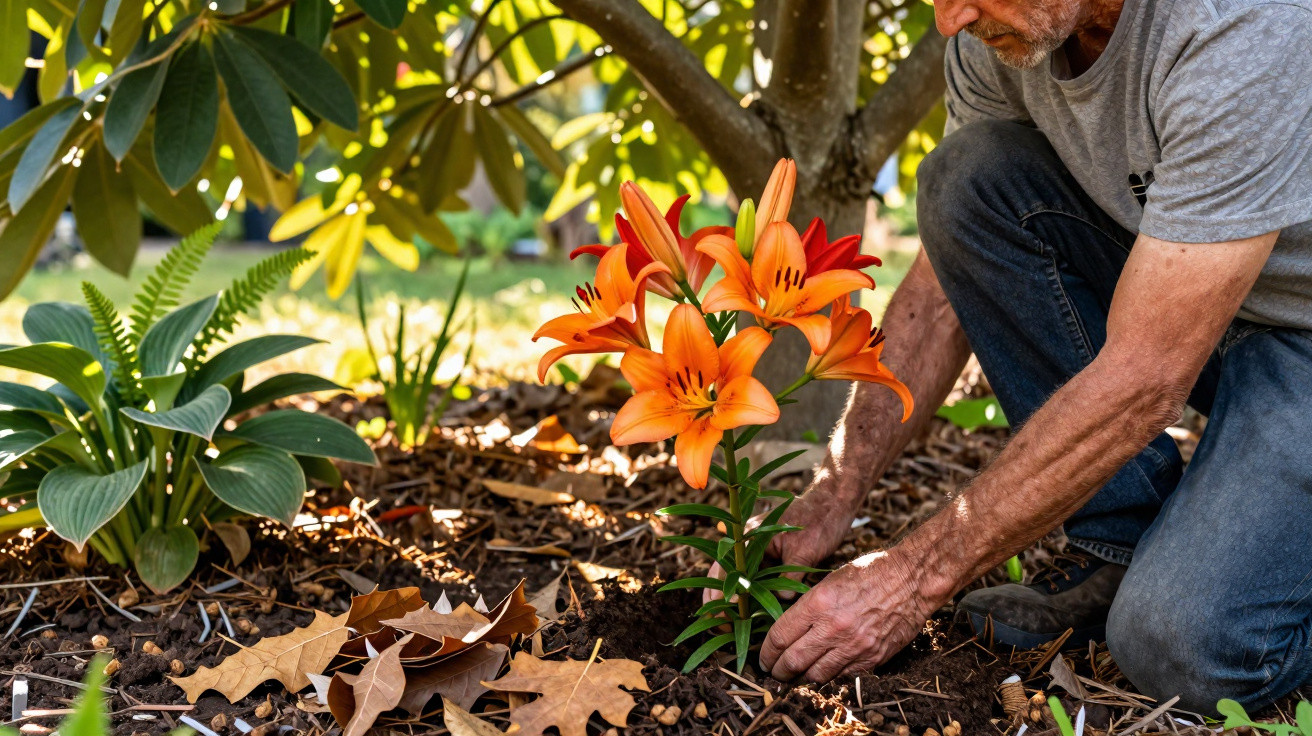
Lilies introduce height and strong structure to mixed borders. Depending on the variety, their blooms may open in late spring or continue through to high summer. Plant the bulbs in March, once the soil can be worked.
How to plant lilies properly
- Position: sunny to partially shaded and sheltered from wind
- Soil: deep, humus-rich and well drained, with no waterlogging
- Planting depth: around two to three times the bulb’s height
- Spacing: roughly 20–30 centimetres, depending on the variety
One major advantage is that choosing varieties carefully allows flowering times to be staggered. Early-flowering lilies follow late tulips directly, while later types cover the interval until perennials and roses really get underway.
A mix of early- and late-flowering lilies keeps the border from being bare during the crucial period between spring and high summer.
Planting peonies in March: patience rewarded for years
Peonies, commonly known as Paeonia, will not solve the immediate flowering gap, but they are among the most worthwhile plants to put in during March. They often need two to three years to establish properly, but then reward the wait with huge, fragrant flower heads in late spring.
Plant them so that the “eyes” – the small reddish buds on the root sections – sit only just beneath the soil surface. If they are planted too deeply, peonies often refuse to flower. The soil may be nutrient-rich, but it must not become waterlogged. A place where they can remain undisturbed for many years is ideal.
- Long-lived, often remaining in the same position for decades
- Large, sometimes strongly scented flowers in many shades
- Tolerant of different soils, as long as they do not become saturated
Four plants, one aim: no more colourless spell in the garden
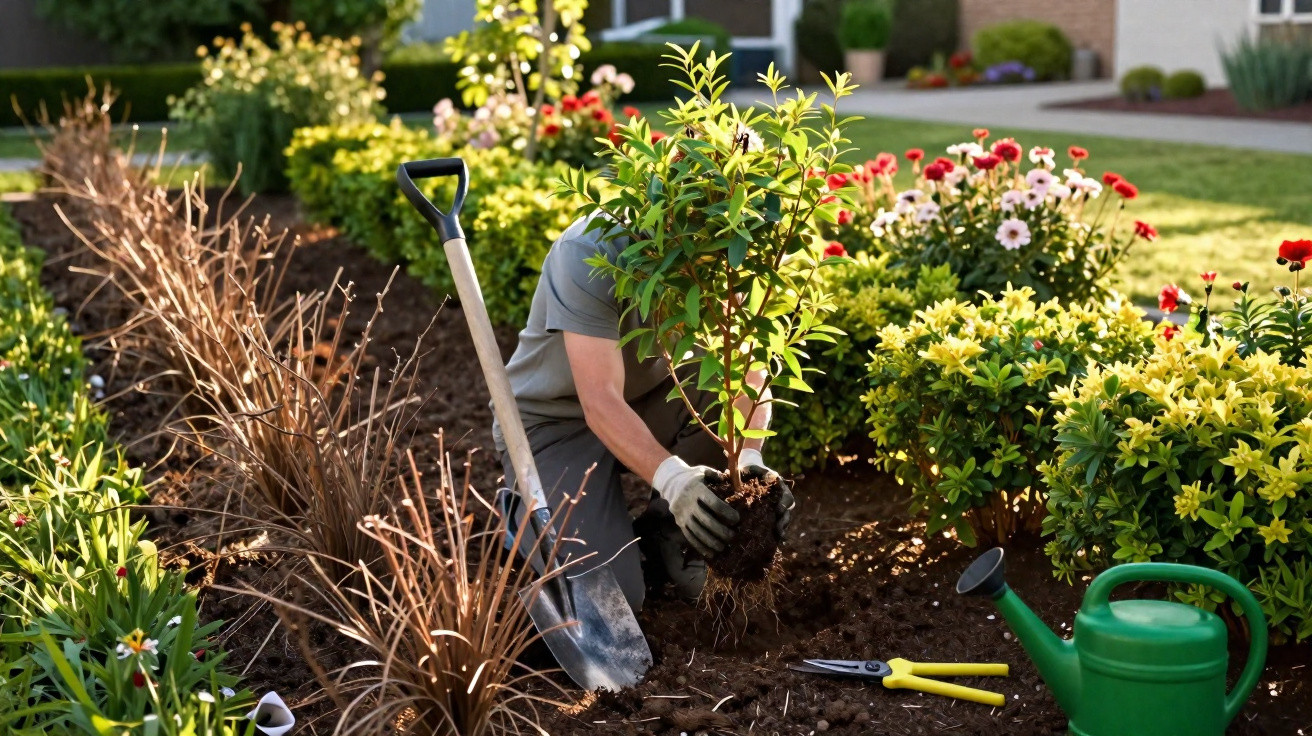
Anyone who deliberately reaches for a spade and planting tray in March can create a kind of “chain of flowers” stretching across several months. Broadly, it looks like this:
| Plant | Planting time | Expected flowering | Best use |
|---|---|---|---|
| Dahlia | March in a pot, then outdoors later | June to October | Border, large container, sunny patio |
| Begonia | March in trays or pots | Early summer to autumn | Shady balcony, north-facing area, partial shade |
| Lily | March directly into the border | Late spring to high summer | Structural plant in a perennial border |
| Peony | March | From the 2nd–3rd year, late-spring flowering | Permanent position in an ornamental garden |
Together, these plants ensure that no grey no-man’s-land appears after the daffodils and tulips. Early lilies take over first, followed by dahlias and begonias, while peonies shape the spring display in the years ahead.
Common mistakes – and simple ways to avoid them
Many issues with summer bulbs and tubers recur time and again in gardens. A few straightforward rules help prevent them:
- Planting too late: Waiting until May wastes valuable weeks of growth.
- Waterlogging: Lilies and dahlias in particular rot quickly in wet soil – a drainage layer helps.
- Wrong planting depth: Peonies planted too deeply and lilies planted too shallowly both respond with poor flowering.
- Frost damage: Do not put pre-sprouted dahlias and begonias outdoors until after the last frosts.
If you are unsure, start with a smaller number of plants in the first year. This lets you discover which varieties and locations genuinely work in your own garden.
Practical additions for an unbroken ribbon of flowers
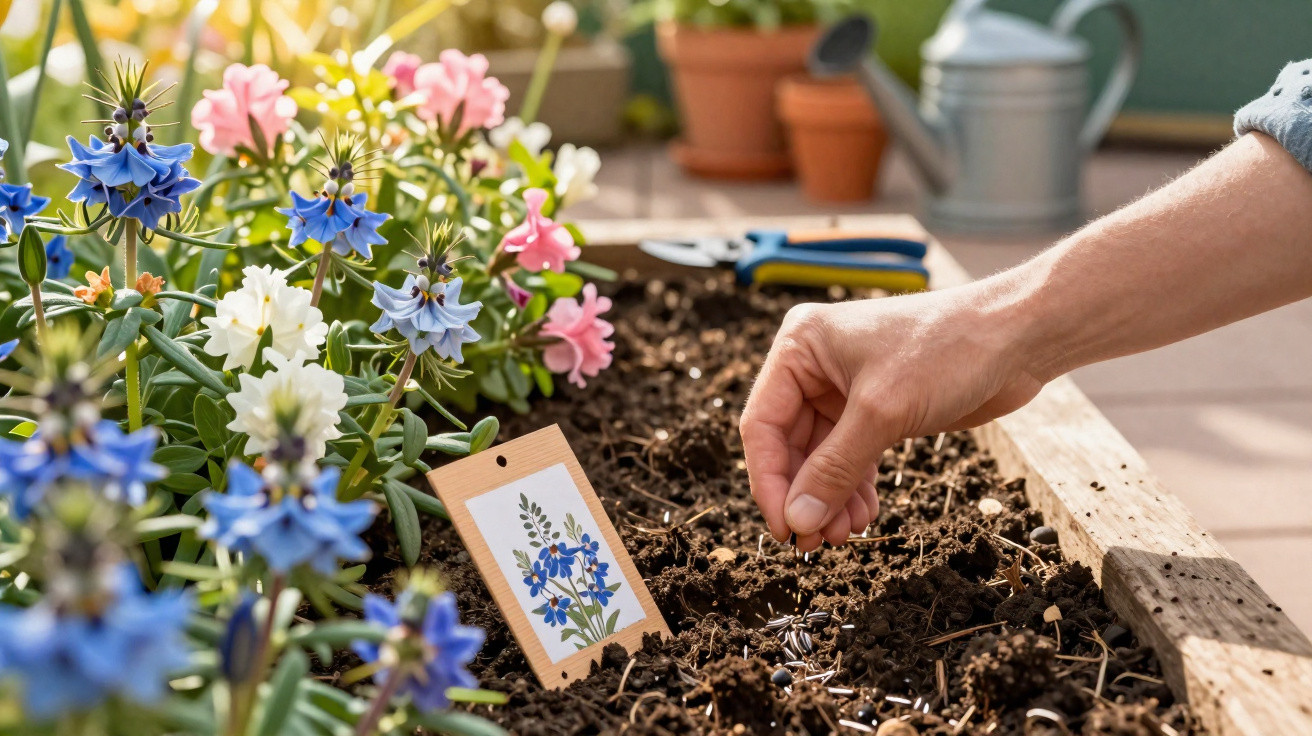
Annual summer flowers can be sown very effectively between dahlias, lilies and begonias, including cosmos, zinnias and calendula. They fill smaller gaps while adding more colours and shapes to the border.
For balcony gardeners, mixed planting in window boxes works well: upright lilies or low dahlias at the back, trailing begonias in the middle and compact summer flowers at the front. This makes the best use of limited space and prevents bare patches.
For a more structured look, arrange the four March plantings deliberately by height: peonies and taller lilies at the back, medium-height dahlias in the middle and begonias at the front. The result is a calmer-looking border that still changes and remains lively for months.
Comments
No comments yet. Be the first to comment!
Leave a Comment