
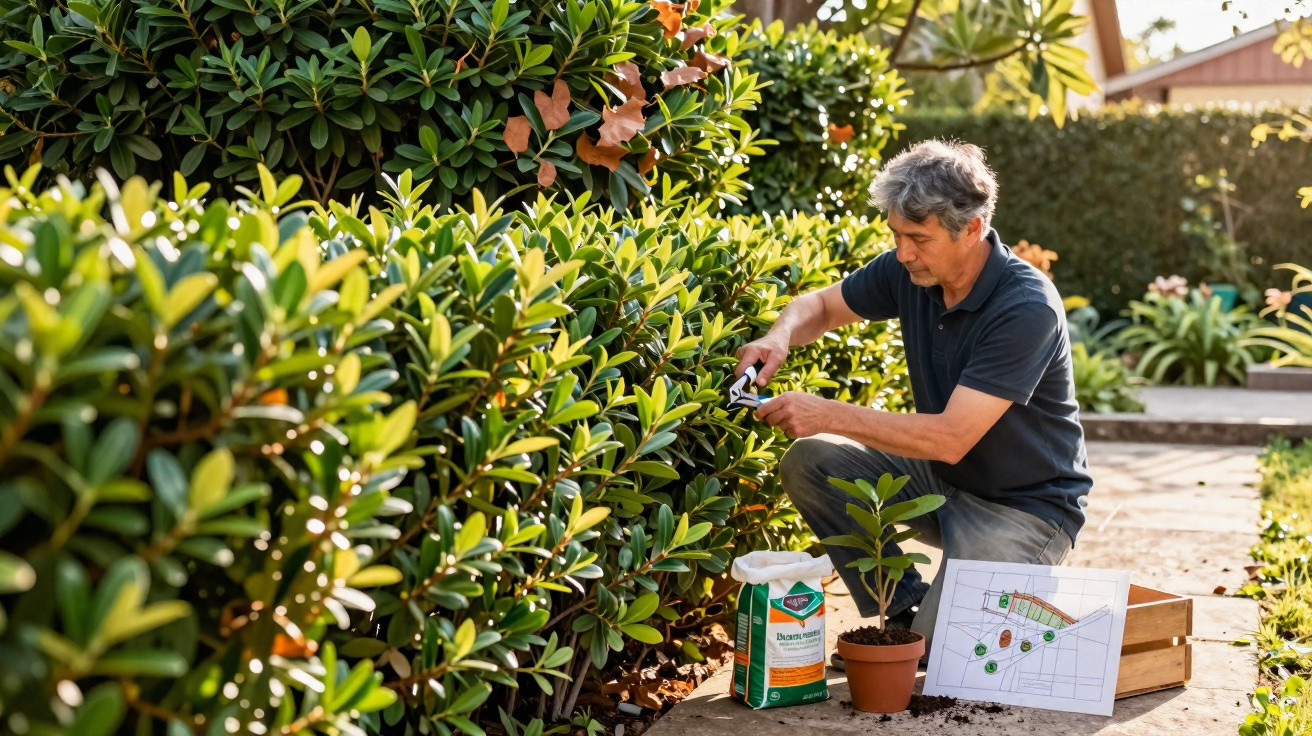
For years, red-tipped Photinia was considered the star of front gardens. Fast-growing, colourful and evergreen, it seemed to offer the ideal privacy hedge. More recently, however, reports of disease, bare patches and demanding maintenance have become increasingly common. Garden professionals are now more often recommending a different shrub: Pittosporum, which is considerably more resilient and ideally suited to modern, low-maintenance hedges.
Why Photinia is suddenly causing problems
Often seen in front gardens and terraced housing developments, Photinia long appeared perfectly suited to compact, colourful hedges. It grows quickly, responds well to pruning and adds variety to greenery with its young red shoots. In many gardens, though, that appealing picture is now changing.
Milder winters and increasingly wet springs encourage fungal diseases that can severely damage the foliage. Black and brown spots, yellowing leaves, and thin hedges that are almost see-through are common consequences. What was once an easy-going, reliable performer is becoming an ongoing project for many owners.
Those who take action often turn to harder pruning, fungicides and specialist fertilisers. Even so, the hedge frequently still looks weak, while new growth falls short of expectations. The outcome is frustrating: more work, higher costs and less privacy.
“Many garden owners are realising that the era of Photinia monoculture in hedges is coming to an end – the maintenance involved no longer matches the desire for relaxed gardening.”
Pittosporum: the quiet rising star of modern hedges
Against this backdrop, a shrub that has previously been rather underestimated is moving into the spotlight: Pittosporum. It has long ceased to be an insider recommendation among specialist nurseries and garden designers, and it is now appearing far more frequently in private gardens too.
Resilient, dense and attractive all year round
Pittosporum stands out for its evergreen, dense foliage and notably even growth habit. Many varieties feature ornamental leaves that are slightly glossy or variegated. Rather than vivid red, it relies on elegant shades of green, sometimes with pale edges or silvery tones.
Its key benefits for hedges include:
- Strong resistance to leaf diseases – with significantly fewer issues than Photinia.
- Good drought tolerance – particularly valuable during hot summers and hosepipe bans.
- Adaptability to wind and urban conditions – making it suitable beside roads and in courtyards.
- Moderate growth – dense without becoming excessively vigorous, which means less pressure to prune.
Once the shrub has established a good root system, a single shaping cut per year is sufficient in many gardens. For a more informal look, pruning may only be needed every other year. In a healthy garden, Pittosporum generally does not require pesticides.
How Pittosporum suits different garden styles
Pittosporum works in neatly clipped rows as well as in relaxed mixed hedges. Its crisp, understated appearance makes it an excellent fit for contemporary urban gardens. In more naturalistic schemes, it can be combined with flowering shrubs without becoming overpowering.
“Pittosporum is not a flashy showstopper, but a quietly dependable performer: stable, shapely and reliable – precisely what many stressed garden owners are missing.”
Mixed hedges instead of uniform greenery: the trend towards varied planting
Alongside the move away from Photinia, a second trend is taking hold: replacing single-species hedges with mixed hedges containing several shrubs. This approach adds greater resilience and variety to the garden.
Why mixed hedges last longer
Using just one plant species always carries the risk that a disease or pest will affect the entire hedge at once. Combining different shrubs reduces that risk substantially. If one species partly fails, the privacy screening remains in place.
Shrubs that combine well with Pittosporum include:
- Elaeagnus (oleaster) – highly resilient and tolerant of salt and wind, making it ideal near the coast too.
- Cornus (dogwood, for example with red stems) – providing colourful branches in winter and green foliage in summer.
- Privet – a well-established hedging classic that tolerates pruning and is also suitable for bird-friendly hedges.
- Osmanthus – evergreen, often with surprisingly intense floral fragrance in spring.
Such mixed hedges look more lively, feel more natural and provide more habitat for birds and insects. Flowers, berries and different growth forms break up the view, turning a “green wall” into a living boundary strip.
Planning: which hedge suits which garden?
Before reaching for the spade too hastily, it is worth considering the site and everyday routine. Not every resilient species is suitable for every soil type or use. A few guiding questions can help with the choice:
| Question | What it means for choosing a hedge |
|---|---|
| How sunny is the site? | Many species tolerate full sun, but some shrubs perform considerably less well in shade. |
| How dry is the soil in summer? | In very dry gardens, deep-rooting or drought-tolerant species such as Pittosporum have an advantage. |
| How much time is available for pruning? | Anyone who prunes infrequently should choose species with moderate growth rather than classic fast-growing hedges. |
| Should the hedge attract wildlife? | Flowering and fruiting species significantly increase biodiversity in the garden. |
Anyone who is unsure can leave part of the old hedge in place and trial Pittosporum and other shrubs in one section. After two or three years, it becomes very clear which plants genuinely perform well in that particular location.
Practical tips for switching from Photinia to Pittosporum
Change gradually rather than removing everything at once
Many homeowners are put off by the thought of removing an entire existing hedge in one go. That is not necessary. In many cases, a gradual transition is enough:
- First, remove the visibly diseased or heavily thinned Photinia plants.
- Replant the resulting gaps with young Pittosporum shrubs.
- Over the following years, replace further weak specimens until the hedge has gradually been replanted.
This largely preserves the privacy screen while the new generation of shrubs is already becoming established. Costs are spread across several seasons.
Prepare the soil and plant correctly
After a heavily affected Photinia hedge, the soil benefits from a brief refresh. Loosen it, work in some mature compost and break up compacted areas – usually, nothing more is required. Pittosporum prefers free-draining soil without waterlogging. Standing water is one of the few conditions it struggles with.
When planting, a simple rule of thumb helps: plant slightly more closely if the hedge needs to fill out quickly, or leave greater spacing if you are willing to wait and want to prune less later on. Many garden centres provide specific recommendations according to the variety.
Long-term trend: less stress, more enjoyment in the garden
The shift away from disease-prone Photinia and towards more resilient species such as Pittosporum reflects a wider change. Fewer and fewer people want a garden that demands work every weekend. The aim is for planting schemes that remain stable independently and do not collapse whenever the weather changes.
At the same time, awareness of sustainability is growing. Choosing resilient shrubs saves pesticides, water and stress. Mixed hedges also help gardens to be valued once again as habitats, rather than merely as a green backdrop.
“The hedge of the future should do more than simply block the view: it should deliver on its promise – for many years, with minimal intervention.”
Pittosporum fits this picture perfectly: resilient, adaptable, visually calm and low-maintenance. Combined with proven species such as privet, dogwood or oleaster, it creates a hedge that is not destabilised by every fungal outbreak. Anyone considering a new planting scheme today would be well advised to question the old Photinia culture critically and give this quiet rising star among hedging shrubs a chance.


Comments
No comments yet. Be the first to comment!
Leave a Comment