
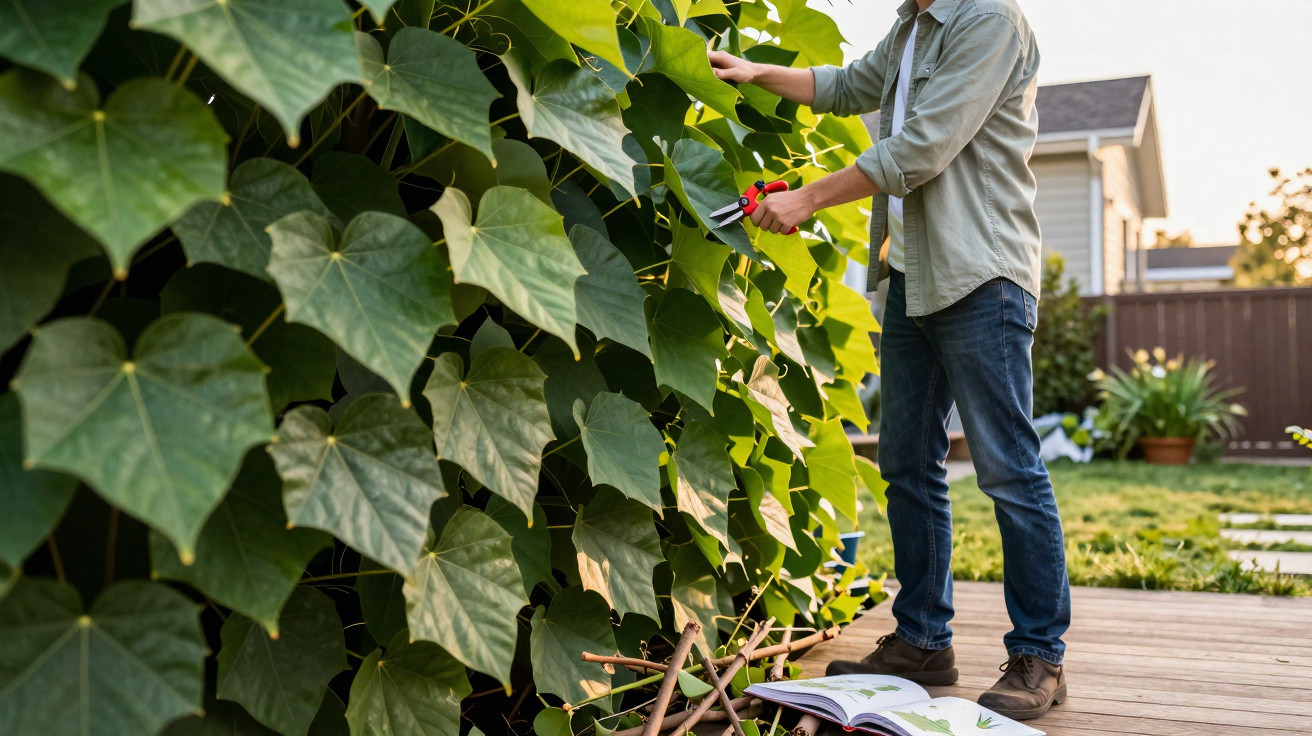
Many people turn to wooden privacy screens, screening mats or tall fences. Yet these block light, can quickly look cheap and often appear tired after a few winters. Anyone wanting to reclaim their privacy without turning the garden into a fortress is increasingly considering another option: a tree that grows so quickly it can form a living curtain within just a few years.
Why a tree can be the better privacy screen
Most people are familiar with the traditional ways of preventing overlooking:
- Wooden or WPC panels installed along the boundary fence
- Bamboo or reed mats fixed to railings
- Walls or tall fences made from concrete or metal
Although they provide immediate screening, they also come with several drawbacks. Many materials fade to grey, crack or simply become unsightly. Solid walls restrict both light and airflow, making a garden feel more enclosed and smaller. In densely built-up residential areas, there are also legal restrictions on their height and construction.
“A fast-growing tree can create a tall, soft privacy screen in a short time – without overwhelming the garden.”
This is why “green curtains” are becoming increasingly popular: plants that gain height relatively quickly while retaining a welcoming appearance. Conifer hedges, such as Leyland cypresses or Thuja varieties, are often high on the list. They grow fast, remain dense in winter and create a veritable wall of greenery.
But that is also precisely where the issue lies. These hedges need regular, disciplined pruning; otherwise, they become too tall and too wide. They cast a heavy, cool wall of shade across the patio and lawn. For anyone who values a bright, airy garden, they can soon create a greater sense of confinement than comfort.
The garden “turbo tree”: Paulownia tomentosa
A deciduous tree offers a way out of this dilemma and has become something of an insider tip for creating privacy screening in record time in many countries: Paulownia tomentosa, also commonly called the empress tree or foxglove tree.
In favourable conditions, this tree can put on up to two metres of growth per year. This is not magic, but the result of its enormous leaf area: its heart-shaped leaves can reach up to 60 centimetres in diameter, capturing vast amounts of light and driving growth like a natural turbocharger.
“Just a few specimens can form a dense screen within three years, effectively blocking views from facing balconies and windows.”
Practical reports show just how quickly this can happen. If three trees are planted about four metres apart opposite a two-storey house, the “green curtain” may already exceed five metres in height after three years. From May until late autumn, it creates an almost continuous privacy screen – exactly when patios and gardens are used most.
How to plant a dense privacy screen within three years
Anyone planning to use the empress tree as a natural privacy screen should not simply put any young tree into the ground and wait. Positioning, care and pruning to shape the canopy deliberately are all crucial.
Choosing the right place in the garden
Paulownia tomentosa thrives in deep, well-drained soil and a sunny position. It does not tolerate waterlogging well, but copes surprisingly well with wind as long as its roots have sufficient anchorage.
- Planting time: autumn or early spring
- Distance from the fence: at least 2 metres
- Spacing between trees: 3 to 4 metres
With this spacing, the canopies can eventually meet to form a continuous curtain without competing for room.
The key pruning method: recépage
One specialist term is particularly important when growing an empress tree: recépage. It refers to hard pruning during the tree’s early stage, encouraging it to produce vigorous branching.
- During the first winter, cut the young trunk back to around 10 centimetres above ground level.
- Allow several new shoots to emerge in the following spring.
- In summer, retain 3 to 4 of the strongest shoots and remove all the rest.
This training method prevents the tree from merely sending up one long stem with a few leaves. Instead, it develops a broad, dense canopy. That width is exactly what delivers the required privacy screen.
For the first two summers, the trees need plenty of water, particularly in warm locations: a useful guide is around 20 litres per tree each week. A thick mulch layer keeps the soil cool and reduces moisture loss.
“Those who invest in the first two years are rewarded with a visible ‘growth spurt’ – a new storey of screening every year.”
Keeping legal requirements and roots under control
As appealing as a fast-growing tree may be, a project can go wrong without checking local neighbour and boundary regulations. Fixed spacing rules for tall trees apply in many areas. One typical guideline is that trees growing taller than two metres must be planted at least two metres from the property boundary.
Anyone planting closer to the boundary because of limited space would need to keep the tree permanently small. That conflicts with the aim of achieving tall screening for upper-storey windows. In the event of a dispute, a neighbour may even demand that the tree is pruned back or relocated. It is therefore worth checking local requirements beforehand and allowing generous space.
The roots are another factor. Paulownia develops vigorous root systems that may, over time, extend beneath patio paving. To avoid damage to surfaces or light foundations, a root barrier is suitable. Installed between the tree and sensitive areas to a depth of around one metre, it directs roots towards the garden side.
Seasonal privacy screening: what happens in winter?
The empress tree is deciduous. During the warmer months, its huge mass of leaves provides almost complete screening. In winter, however, mostly branches and twigs remain. They still interrupt sightlines to some extent, but they are no replacement for a solid barrier.
Those wanting a sense of shelter in every season can combine the fast-growing tree with a low evergreen hedge, such as narrowly maintained conifers or compact cherry laurel. A light pergola with climbers that retain their foliage in winter also complements the tall screen effectively.
“Combining a tall deciduous tree with a low evergreen structure creates privacy without darkening the garden.”
Paulownia tomentosa: advantages, risks and useful combinations at a glance
| Aspect | Paulownia tomentosa |
|---|---|
| Growth | Up to 2 metres per year in good conditions |
| Privacy screening | Very strong from May to November, reduced in winter |
| Light in the garden | Heavy shade in summer, more light in winter |
| Maintenance effort | Intensive training in the first years, moderate later |
| Root system | Vigorous, manageable with a root barrier |
The clear benefits include rapid growth, spectacular foliage and the welcoming character of this type of privacy screen. Rather than a rigid wall, the garden gains a living feature that changes over time. Its large canopy supplies shade without completely darkening the space beneath it.
Anyone with little time for maintenance or a very small garden should assess the required space realistically. While an empress tree can be pruned, it responds to drastic cuts with equally vigorous regrowth. Planning for its eventual size carefully helps to prevent problems later on.
The tree is also interesting when paired with other garden design features. A seating area beneath the canopy, a small pond in partial shade or a vegetable bed at the edge of the shaded zone can soften the overall layout. The large leaves add a subtly exotic feel without making the garden look like a tropical experiment.
One further point often raises questions: in retail, the term “empress tree” is sometimes used for different Paulownia species and cultivars. Some cultivated forms are more strongly geared towards timber production and upright growth, while others focus on ornamental value. Anyone specifically seeking a privacy screen should ask a specialist supplier for varieties marketed for their large foliage and rapid early growth.
Used correctly, Paulownia tomentosa becomes more than simply a fast privacy screen. It can turn an exposed garden into a sheltered retreat – with the welcome added benefit that its greenery develops visibly and tangibly year after year.






Comments
No comments yet. Be the first to comment!
Leave a Comment