
Many amateur gardeners will recognise the situation: a few ants appear at first, then before long they are swarming around lettuces, rosebuds and patio slabs. Chemical products may work, but they are far from ideal near vegetable beds, children or pets. Two aromatic favourites from the herb garden can help keep ants at a natural distance, while also adding colour and fragrance to the garden.
Why ants can suddenly become a problem in the garden
Ants are naturally part of the ecosystem. They aerate the soil, clear away dead insects and carry seeds around the garden. Problems arise when a nest becomes established in the middle of a vegetable bed, beneath the patio or right beside a rose bush.
The issue becomes particularly tricky when aphids are involved. Ants “farm” these small sap-sucking insects because they value the sugary honeydew they produce. In return, they protect the aphid colony - and therefore the very plant you are trying to safeguard.
Ants are mainly troublesome where they protect aphids, weakening lettuces, roses and young shoots as a result.
As ants rely heavily on scent, their movements can be directed effectively through fragrance. This is precisely where certain herbs come in.
How fragrant plants drive ants away
Ants create scent trails. A scout finds food, marks the route with chemical signals and the rest of the colony follows the trail. If strong unfamiliar scents disrupt that route, the insects lose their bearings or avoid the area altogether.
Strongly aromatic herbs form a kind of “scent veil” around beds and pathways. These areas become less appealing to ants, which then choose alternative routes. Gardeners have long used this principle under the heading of “plants with a deterrent effect”: planted among vulnerable crops, they steer pests and their helpers away.
- Intensely scented herbs disrupt ant trails.
- Plants in pots can be moved around whenever needed.
- Used alongside beneficial insects and good garden hygiene, they can noticeably reduce the pressure.
Of all the options for a home garden, two classic plants are especially effective against ants: lavender and mint.
Lavender: a fragrant barrier around beds and patios
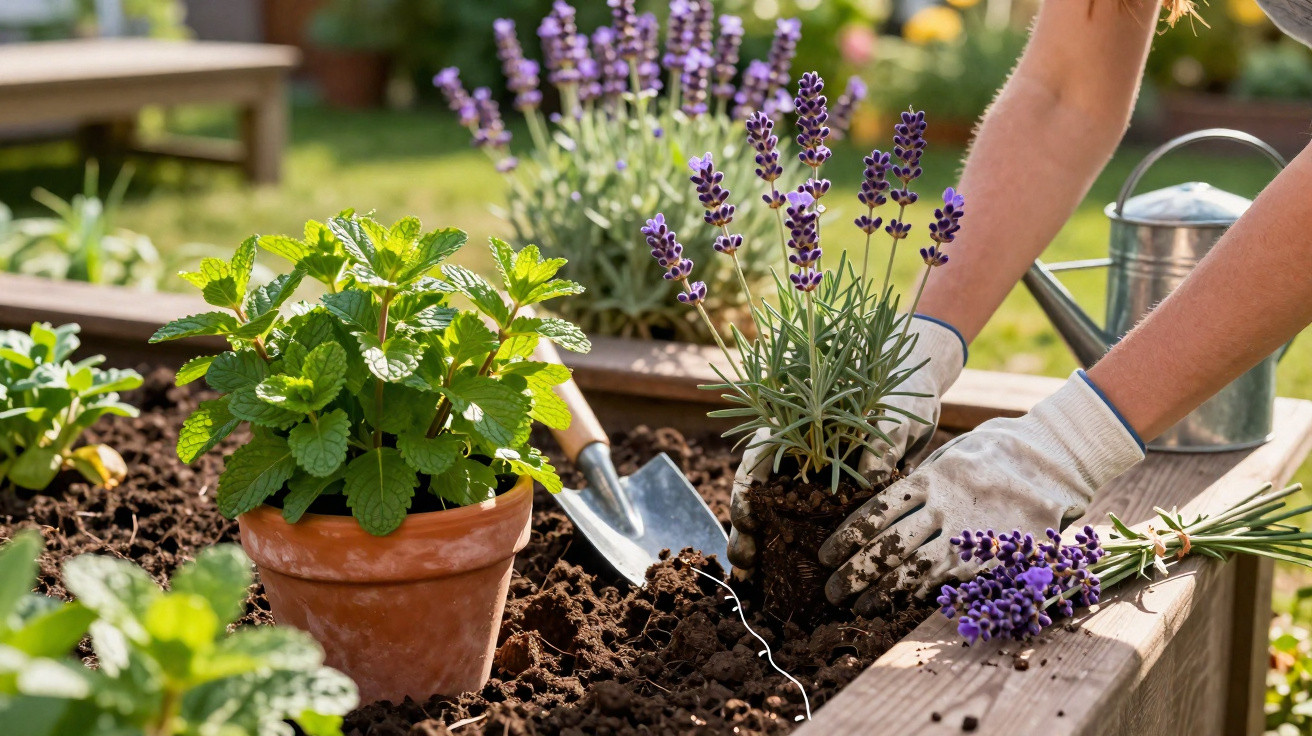
English lavender (Lavandula angustifolia) is far more than a decorative choice for Mediterranean-style gardens. Its intense, almost resinous aroma can disrupt the orientation of many insects - and ants are certainly among them.
Placed thoughtfully, lavender creates a type of “ant boundary”:
- As bed edging: Low-growing lavender varieties planted along a vegetable bed or around rose borders create a dense scented barrier.
- In pots: A pot of lavender positioned directly beside an ant trail can often interrupt the activity within a few days.
- Along the patio edge: Containers of lavender set along the boundary help keep ants away from the dining table and seating areas.
A single vigorous pot of lavender can disrupt a well-used ant trail so much that the colony chooses a different route.
Lavender also offers visual and ecological benefits: its purple flowers attract bees and butterflies, while ants tend to avoid the area. It is ideal for sunny, relatively dry positions. However, lavender does not thrive in heavy, very wet soil.
Lavender care tips for deterring ants
- Position: Full sun, in free-draining, fairly lean soil.
- Watering: Water moderately and avoid waterlogging.
- Pruning: Cutting back after flowering keeps the shrub compact and encourages blooms.
- Growing in pots: Containers filled with well-drained compost make it easy to adjust the plant’s position.
Mint: the easy-going helper indoors and outdoors
The second key plant in the fight against ants is mint (Mentha). Its fresh, sharp scent works wonderfully in cups of tea and desserts, but ants find it irritating.
Both spearmint and peppermint can serve as living deterrents. They offer several advantages:
- Versatile: Mint grows in borders, raised beds, on balconies and even on a windowsill.
- Powerfully scented: Rubbing a leaf between your fingers intensifies the effect for a short time.
- Moveable: Pots can be placed exactly where ants appear, such as by doors, cracks or gaps in walls.
Mint is known for spreading vigorously - in a pot, this “problem” becomes a major advantage because you can position the plant exactly where it is needed.
Using mint properly without letting it take over the garden
Mint spreads vigorously through runners. In a border, it can crowd out other plants, whereas this is not an issue in a pot. For ant control, growing it in containers is therefore particularly suitable:
- Fill pots at least 20 centimetres wide with nutrient-rich compost.
- Plant the mint and water it lightly.
- Place containers directly along ant routes, for example beside the house wall or close to heavily affected beds.
- Cut it back regularly, using the leaves for tea, water or cooking.
If you would prefer to plant mint directly in a border, use a root barrier, such as a bottomless bucket sunk into the ground. This keeps its spread under control.
Where lavender and mint make the biggest difference in the garden
For these two herbs to genuinely redirect ants, positioning matters. Common problem areas can be protected in a targeted way:
| Area | Recommended plant | Positioning tip |
|---|---|---|
| Vegetable bed | Lavender, mint | Use lavender as border planting and place pots of mint between vulnerable rows |
| Roses and perennials | Lavender | Plant lavender bushes in a semicircle in front of sensitive plants |
| Patio and seating area | Lavender, mint | Position containers along the edge or at the ants’ entry points |
| House entrance | Mint | Place pots on both sides of the door, close to gaps at ground level |
Important: these plants do not drive ants away instantly; instead, they gradually redirect them. Reducing aphid numbers at the same time and removing food sources around the house significantly strengthens the effect.
Other herbs that ants avoid
Lavender and mint provide the foundation, but other herbs can complement the system. Many gardeners report positive results with:
- Rosemary
- Sage
- Lemon balm
- Basil
- Tansy, used carefully because of its toxicity
- Herbs with an aniseed or dill-like fragrance
These plants can be grouped into a “scent belt” around sensitive crops. Anyone who already enjoys cooking with fresh herbs gets two benefits at once: more flavour in the kitchen and fewer ants in the beds.
Practical tips for sustainable ant control
Relying on fragrant plants alone is not always enough. Gardeners achieve better long-term results when they combine several measures:
- Keep an eye on aphids: Regularly wipe affected shoots clean or spray them with water, and encourage beneficial insects such as ladybirds.
- Reduce food sources: Do not leave uncovered food scraps or sweet drinks on the patio or balcony.
- Keep the ground clean: Sweep regularly beneath garden furniture and alongside house walls so that crumbs do not attract ants.
- Replace plants when needed: Add new lavender or mint plants each year if older specimens begin to weaken.
Those who avoid pesticides entirely may need a little patience. In return, the garden remains a safer place for children, pets, hedgehogs and birds.
Risks and limits of fragrant plants against ants
As useful as lavender and mint are, they cannot always completely remove a firmly established nest directly beneath a patio. In these cases, activity usually shifts to the edges, which is already helpful but does not guarantee a completely ant-free space.
There is another consideration: some herbs, particularly mint and tansy, should be allowed to grow only under control. Planting them in a border without planning can later lead to frustration with rampant growth. Pots, root barriers and occasional thinning keep the issue manageable.
People with sensitive skin or severe hay fever should start cautiously: try one plant first, wait to see whether there is a reaction and then expand gradually. Lavender is generally considered well tolerated in central Europe, although it can cause irritation in a small number of people.
Used together correctly, lavender and mint form an effective, practical system: ants are gently pushed away from sensitive areas, while the garden gains visual appeal and the supply of herbs for tea, cooking and decoration grows.


Comments
No comments yet. Be the first to comment!
Leave a Comment