
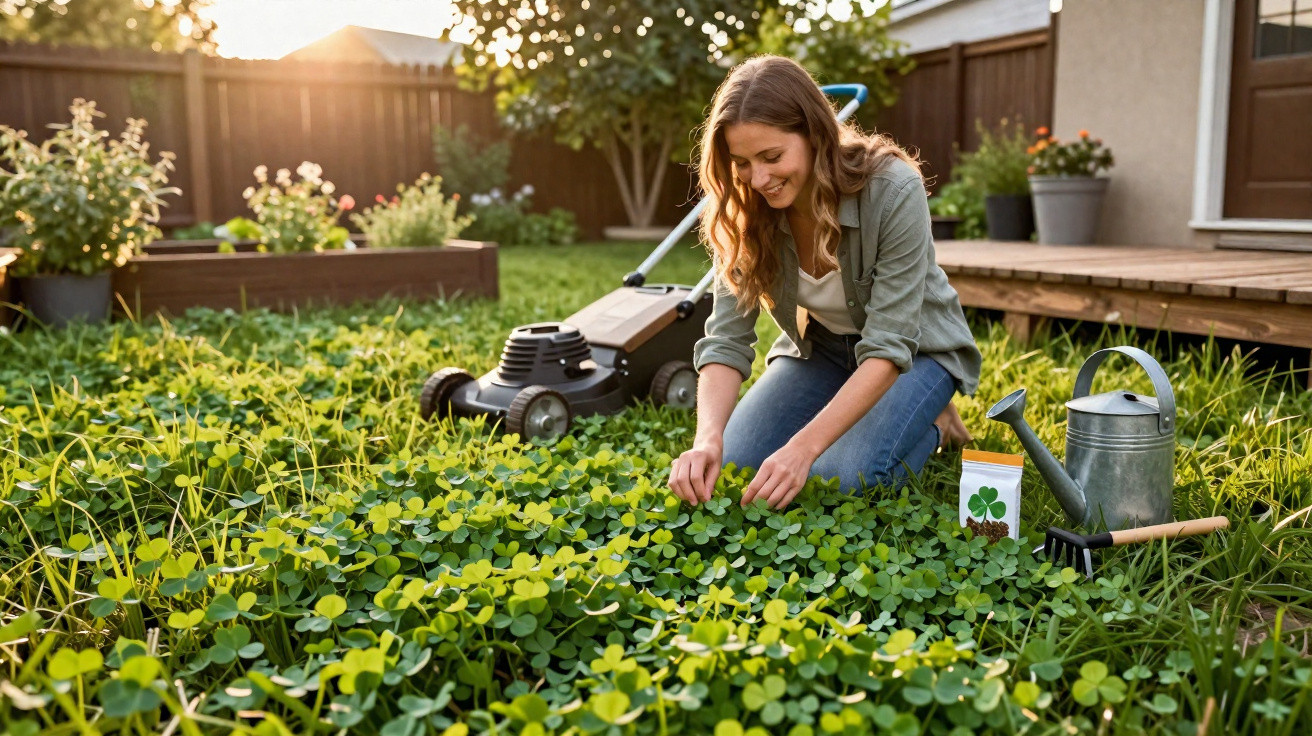
More and more gardening professionals are moving away from the traditional grass lawn. In its place, they are choosing a low-growing plant that stays green, needs very little water and hardly requires mowing. The clever part is that it still looks like a “lawn” and feels pleasantly soft under bare feet.
Why traditional lawns have become a problem
Almost everyone knows the pattern: in spring, a newly sown lawn looks richly green, but by high summer frustration sets in. Despite watering, feeding and mowing, yellow patches, bare areas and persistent weeds appear. After the first heatwave, many gardens resemble a dried-out meadow rather than a neatly maintained green space.
A conventional lawn made up of grasses simply has demanding needs. It requires:
- frequent watering, particularly during dry summers
- regular fertiliser to remain dense and green
- weekly mowing once warm weather arrives
- often scarifying and overseeding as well
This takes time, money and patience, while also using large amounts of water. Summer watering restrictions are now in force in an increasing number of areas, water butts run dry early and rainfall fails to arrive. Anyone trying to maintain a flawless grass lawn under these conditions is working against reality.
Many garden experts now advise moving away from thirsty grass lawns and towards hardy ground-cover plants that cope better with heat and demand less maintenance.
The quiet revolution: micro-clover instead of a grass lawn
Among alternative ground covers, one plant is currently leading the way: a particularly compact form of white clover, commonly known as micro-clover. It grows much shorter than familiar meadow clover, while forming a continuous carpet that closely resembles a lawn.
Typical characteristics of this clover variety include:
- a height of usually only around 5 to 15 centimetres
- very dense growth with hardly any bare spots
- a soft feel underfoot, ideal for walking barefoot
- noticeably longer-lasting green colour than grass, even in hot weather
Clover has another important advantage: it belongs to the legume family. With the help of bacteria on their roots, these plants can fix nitrogen from the air. That nitrogen enters the soil and acts as a natural fertiliser.
In principle, micro-clover fertilises itself – the need for artificial fertiliser falls considerably and, in some cases, almost disappears altogether.
Hardly any mowing and much less water
Anyone wanting a tidy outdoor area will know the lawn mower as a constant companion: at the height of summer, it often comes out every weekend, and sometimes more often. Micro-clover changes that dramatically.
Because the clover remains so short, mowing once or twice a year is enough in many gardens, mainly to level the growth slightly. Noise, time spent and the cost of petrol or electricity all fall substantially.
There is also a clear difference in water use. Trials and practical experience suggest that micro-clover manages with around 20 to 50 percent less watering than a traditional grass lawn. This is particularly noticeable for anyone using rainwater or relying on a water butt.
The savings are reflected in the household budget too. Rather than allowing for high annual costs for fertiliser, overseeding seed, watering and fuel, expenses are often limited to the low tens of pounds.
How to establish a micro-clover area properly in spring
Spring is the right time to create a new micro-clover area, once the soil has warmed up. Many professionals recommend April, although May can still be ideal depending on the region. One point matters above all: clover should not simply be scattered over an existing patchy lawn.
Preparing the soil: the old lawn needs to go
For a genuinely even result, remove the old grass lawn completely. Only then can the clover develop an uninterrupted, dense cushion and deliver its full benefits.
- Strip away the old lawn with a spade or turf cutter, or break it up with several passes of a cultivator.
- Carefully remove root remnants and weeds so the area does not become overgrown again immediately.
- Loosen the soil lightly, using a rake or cultivator, for example.
- Fill in uneven areas with soil, then level the surface.
Skipping these steps and merely mixing clover into an established grass lawn risks a patchy appearance. Grass and clover will then compete strongly, often leaving an uneven patchwork effect.
Sowing correctly and supporting germination
Once the ground is prepared, it is time to sow. Micro-clover is generally spread broadly by hand or with a seed spreader.
- Around 10 to 15 grams of seed per square metre is normally sufficient.
- Sow the seeds shallowly rather than burying them deeply, as clover needs light to germinate.
- Then press them gently into place with a roller or by carefully treading over the surface, ensuring the seeds make contact with the soil.
- During the first few weeks, water with a fine spray so the soil remains evenly moist without becoming waterlogged or compacted.
The first few weeks are the most important stage: maintaining regular moisture during this period lays the foundation for a resilient area with deep roots.
Over the following 18 to 24 months, the clover develops an increasingly deep root system. The area then becomes progressively more tolerant of extended dry spells. Some patience is worthwhile during this period: the attention invested at the start pays off noticeably from the second year onwards.
How practical is a micro-clover area in everyday use?
Many garden owners wonder whether micro-clover can replace a “proper” lawn. The answer depends on how the space will be used. It is generally well suited to children playing, sun loungers, picnic blankets and garden chairs. The surface feels softly cushioned, remains green for a long time and recovers surprisingly quickly after use.
It does reach its limits under very heavy wear, however, such as a permanently used, child-sized football pitch. In this situation, a blend of robust grasses and clover may be worthwhile. Water and fertiliser use will not fall quite as sharply, but it will still be lower than with a lawn made entirely of grass.
Benefits and possible drawbacks at a glance
| Aspect | Benefit | What to consider? |
|---|---|---|
| Maintenance | Much less mowing and hardly any fertilising | It still needs regular checking during the first few months |
| Water use | Noticeably lower than for a grass lawn | Do not allow it to dry out during germination |
| Appearance | Long-lasting green colour and a dense carpet | Clover leaves look different from lawn grasses – a matter of taste |
| Environmental impact | Less fertiliser, less fuel and more flowers for insects | Anyone who does not want bees in the lawn should choose low-flowering varieties |
What to know before switching to clover
Clover can flower, and that is exactly what it does in summer. Its small white flowers are decorative and welcome to insects. However, anyone with allergies or concerns about bee stings should consider how they intend to use the area. Mowing more frequently while it is flowering significantly reduces the number of open flower heads.
There is one more consideration: micro-clover loves light. It does not thrive in heavily shaded spots beneath dense trees. Other ground covers, such as ivy, barren strawberry or certain varieties of cranesbill, are more suitable there. For sunny to partially shaded positions, this low-growing clover is a very appealing choice.
Practical ways to combine micro-clover in the garden
Anyone hesitant to replace their whole lawn with clover can start with small trial areas. A strip around the edge, a corner behind the patio or a problem spot that dries out quickly are all good options.
A mix of clover areas and perennial beds can also look striking. Clover can serve as a green carpet between taller plants, visually link pathways or fill bare areas around beds. This creates a relaxed, natural-looking garden that is less like a “golf-course lawn” while being far easier to maintain.
With energy and water costs rising, many people are rethinking their garden design. Micro-clover is perfectly suited to this shift: less work, lower running costs, a benefit for bees and soil life, and still a green carpet on which people can happily sit, play or stretch out their feet.

Comments
No comments yet. Be the first to comment!
Leave a Comment