
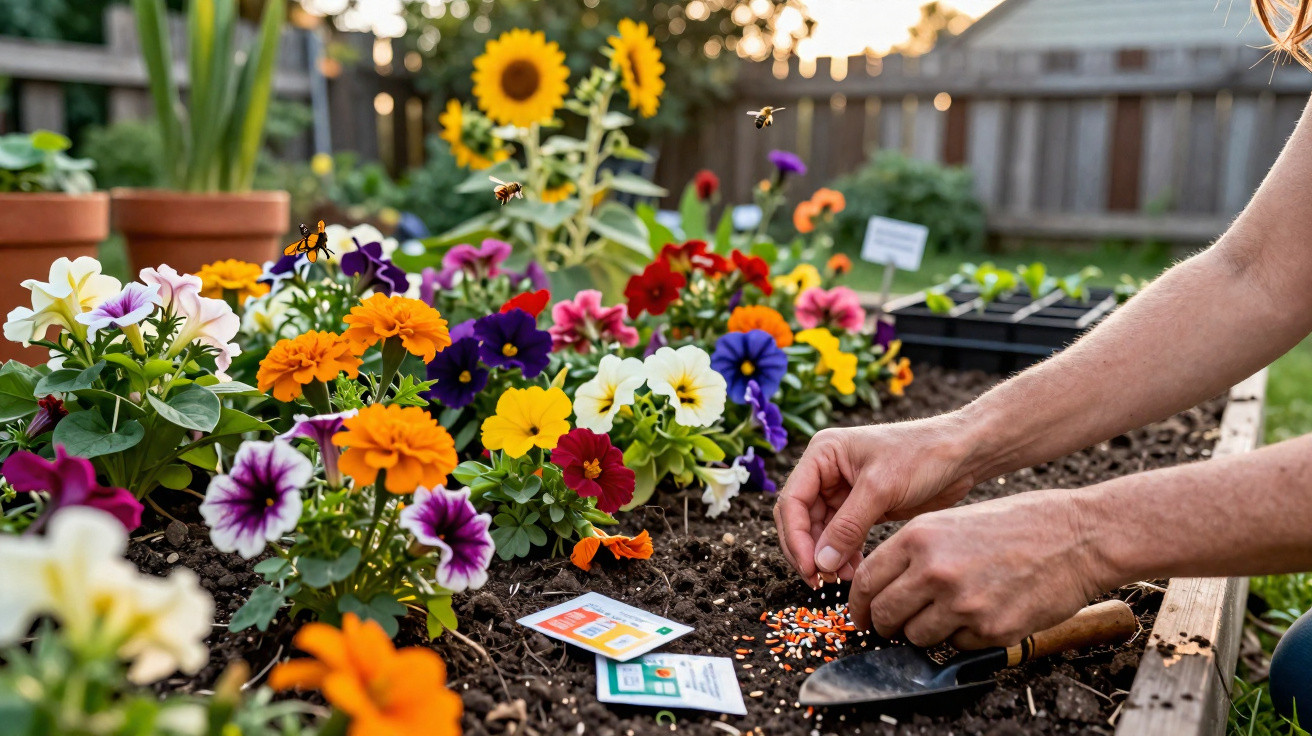
Many amateur gardeners are surprised each year by how long a garden takes to properly come back to life after winter. Anyone unwilling to wait until high summer can turn their beds into a dense, colourful sea of flowers by early summer with carefully chosen fast-growing flowers. The secret lies in particular annual varieties that race from seed to bloom within just a few weeks.
Why fast starters in spring are so exciting
Fast-growing annual flowers frequently progress from sowing to their first blooms in 45 to 90 days. Begin between March and April, either indoors or, depending on the region, straight into the bed, and bare soil can become a lively focal point by early summer.
“Those who sow early and choose the right varieties can transform a dull spring garden into a lush floral setting around the house in less than three months.”
The basic requirements are straightforward: these plants enjoy sunshine, cannot cope with late frosts and need free-draining soil so that waterlogging does not develop. Meet those conditions and most of these varieties will forgive minor mistakes, making them ideal for gardening beginners too.
How to sow fast-growing flowers
Many quick summer flowers germinate dependably and do not require complicated pre-treatment. Starting indoors or in a greenhouse from March is ideal; later, sow them directly outdoors once night frosts are no longer expected.
- Scatter the seeds loosely rather than sowing them too densely.
- Press them down lightly or cover them with a thin layer of soil.
- Water carefully but regularly.
- Thin out the seedlings after emergence so they have enough room.
Sowing too thickly may produce plenty of seedlings, but few flowers. Be decisive when thinning: depending on the variety, leave anything from several centimetres to several hand widths between young plants.
The 9 fastest flowers for lush beds
The following selection includes every height and growth habit, from low bed edging to a dense, screening backdrop.
| Flower | Height | Garden strengths |
|---|---|---|
| Zinnia | 30–90 cm | bold colours, ideal as cut flowers |
| Gomphrena | 20–60 cm | flowers for an exceptionally long time; tolerates heat and drought |
| French marigold (Tagetes) | 20–40 cm | tough bed edging, an intense carpet of colour |
| Sunflower | 40–250 cm | gains height quickly, creates a striking focal point |
| Borage | 40–80 cm | a magnet for pollinators, with edible flowers |
| Nasturtium | 20–250 cm (depending on variety) | climbing or trailing, with edible leaves and flowers |
| Celosia | 20–70 cm | unusual flower shapes and vivid colours |
| Petunia | 20–40 cm | long-flowering choice for window boxes and bed edges |
| Spider flower (Cleome) | 80–150 cm | airy, eye-catching flower clusters that fill gaps |
Zinnias and Gomphrena: long-lasting flowers in bold colour
Zinnias are among the least demanding summer flowers. If they are raised in warmth in March, sturdy young plants can be planted into beds from May. Sowing directly into the ground from May works just as well, although it takes a little longer.
Tall varieties provide excellent cut flowers for a vase. Shorter rows, including more compact cultivars, thrive in borders and containers, where they add bright splashes of colour.
Gomphrena, often sold as globe amaranth, follows a similar routine: sow it, cover it lightly, keep it warm and plant it out later in a sunny bed. Its firm, rounded blooms persist throughout the season and cope remarkably well with heat and brief dry spells.
French marigolds and nasturtiums: gap fillers with extra benefits
French marigolds are a classic choice for bed edges. They germinate quickly, need little attention and flower in shades of yellow, orange and red, sometimes with two colours. Many gardeners also deliberately plant them among vegetables because their strong scent can confuse pests.
Nasturtiums are sown directly outdoors, usually from April or early May. According to the variety, they form compact bushes, climb up fences or trail generously from window boxes and hanging baskets. Their rounded leaves and colourful flowers are not merely decorative; they also work well in salads or on a sharing platter.
“With French marigolds along the bed edge and nasturtiums as climbing or trailing companions, even a tiny front garden quickly looks like a small piece of jungle.”
Sunflowers, celosias and spider flowers: the tall stars take centre stage
For height and structure, choose sunflowers. Options range from knee-high varieties to types exceeding two metres. Selecting the right kind matters here: lower-growing types suit small gardens so that they do not tower over everything else.
Celosias look especially effective in front of sunflowers. Their flowers resemble flames, feathers or small combs, and can appear almost paper-like. They shine intensely in sunlight, particularly in red, pink and yellow shades.
The spider flower stands apart thanks to its delicate blooms on long stems. It rapidly develops into loose, tall bushes, giving beds an airy, subtly exotic character. It is ideal for naturalistic planting or as a transition between tall and low flowers.
Borage and petunias: colour and food for insects
Borage, often known only as a herb, is also superb for colourful summer beds. It germinates quickly, grows vigorously and bears bright blue, star-shaped flowers. Bees, bumblebees and other pollinators are especially drawn to it. For anyone who enjoys edible flowers, its blooms can be used to decorate drinks or desserts.
Petunias are familiar to almost everyone with a balcony. They rank among the most dependable flowering plants from May into autumn. Whether grown in window boxes, pots or directly in a bed, they continuously produce fresh blooms with a little fertiliser and regular watering, making them ideal for visually filling spaces between taller varieties.
How to create a dense carpet of flowers in just a few weeks
The key is to combine different heights and growth habits. Treat the garden like a small stage set and arrange it in three layers:
- at the back: sunflowers and spider flowers as the backdrop
- in the middle: zinnias, celosias, borage and Gomphrena as colourful main performers
- at the front and in containers: French marigolds, petunias and nasturtiums
Planting these flowers repeatedly not only in beds but also in pots and window boxes on the patio visually links the house and garden into one large, colourful overall picture. In many cases, two to three months are enough for everything to look dense and luxuriant.
Practical tips for healthy growth and long flowering
A few simple measures will get even more from these fast-flowering plants:
- Harden off young plants gradually before moving them outside.
- Ideally water in the morning, directly at the roots rather than over the leaves.
- Remove spent flower heads regularly to encourage new buds.
- Use high-quality, free-draining compost in pots and window boxes.
- Plan supports for strongly growing varieties such as sunflowers.
If unsettled weather is a concern, raise part of the seeds indoors and sow a second batch directly outside. This extends the flowering period and allows gaps to be replanted later.
What beginners should also know
Terms such as “annual” and “fast-growing” often cause misunderstandings. Annual simply means that plants complete their cycle from seed to seed maturity within one season before dying. However, many of the varieties listed will self-seed if they are allowed to retain a few seed heads. The following year, fresh plants may then emerge in unexpected places.
These turbo flowers are particularly rewarding for those with children or anyone just beginning to garden. Results appear quickly, setbacks are limited, and the range of shapes and colours helps to keep interest alive. Add a few herbs or vegetables to the flowers and the result is a vibrant mixed garden that looks attractive, draws insects and provides useful ingredients for the kitchen.
Comments
No comments yet. Be the first to comment!
Leave a Comment