
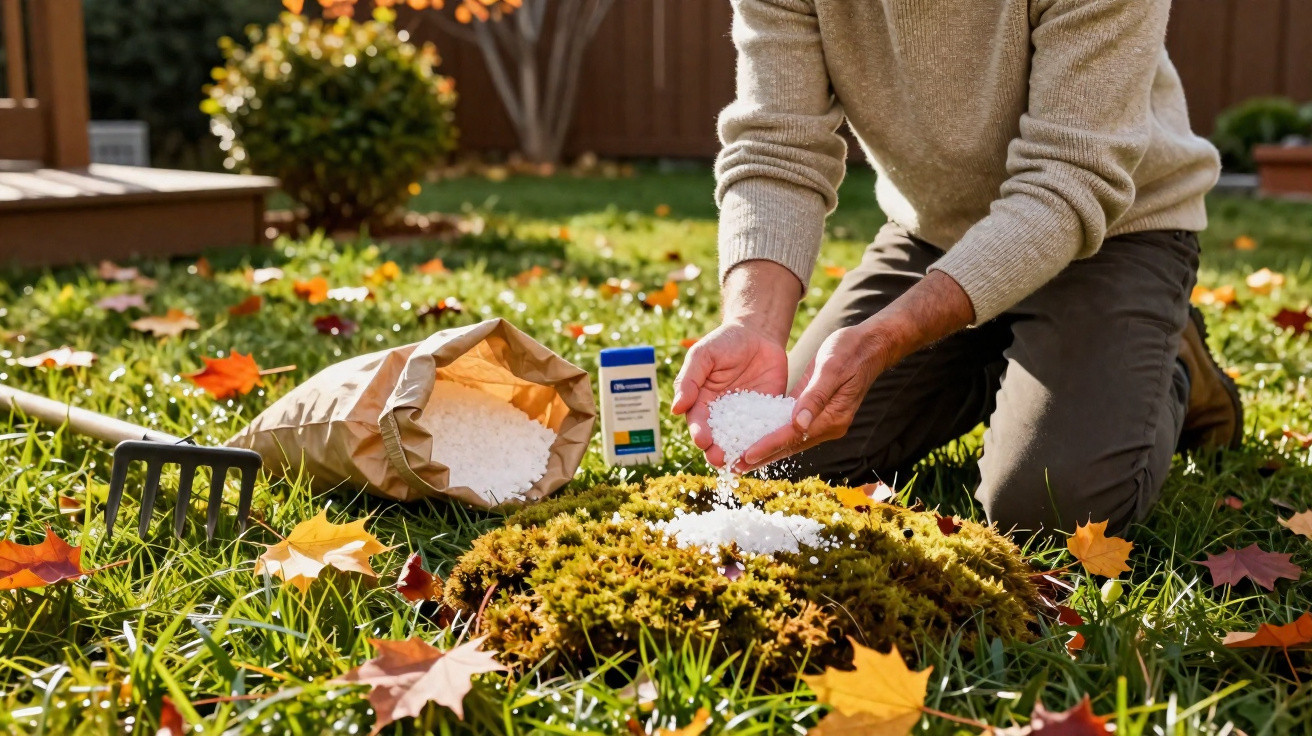
Many garden owners eventually feel defeated by green patches on the driveway, in the lawn or around fruit trees. Moss may look harmless, yet it usually indicates that something is wrong with the soil. Scraping, raking or spraying only tackles the visible symptom rather than its cause. One targeted task in autumn can turn the situation around for good, without using harsh products from the garden centre.
Why moss takes over your garden so quickly
Moss rarely appears “for no reason”. It ruthlessly exploits weaknesses in the garden’s growing conditions. Typical trouble spots include shaded corners, areas beneath trees, ground alongside walls, and paths where rainwater lingers for a long time.
From the soil’s perspective, four factors are particularly important:
- Excess moisture: Water remains on the surface long after rain, while the ground barely dries out.
- Acidic soil: The pH is often well below 6 – ideal for moss, but not for lawn grass.
- Compaction: Frequent foot traffic or heavy equipment compresses the soil, leaving too little air around the roots.
- Weak grass: Cutting too low, poor feeding and thin growth all leave bare patches that invite moss in.
Especially in heavily used gardens, the soil is often trodden down so firmly that water can scarcely soak in. It then collects on the surface, while grass roots effectively “suffocate”. As the grass retreats, moss spreads and forms a dense mat.
Moss almost always means: something is wrong with the pH, wetness or soil structure here – the green carpet is a warning sign, not a coincidence.
Some gardeners deliberately leave moss in particularly dark, damp places, such as behind the garden shed. However, anyone wanting a thick, even lawn will need to change the conditions.
The crucial autumn step: liming the soil
The simplest and, at the same time, most effective way to tackle moss in the lawn is surprisingly unglamorous: apply lime. This does not mean paint for the side of the house, but finely ground garden lime products that make the soil less acidic.
What lime does to the soil
Garden lime raises the soil’s pH and removes the conditions in which moss thrives. Lawn grass grows best at a pH between 6 and 7, whereas moss generally prefers levels below this. Once the soil becomes a little less acidic, the grass can recover and the moss gradually recedes.
The most suitable options are:
- carbonate lime
- dolomitic lime, which contains magnesium
- slaked lime intended for garden use, rather than the harsh professional-grade version
Amateur gardeners should avoid highly caustic products, such as quicklime for professional use. They can harm plants and are hazardous to handle.
How to lime your lawn correctly
Before starting, it is worth carrying out a quick pH test. Testing kits are available from almost every garden centre. The result will reveal whether the soil really is too acidic, and only then should you reach for the bag of lime.
The following method has proved effective in many gardens:
- Check the pH: If it is below roughly 6, there is a strong case for applying lime.
- Set the dose: In most cases, 100 to 200 grams of garden lime per square metre is sufficient.
- Choose the right time: Autumn or very early spring is ideal, provided the soil is damp but not frozen.
- Spread it: Apply the lime as evenly as possible, either by hand or with a spreader.
- Work it in: Lightly rake it into the surface so that the material comes into contact with the soil.
- Water lightly: A brief shower or moderate watering is enough to help the lime take effect.
On slightly acidic ground, one application each year is often enough. In more difficult cases, use two treatments several months apart. Keeping an eye on the pH prevents “over-liming”, which can upset the soil balance again.
Many amateur gardeners report: After one or two years of moderate liming, the lawn looks noticeably more vigorous while the moss carpet slowly disappears.
Removing moss: additional steps you can take now
Lime changes the growing conditions, but it will not make existing moss vanish overnight. The lawn also needs space and air if it is to recover quickly.
Mechanical methods: rake through thoroughly
For smaller areas, a sturdy rake is often enough. If you have more square metres to deal with, an electric or petrol-powered scarifier is the better choice. It lightly cuts into the soil and brings moss and thatch to the surface, where they can be swept away easily.
After scarifying, three measures are useful:
- Clear away moss and lawn thatch so the soil can breathe freely.
- Apply a thin layer of mature compost, around half a centimetre, to improve soil life.
- Overseed bare areas, ideally with a hard-wearing lawn seed mix, so new moss cannot move in.
Immediately after this treatment, the lawn will often look worse than it did beforehand. With patience and a little care, though, it will grow back considerably denser.
Gentle household remedies instead of a chemical cocktail
For isolated, small problem patches, many people use mild mixtures made from kitchen and garden ingredients. Common choices include:
- Bicarbonate of soda solution: Spray approximately five tablespoons mixed with one litre of water onto the moss cushions.
- Diluted household vinegar: Apply a mixture of equal parts water and vinegar directly to the moss.
- Nettle liquid feed: Used heavily diluted, at around ten per cent, it can weaken moss while also enlivening the soil.
These household remedies are only sensible for small areas. They should never be poured across an entire lawn, as the grasses will suffer as well. Undiluted vinegar or salt solutions have no place in garden soil: they damage soil organisms and may create more long-term problems than they solve.
Preventing moss permanently: smart lawn care
Keeping the lawn healthy makes it much harder for moss to return. A few adjustments can make a major difference.
Mow and water correctly
Extremely short “golf-course cuts” tend to harm a domestic lawn. A cutting height of five to six centimetres is better. Longer blades lightly shade the soil, protect it from drying out and strengthen grass roots.
Rather than watering every day, give the lawn heavier watering less often. This encourages roots to grow deeper. Light surface spraying produces shallow-rooted grass – a paradise for moss whenever it rains.
Reduce shade and compaction
Light and air matter too. Where thick branches keep the ground shaded all day, grass has little chance. Careful pruning of shrubs and trees can help. More light means more photosynthesis, and therefore more energy for the lawn.
Compacted areas, such as play spaces or frequently used desire paths, benefit from regular aeration. Hollow-tine tools, lawn aerators or even a simple garden fork create air channels and loosen the ground beneath. In stubborn cases, it may make sense to deliberately use heavily trafficked areas differently, for example by adding stepping stones or a hard surface.
When moss can be worthwhile – and where its limits lie
As frustrating as moss can be in a lawn, this green carpet can add real charm to certain parts of the garden. It creates a calm, soft effect on old natural stone, in shaded woodland gardens or when used as a deliberate design feature. Where a conventional lawn is not expected, the moss can simply be left to grow.
It becomes problematic mainly when moss dominates entire lawn areas. The soil beneath remains permanently damp, encouraging fungal diseases and restricting the root growth of other plants. A wet covering of moss also makes paths significantly more slippery.
A considered combination of liming, soil improvement and tailored maintenance can nevertheless keep the unwanted growth under control and allow the lawn to regain the upper hand. Those who take the soil’s signals seriously will ultimately have less work and a much healthier garden.

Comments
No comments yet. Be the first to comment!
Leave a Comment