
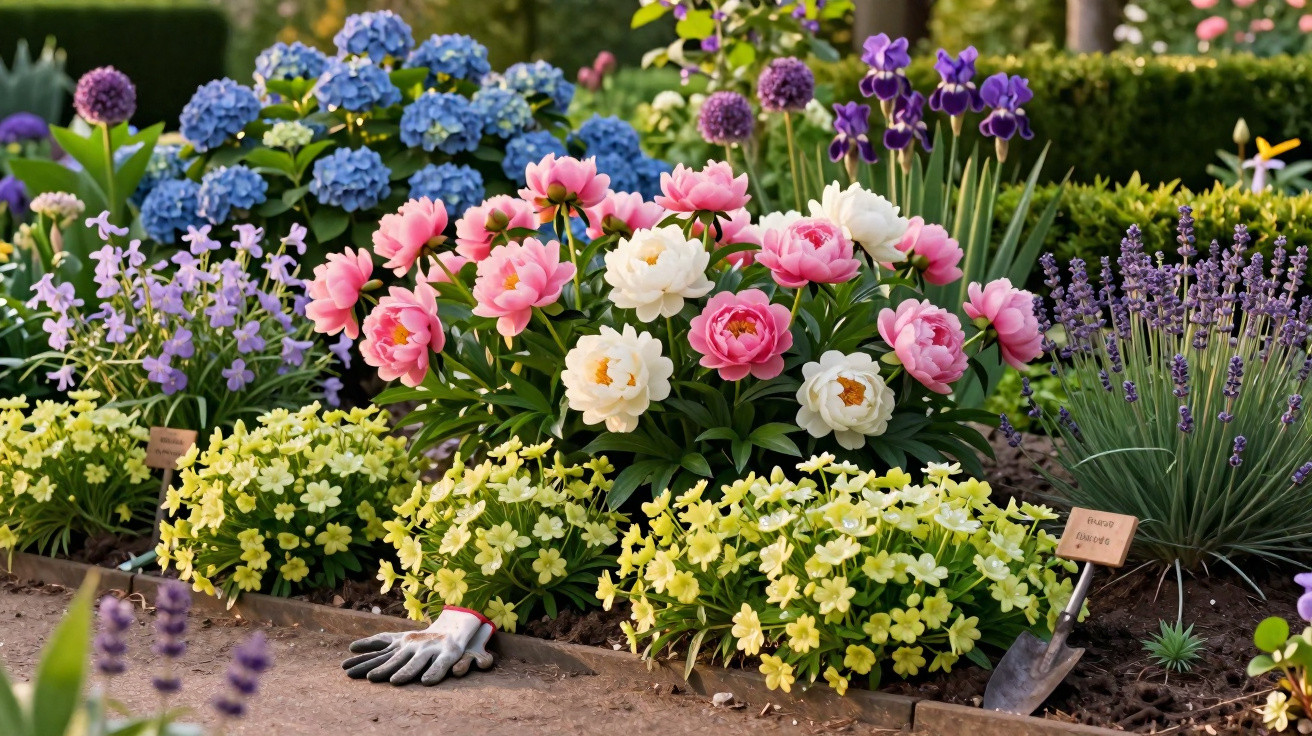
Many amateur gardeners plant peonies on their own in a border, then wonder why the dramatic wow factor never appears. These perennials are undeniably impressive in their own right, but they reveal their full potential only with suitable companion plants – and enough room around every specimen. Follow a few basic principles and you can create a border that resembles a painted picture from spring into high summer.
What peonies need before neighbouring plants move in
Peonies are among the longest-lived perennials in the garden. They can remain in the same spot for decades without needing to be transplanted. That is precisely why it pays to plan both their position and their plant companions with care.
“Peonies love sunshine, deep, nutrient-rich soil and, above all, space away from pushy neighbours.”
Here is an overview of their key growing requirements:
- Light: Full sun to light partial shade; at least 5–6 hours of direct sunlight each day is ideal.
- Soil: Deep, humus-rich and free-draining, without remaining waterlogged throughout winter.
- Root competition: Avoid placing vigorous shallow-rooted plants or woody plants immediately beside them.
- Spacing: Each perennial needs an uncluttered area so its foliage can dry quickly after rain.
A border planted too densely retains moisture for a long time. Fungal diseases such as grey mould can spread, destroying entire flushes of flowers. An open planting scheme is therefore not merely an aesthetic luxury, but an important form of plant protection.
Lady’s mantle and bellflowers: a gentle stage for large blooms
Once the essentials are in place, attention can turn to the design. Some perennials make peonies appear even more lavish without competing for attention.
Lady’s mantle as a soft groundcover
Lady’s mantle (Alchemilla mollis) is a classic peony companion. It forms dense yet low cushions of pleated leaves, topped in early summer by a haze of yellow-green flowers.
This pairing offers several benefits:
- Its delicate clouds of flowers emphasise the soft pink and cream shades of peonies.
- The plant stays low, so it does not crowd the peonies.
- When cut, it makes an excellent filler for peony bouquets.
Bellflowers for playful contrasts
Compact-growing bellflower varieties also work exceptionally well alongside peonies. Their nodding or upright bells add a sense of lightness to the border. As they generally flower a little later, they extend the period during which the planting looks appealing.
Spacing still matters: if bellflowers grow directly within the peony crown, they reduce both light and airflow. Leaving a gap of 20–30 centimetres keeps both plants healthy.
Hydrangeas and bulbs: colour in the background and throughout the season
Hydrangeas as a calm backdrop
Hydrangeas are particularly effective behind larger herbaceous peonies. Their rounded flowerheads echo the form of peony blooms, but arrive at a slightly different time. This creates a natural relay effect through summer.
To make this combination work, keep the following points in mind:
- Do not plant hydrangeas too close behind peonies, or they will cast excessive shade.
- Choose varieties that tolerate sun and cope well with ordinary garden soil.
- Position larger shrubs to one side where possible, so air can continue to circulate through the border.
Iris, alliums and daylilies: perfectly timed flowering
With thoughtful planning, you can create a border that flowers almost without interruption:
| Plant | Typical flowering period | Role in a peony border |
|---|---|---|
| Bearded iris | Early to mid-spring | Opens the season before peonies properly begin |
| Peonies | Late April to June (depending on variety) | The peak display, with large individual flowers |
| Allium | Late spring to early summer | Rounded accents among peonies, also used as a protective plant |
| Daylilies | High summer | Take over as peonies fade and their foliage gradually declines |
This succession ensures that the border remains interesting for months rather than looking attractive for only a few weeks.
Lavender as a fragrant protective barrier
Lavender is much more than a scented plant for creating a holiday-like garden feel. Its requirements suit peonies perfectly: plenty of sunshine, well-drained soil and no waterlogging.
“Lavender around peonies acts like a natural protective belt: attractive to look at and unpleasant for many pests.”
Its strong fragrance deters a range of unwelcome visitors, including:
- mosquitoes
- flies
- fleas
- moths
- deer, which are reluctant to pass through heavily scented areas
Paired with alliums, it produces a double effect. The ornamental onions provide decorative purple or white spherical blooms, while their onion-like scent is disliked by many insects. Together, they form an almost invisible defensive ring around the peony border.
Which planting partners should be kept at a distance
Not every plant that looks right beside peonies is automatically a suitable immediate neighbour. In particular, strongly growing species can quite literally deprive peonies of air.
Potentially troublesome choices include:
- tall ornamental grasses with robust root systems planted directly against the clump,
- perennials that prefer permanently wet soil,
- very broad-growing shrubs in the immediate vicinity.
Such plants increase the risk of damp conditions and force peonies into shade. If you enjoy moisture-loving or bog perennials, it is better to place them in a separate area of the garden, or divide them clearly with a path or wall.
Practical tips for a long-lasting, stable peony border
Plan generous spacing from the start
Peonies often look deceptively small when first planted. A common mistake is to fill every gap too tightly with other perennials. It is better to allow for their eventual dimensions: a mature plant can easily reach 80 centimetres in width.
A tried-and-tested layout is:
- Place a peony clump in the centre of the border.
- Plant low companions such as lady’s mantle or bellflowers 40–60 centimetres away.
- Set lavender, ornamental alliums and, where appropriate, small shrubs even further towards the outside.
Soil care without stressing the perennials
Because peonies stay in one position permanently, their soil should be disturbed as little as possible. Deep digging immediately around the plant weakens it. A gentler approach is preferable:
- Spread a little mature compost around each perennial in spring, without digging it in.
- Remove weeds carefully by hand rather than hoeing right up to the crown.
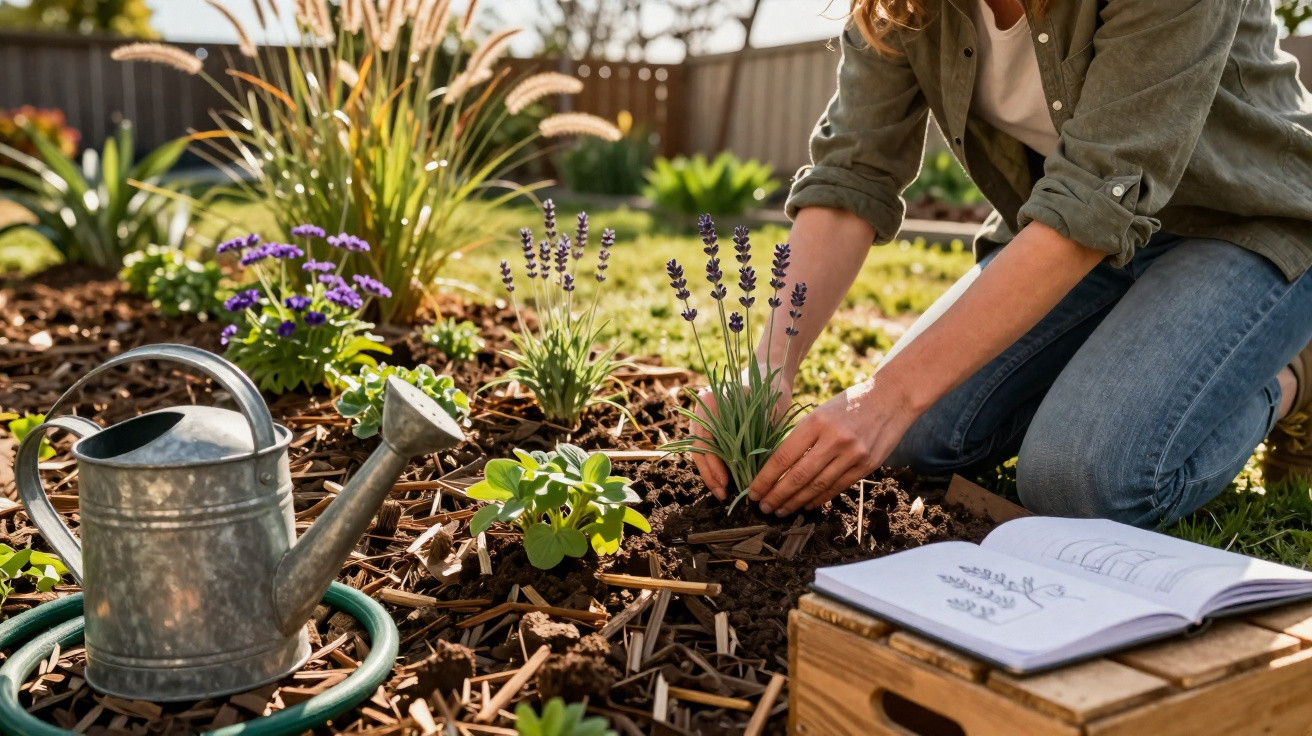
- Apply a thin mulch of fine material, such as grass clippings that have been left to dry, over bare soil without smothering the root area.
Additional ideas for plant combinations and greater benefits
Gardeners considering pollinators as well as appearance can add insect-friendly perennials between peonies and lavender. Catmint, sage or coneflowers attract bees and bumblebees in large numbers. The abundance of flowers then becomes spectacular not only for people, but also an important garden buffet.
It is also worth considering how to handle fading foliage. Peonies gradually die back over the course of summer. Daylilies, cranesbills or low-growing perennial phlox varieties planted in front will elegantly conceal browning leaves. This keeps the border looking tidy and well cared for without the need for constant cutting back.
Anyone planning a new garden or refreshing an established border can save considerable effort by incorporating these core principles from the outset: ample sunshine, airy planting distances, dry and warm-loving partners such as lavender, and decorative protective plants such as alliums. A few peony clumps will then become an almost overflowing focal point year after year – without complicated maintenance routines.
Comments
No comments yet. Be the first to comment!
Leave a Comment